
Cretaceous
Type of resources
Available actions
Topics
Keywords
Contact for the resource
Provided by
Years
Formats
Representation types
Update frequencies
status
Scale
-
This dataset contains fossil occurrence data from the Cretaceous Lopez de Bertodano Formation (Maastrichtian), on Seymour Island, compiled in August 2022. Fossils were collected by Carlos Macellari and William Zinsmeister over several field seasons in the 1980s, and are presently (since 2010) reposited in the Paleontological Research Institution, Ithaca, NY. Data in this spreadsheet are presented by locality (station number, as compiled by PRI), with fossils identified at the family level. This work has been supported by Natural Environment Research Council (NERC) Independent Research Fellowship NE/S014756/1, awarded to EM. TMK is funded by a Cambridge International and Newnham College Scholarship, administered by Cambridge Trust. The Newnham College United States Travel Bursary funded TMK's visit to the PRI Collections. RJW and HJG are funded by UK Research and Innovation (UKRI) Future Leaders Fellowship MR/W01002X/1 "The past, present and future of unique cold-water benthic (seafloor) ecosystems in the Southern Ocean" awarded to RJW. HJG is also funded by BIOPOLE, under the National Capability Science Multi-Centre award scheme (NC-SM2).
-
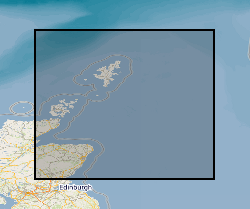
This dataset shows the distribution of Middle Jurassic, Upper Jurassic and Lower Cretaceous lithostratigraphic (UK Offshore Operators Association - UKOOA) units within the UK North Sea graben. The data are based on a subset of released exploration and appraisal wells from within the UK North Sea graben areas. The well data are concentrated in the areas overlying the deep sedimentary basins of the Viking Graben, Central Graben and the Moray Firth Basin, with fewer wells over the adjacent platforms. The UKOOA lithostratigraphic classification has been applied consistently.
-

Clumped isotope analyses, raw data, replicates and temperatures calculated using the empirical calibration of Wacker et al. (2014), recalculated using the [Brand] isotopic parameters.
-

Occurrences of angiosperm pollen grains from North American sections crossing the Cretaceous–Palaeogene boundary were complied from previous publications. Morphological characters for pollen taxa from the Maastrichtian and Palaeocene were encoded based on their descriptions and following the methodology of Lupia (Lupia, R. (1999) ‘Discordant morphological disparity and taxonomic diversity during the Cretaceous angiosperm radiation: North American pollen record’, Paleobiology, 25(1), pp. 1–28. doi:10.1666/0094-8373(1999)025<0001:DMDATD>2.3.CO;2.) for disparity analyses. References and character table are included.
-

Neodymium (Nd) isotope data measured from fossil fish debris and sediment leaches collected from IODP Sites U1512, U1513, U1514 and U1516.
-
Three volumes of SAM samples (SAM1-SAM4789) exist. They represent the work of FW Anderson in the 1950s and 1960s. All samples were re-registered into other datasets. They are predominantly from the Cretaceous and Tertiary. Sample number, fossil type, locality and geological details are given, including borehole name and depth where appropriate.
-

Excel file containing abundance data of planktonic foraminifer from IODP Expedition 375 Hole 1520C (41R-44R)
-

Cretaceous to Recent marine assemblages (total of 24,372) used to measure uplift, interpreted paleo-water depths and measured uplift. This inventory contains information about age, location, stratigraphic origin (i.e., formation, unit, member), lithology, paleoenvironment, and tectonic setting at the time of deposition and references to original source material. An extended methodology is presented in, Victoria M. Fernandes, Gareth G. Roberts; Cretaceous to Recent net continental uplift from paleobiological data: Insights into sub-plate support. GSA Bulletin 2020;; 133 (5-6): 1217–1236. doi: https://doi.org/10.1130/B35739.1 Examples of this information being used to test mantle convection simulations is presented in, Victoria, M. Fernandes, Gareth G. Roberts, Fred Richards; Testing Mantle Convection Simulations With Paleobiology and Other Stratigraphic Observations: Examples From Western North America. G-Cubed 2024; 25(e2023GC011381). doi: https://doi.org/10.1029/2023GC011381
-
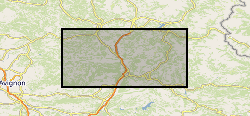
Stable Isotope and trace element analyses (Ca, Sr, Mg, Fe and Mn concentrations) derived from Cretaceous Belemnites including Duvalia tornajoensis, D. cf. lata constricta, D. binervia, D. cf. emericii, Hibolithes, H. cf. jaculoides, Berriasibelus, Castellanibelus and Pseudobelus.
-

**Nothing Known About This**Grain size analysis and statistics of Jurassic-Cretaceous and Tertiary sands from East Dorset, the Hampshire Basin and Shaftesbury area. Analysis taken from selected sites therefore not complete cover of the area.