
data.gov.uk (non-INSPIRE)
Type of resources
Available actions
Topics
Keywords
Contact for the resource
Provided by
Years
Formats
Representation types
Update frequencies
Service types
Scale
Resolution
-
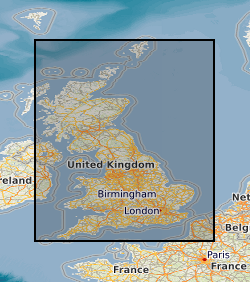
The 5km Hex GS Landslides dataset shows a generalised view of the GeoSure Landslides v8 dataset to a hexagonal grid resolution of 64.95km coverage area (side length of 5km). This dataset indicates areas of potential ground movement in a helpful and user-friendly format. The rating is based on a highest level of susceptibility identified within that Hex area: Low (1), Moderate (2), Significant (3). Areas of localised significant rating are also indicated. The summarising process via spatial statistics at this scale may lead to under or over estimation of the extent of a hazard. The supporting GeoSure reports can help inform planning decisions and indicate causes of subsidence. The methodology is based on the BGS Digital Map (DiGMapGB-50) and expert knowledge of the behaviour of the formations so defined. This dataset provides an assessment of slope instability. Landslide hazard occurs due to particular slope characteristics (such as geology, gradient, sources of water, drainage, man-made constructions) combining to cause the slope to become unstable. Downslope movement of materials, such as a landslide or rockfall may lead to a loss of support and damage to buildings. Complete Great Britain national coverage is available.
-
The World Magnetic Model (WMM) is a standard model of the core and large-scale crustal magnetic field. It is the standard model for navigation, attitude, and heading referencing systems that use the geomagnetic field. The WMM is also used for civilian applications, including navigation and heading systems. A new version of the model is updated every five years to address changes in Earth’s magnetic field. The current version (WMM2025) was released on December 17, 2024, and will remain valid until late 2029. The current model WMM2025 is produced jointly by the NCEI and the British Geological Survey (BGS). The model, associated software, and documentation are distributed by NCEI on behalf of US National Geospatial-Intelligence Agency and by BGS on behalf of UK Defence Geographic Centre.
-
The IGRF is a global model of the geomagnetic field. It allows spot values of the geomagnetic field vector to be calculated anywhere from the Earth's core out into space. The IGRF is generally revised every five years by a group of modellers associated with the International Association of Geomagnetism and Aeronomy (IAGA).
-
Scanned collection of seismological journals and offprints. The original collection was compiled by John Wartnaby. John Wartnaby was a curator at the Science Museum, London, and wrote a historical survey of seismology and scientific instruments. His accumulated papers consist chiefly of offprints and articles, and many older British Association seismological reports. The collection is part of the National Seismological Archive.
-

The dataset results from a multi-disciplinary geological and geotechnical survey, carried out on contract for the Department of the Environment, to aid planning in an area of south Essex. This area had been designated for urban and transport developments to accompany the construction of a proposed third London Airport on Maplin Sands. The major part of the dataset comprises borehole logs and the results of in-situ and laboratory geotechnical tests, together with interpretative maps and sections. There is also data from palaeontological and mineralogical studies and geophysical surveys. The data is not currently available in digital format.
-
The collection consists of records of enquiries answered by the Land Survey from c.1939 to 1970, with a small number of earlier records. Pre c.1960 files relate mainly to economic mineral enquiries while files after that year relate increasingly to enquiries on geological site conditions. Enquiry records of former Leeds and Newcastle offices, relevant to UK(North), are held for c.1950 to 1992. Edinburgh Office enquiry files dated up to 1970 have been reviewed for retention/destruction and those of continuing informational or historical value have been retained as archives. Post 1970 files are confidential to BGS staff. Indexed on Land Survey Record Index (LSRI). Edinburgh enquiry files are referenced EE, (ex-Newcastle Office enquiries, EN). Covers Scotland and Northern England with concentrations in urban ares. All non-confidential data held by NGRC(North) is available to users.
-

The Africa Groundwater Atlas is an online resource developed by the BGS, in collaboration with hydrogeologists across Africa. This service presents layers showing the hydrogeology (aquifer type and productivity) and geology (with particular reference to hydrogeology) of 38 African countries.
-
Offprints of articles relating to Geomagnetism from 1822 to 1981. Offprints collected by Kew Observatory, Meteorological Office, Edinburgh and Greenwich Observatory (Herstmonceux castle). The first page of each offprint has been digitised to produce a finding aid.
-
The NIGL (NERC Isotope Geosciences Laboratories) laboratory records comprise paper output from mass spectrometers, which is retained for 5 years from the date of analysis, and mass spectrometer loading sheets, which are retained indefinitely. NIGL is a comprehensive stable and radiogenic isotope laboratory facility that undertakes environmental, life, archaeological and earth science research, and educates and trains PhD students, in a collaborative research environment.
-
The BGS Geoscience Thesaurus contains approximately 6000 descriptor terms for concepts in the geoscience and related subjects. Some entries have scope notes to further explain the term. The original source of the data was the Australian Mineral Foundation thesaurus of geoscience; some terms have been added or updated to suit BGS needs and the content will continue to be updated as required. The thesaurus includes synonyms to descriptor terms, hierarchical relationships, symmetric (see also) relationships and lapsed (deprecated) term replacements.