
Seismicity
Type of resources
Available actions
Topics
Keywords
Contact for the resource
Provided by
Years
Formats
Representation types
Update frequencies
-
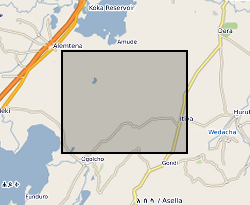
This data set characterises the seismicity occurring within 30 km of the Bora - Tullu-Moye volcanic field between 2016 and 2017. It also provides a description of key geologic features in this region. See the README file for a full explanation of the data set. These data were originally published as supplementary material in g-cubed article: Seismicity of the Bora – Tullu-Moye Volcanic field 2016-2017: Greenfield et al (2018), https://doi.org/10.1029/2018GC007648
-
This data set contains seismic source parameters (magnitudes, corner frequencies, stress drops and their associated uncertainty) for 94 microseismic events linked to fault reactivation during hydro-fracturing operations in the Horn River Basin (British Columbia). The data presented here were derived from proprietary third party seismic data recorded on 2 arrays of 35 - 15 Hz GEO-OMNI-2400 borehole geophones each. These data were first reported in Adam G Klinger, Maximilian J Werner, Stress drops of hydraulic fracturing induced microseismicity in the Horn River basin: challenges at high frequencies recorded by borehole geophones, Geophysical Journal International, Volume 228, Issue 3, March 2022, Pages 2018–2037, https://doi.org/10.1093/gji/ggab458
-

Continuous seismic waveforms from a temporary network of 10 seismometers deployed around the United Downs Geothermal Project, Cornwall, between 2019 and 2021 as part of the NERC funded GWATT project. Data were recorded on Guralp CMG3-ESP broadband seismometers and digitised with a sample rate of 200 Hz. Raw data are stored in miniSEED format (https://ds.iris.edu/ds/nodes/dmc/data/formats/miniseed/). Metadata that allows the raw data to be converted to ground motions, as well as the location of the stations are stored in StationXML format (https://docs.fdsn.org/projects/stationxml/en/latest/overview.html). Both raw data and metadata are available from the UK node of the European Integrated Data Archive (https://eida.bgs.ac.uk) using standard FDSN webservices (https://www.fdsn.org/webservices/). Further details about the network are available at https://www.fdsn.org/networks/detail/9U_2019/. The DOI for this data set is https://doi.org/10.7914/hpf0-6r63.
-
"This data was compiled for the paper "Self-similarity of seismic moment release to volume change scaling for volcanoes: a comparison with injection-induced seismicity", that has been accepted for publication in Geophysical Research Letters. It is a compilation of literature values of volume changes and associated total seismic moment releases for many injection-induced earthquake sequences. It also includes a number of total moment releases and volume changes from volcanic sequences that were calculated for the study from published earthquake catalogues. This work was conducted to examine the response of the shallow crust to volume changes in the two different contexts, make the comparison between them, and discuss why the response is similar or dissimilar. The data consists of two tables. For the fluid injection data the table lists the project name, the approximate dates, the source, the type of operation, and naturally the volume and total seismic moment release. For the volcanotectonic sequences, it lists the name of the eruption/intrusion, the dates, volume change, and moment release. Also included in both tables are the seismic efficiency (functionally the ratio of moment releasee to volume change, see Hallo et al., 2014) and seismogenic index (another measure of the response of the crust to a volume change, see Shapiro et al., 2010). Aki, K. (1965). Maximum likelihood estimate of b in the formula log N = a-bM and its confidence. Bulletin of Earthquake Research Institute of the University of Tokyo, 43, 237–239. Cao, A., & Gao, S. S. (2002). Temporal variation of seismic b -values beneath northeastern Japan island arc Geophysical Research Letters, 29(9), 48-1-48–3. https://doi.org/10.1029/2001gl013775 Hallo, M., Oprsal, I., Eisner, L., & Ali, M. Y. (2014). Prediction of magnitude of the largest potentially induced seismic event. Journal of Seismology, 18(3), 421–431. https://doi.org/10.1007/s10950-014-9417-4 Shapiro, S. A., Dinske, C., Langenbruch, C., & Wenzel, F. (2010). Seismogenic index and magnitude probability of earthquakes induced during reservoir fluid stimulations. Leading Edge, 29(3), 304–309. https://doi.org/10.1190/1.3353727 "
-

Field and microstructural analysis of pseudotachylytes formed at lower crustal depths and now lying exposed in the Flakstadøy Anorthosite, Lofoten, Norway. Electron backscatter diffraction (EBSD) analysis : 10 EBSD datasets (cpr files) - unfiltered. These characterise deformation in pyroxenes spatially associated with pseudotachylyte faults in the Nusfjord anorthosite. Grain size analysis - backscattered electron (BSE) images and processed equivalents (segmented manually or with ImageJ software) of fragmented orthopyroxene for grain size analysis. Results are processed in the spreadsheet 'Grain size distributions for fragmented OPX'. Samples involved: LC1724 and N22 Grain growth modelling - spreadsheet calculating grain growth rates for orthopyroxene in samples LC1724 and N22 Strain analysis - used to estimate strain via clast analysis of mylonitised pseudotachylyte, sample 269c
-
These data contain the shear modulus and attenuation of Vermont antigorite serpentinite in the seismic "low" frequency range, as functions of oscillation period (ranging from 1 to 1000s) and temperature during staged cooling from 550 degrees C down to room temperature, at a confining pressure of 200 MPa. This dataset is used and fully described/interpreted in the paper: David, E.C., N. Brantut, L.N. Hansen and I. Jackson, Low-frequency measurements of seismic velocity and attenuation in antigorite serpentinite, submitted to Geophys. Res. Lett.
-
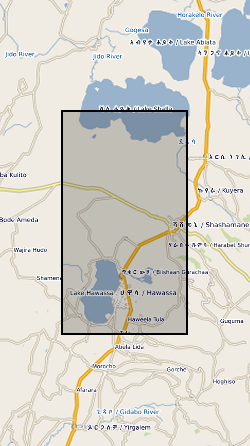
This dataset contains the locations and other pertinent information for 122 well-constrained seismic events that occurred on or near Corbetti between February 2016 and September 2017. These locations were derived from data collected on 37 broadband seismometers deployed as part of the RiftVolc project. The data were originally published in Lavayssière, A., et al. "Local seismicity near the actively deforming Corbetti volcano in the Main Ethiopian Rift." Journal of Volcanology and Geothermal Research (2019). https://doi.org/10.1016/j.jvolgeores.2019.06.008
-
Seismic data from volcano observatories and from laboratory experiments, plus description of novel methods of data analysis and synchronization. 6 papers - Library for volcanology and rock physics data analysis; An innovative platform to allow collaborative research in rock physics and volcanology; Trends in the aggregated rate of pre-eruptive seismicity at Kilauea volcano, Hawaii; Convergence of the frequency-size distribution of global earthquakes; Method for predictability of volcanic eruptions from monitored seismic data and; Evaluation of the failure forecasting model for volcanic eruptions.
-
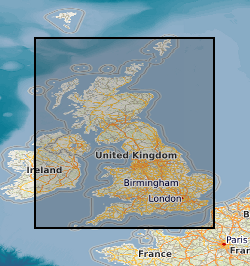
This dataset contains recorded earthquakes in the UK from 1970 onwards. The catalogue covers the offshore areas as well as mainland UK, covering an area between 10 degrees West to 4 degrees East and 49 degrees to 62 degrees North. This includes all of Ireland and some earthquakes in northern France that were also felt in the UK. Accuracies of magnitude, location, and origin time vary with the instrumental measurements. Variations are largely a function of the seismograph station coverage, which has been improving up to the present day.
-
Data deposited are connected to paper "Investigating the use of 3-D full-waveform inversion to characterize the host rock at a geological disposal site" by H.L.M. Bentham, J.V. Morgan and D.A. Angus, in Geophysical Journal International, https://doi.org/10.1093/gji/ggy386. The geological model consists of fractured granite host rock (depth: 800 - 1200 m) with an Excavated disturbed Zone (EdZ) that could be formed through constructing the tunnels. In addition to the host rock, the model contains sedimentary overburden (depth: 0 - 800 m) and a fractured granite bed rock (depth: 1200 - 2000 m). Seismic velocities and rock properties were assigned through analogues e.g. Olkiluoto, Finland. Full data description and method found in Bentham et al. (2018). Data deposited are for Case 1 (no tunnels) and Case 3 (with multiple tunnels). For each case, the following 3D volumes are available: * Seismic data * True velocity model (used to generate seismic data) * Starting velocity model for full-waveform inversion Additionally, the following ASCII files are available to aid the use of the seismic and velocity models: * Locations of sources at surface (Case 1, 2 and 3 except where survey area is reduced [see GJI article]) * Locations of receivers at surface and below tunnels (Case 1, 2 and 3) * Locations of receiver at surface and above and below tunnels (Case 3 only)