 NERC Data Catalogue Service
Metals
Type of resources
Available actions
Topics
Keywords
Contact for the resource
Provided by
Years
Formats
Representation types
Update frequencies
Scale
-

The potential for leakage of CO2 from a storage reservoir into the overlying marine sediments and into the water column and the impacts on benthic ecosystems are major challenges The potential for leakage of CO2 from a storage reservoir into the overlying marine sediments and into the water column and the impacts on benthic ecosystems are major challenges associated with Carbon Capture and Storage (CCS) in subseafloor reservoirs. To investigate the consequences of CO2 leakage for the marine environment, a field-scale controlled CO2 release experiment was conducted in shallow, unconsolidated marine sediments. Changes of the chemical composition of the sediments, their pore waters and overlying water column were monitored before, during and up to 1 year after the 37-day long CO2 release from May 2012 to May 2013. In particular this focused on changes in the solid phase (physical properties, major and minor elemental composition, inorganic and organic carbon content), the pore water chemical composition (cations, anions, nutrients and the carbonate system parameters total alkalinity, dissolved inorganic carbon and isotopic signature of DIC) and the water column chemical composition (oxygen, nutrients, total alkalinity and dissolved inorganic carbon). This dataset was collected by the National Oceanography Centre (NOC) under the program QICS (Quantifying and monitoring environmental impacts of geological carbon storage) which was funded by the Natural Environment Research Council (NERC), with support from the Scottish Government. The results are contained in an Excel file. QICS project website: www.bgs.ac.uk/qics/home.html. Lichtschlag et al. (2014) Effect of a controlled sub-seabed release of CO2 on the biogeochemistry of shallow marine sediments, their pore waters, and the overlying water column, http://www.sciencedirect.com/science/article/pii/S1750583614003090 (doi:10.1016/j.ijggc.2014.10.008).
-
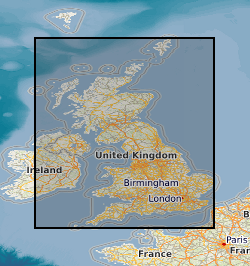
This dataset comprises reports and associated project documentation from mineral exploration projects undertaken in Great Britain under the Mineral Exploration and Investigation Grants Act (MEIGA). The collection includes reports from approximately 267 mineral exploration projects carried out between 1971 and 1984 by external mineral exploration companies under grant funding administered by the Department of Trade and Industry (DTI). The Mineral Exploration and Investment Grants Act 1972 was introduced to stimulate mineral exploration in Great Britain through the provision of government grants for exploration targeting non-ferrous metals, fluorspar, barium minerals and potash. The programme contributed to a number of significant mineral discoveries and developments, including the Gairloch copper–zinc–gold deposit, the Parys Mountain copper–lead–zinc deposit and the Hemerdon tungsten–tin deposit. The MEIGA report collection includes geological and exploration data generated during project activities, including geological mapping, soil and stream sediment geochemistry, geophysical survey data, drill core logs and analytical assay data. The reports are held by the British Geological Survey (BGS) on behalf of the former Department of Trade and Industry. All reports are held in hard copy and are available on open file. Associated geological materials collected during the programme are available for viewing through the BGS core store booking process. Spatial information on MEIGA project areas is available through BGS GeoIndex. The scanned reports are available on the UK Critical Minerals Intelligence Centre (CMIC) website (with full text search capability), the National Geoscience Data Centre Deposited Data Search and spatially through the BGS Geoindex.
-
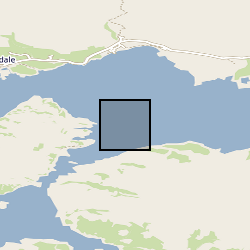
Geochemical data for the upper 300cm of giant piston core MD04-2832. Core MD04-2832 was collected from the middle basin of Loch Sunart a fjord on the west coast of Scotland from the research vessel Marion Dufresne on the 15th of June 2004. This data resource includes five data sheets: (1) Geochemical data, (2) Bulk radiocarbon, (3) ICP-MS, (4) FRUITS and (5) Age Model. 1. Geochemical data sheet includes Bulk elemental data (Organic Carbon, Nitrogen, C/N ratio, N/C ratio), Isotopic data (δ13C and ẟ15N), Biomarker data (Alkanes, Fatty Acids, GDGT's) and thermosgravimetric data (% labile, recalcitrant and refractory organic matter). 2. Bulk Radiocarbon data sheet includes bulk radiocarbon data for ten sediment samples presented as % modern, 14C Age (years BP), ẟ14C and Δ14C. 3. ICP-MS data sheet includes metal data associated with mining activities within the fjords catchment. Data includes Zinc (Zn), Lead (Pb), Copper (Cu), Barium (Ba), Aluminium (Al) and elemental ratios of these metal normalized with Al concentrations. 4. The FRUITS data sheet contains the outputs from the FRUITS Bayesian isotopic mixing model (Fernandes et al., 2014) used to constrain the source (terrestrial vs marine) of the organic carbon found at site MD04-2832. The model used bulk elemental ratios (N/C), Isotopic (δ13C and ẟ15N) and biomarker data (GDGT - BIT Index) to calculate the terrestrial and marine OC fraction from each downcore sample. 5. The Age Model datasheet contains the age model produced by the BACON software package (Blaauw and Christen, 2011). The age model was developed with a combination of shell/foraminifera radiocarbon dates and radiometric dating (210Pb and 137Cs). Further details on the data can be found in Smeaton, C., Cui, X., Bianchi, T.S., Cage, A.G., Howe J.A., Austin, W.E.N., (2021), The evolution of a coastal carbon store over the last millennium, Quaternary Science Reviews.