
SEG-Y
Type of resources
Available actions
Topics
Keywords
Contact for the resource
Provided by
Years
Formats
Representation types
Update frequencies
Scale
Resolution
-
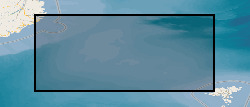
Faeroe-Iceland Ridge Experiment (FIRE) was acquired by BIRPS (the British Institutions Reflection Profiling Syndicate). The primary target was anomalously thick oceanic crust along the Faeroe-Iceland Ridge that was possibly formed by underplating due to the proximity of the Iceland hotspot. FIRE made use of 110 land seismometers to record the airgun shots. The resulting velocity models and reflector geometries have proved critical in interpretation of variations in crustal volumes along the ridge. The data were recorded to 23 s two-way time.
-
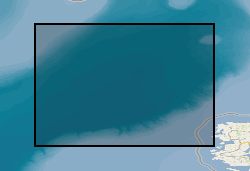
WESTLINE was acquired by BIRPS (the British Institutions Reflection Profiling Syndicate). The seismic data image the faulted conjugate margins of the Rockall Trough and the intrabasinal sediments. The seismic data were shot to 18 s two-way time along a single 450 km-long transect.
-
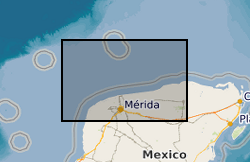
BIRPS (the British Institutions Reflection Profiling Syndicate) acquired almost 650 km of offshore seismic data and 300 km of onshore seismic data over the Chicxulub impact crater. The data were recorded to 18 s two-way time.
-
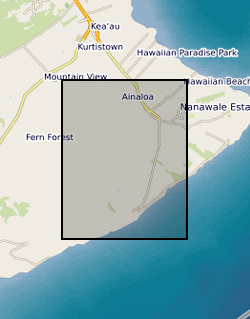
The data is from four three-component broadband seismometers deployed along the lower east rift zone during the 2018 Kilauea eruption for four months. The instruments were deployed towards the end of July before the eruption ceased, and were placed in locations that would complement the existing USGS seismic network.
-

The data result from a cooperative project between the U.K., U.S., Germany, Spain, and Portugal. This 2013 seismic experiment surveyed the Galicia Bank region off Iberia with the RV Marcus Langseth. The goal was to collect 3D seismic reflection data specifically designed to reveal the 3D structures generated during the rifting of the Galicia margin and to study the rifted continental to oceanic crust transition in the Deep Galicia Margin west of Spain. The data correspond to a 68.5km x 20 km volume down to 14s TWT with a nominal inline spacing of 6.25 m and a cross-line spacing of 50m, including 800 inlines and 5500 cross-lines. References Bayrakci, G., Minshull, T.A., Sawyer, D.S., Reston, T.J., Klaeschen, D., Papenberg, C., Ranero, C., Bull, J.M., Davy, R.G., Shillington, D.J., Perez-Gussinye, M., and Morgan, J.K., 2016, Fault-controlled hydration of the upper mantle during continental rifting, Nature Geoscience, vol. 9, p. 3840388, DOI: 10.1038/ngeo2671. URL: http://www.nature.com/ngeo/journal/v9/n5/full/ngeo2671.html R. G. Davy, J. V. Morgan, T. A. Minshull, G. Bayrakci, J. M. Bull, D. Klaeschen, T. J. Reston, D. S. Sawyer, G. Lymer, D. Cresswell, 2017. Resolving the fine-scale velocity structure of continental hyperextension at the Deep Galicia Margin using full-waveform inversion. Geophysical Journal International, Volume 212, Issue 1, 1 January 2018, Pages 244–263, https://doi.org/10.1093/gji/ggx415 C.Nur Schuba, Gary G.Gray, Julia K.Morgan, Dale S.Sawyer, Donna J. Shillington, Tim J.Reston, Jonathan M.Bull, Brian E.Jordan, 2018. A low-angle detachment fault revealed: Three-dimensional images of the S-reflector fault zone along the Galicia passive margin. Earth and Planetary Science Letters, 492, (2018), 232–238, https://doi.org/10.1016/j.epsl.2018.04.012
-

The 3D multi channel seismic data were acquired as part of a collaborative investigation into models of magmatic segmentation between the Scripps Institute of Oceanography and BIRPS (the British Institutions Reflection Profiling Syndicate). The 3D EPR (East Pacific Rise) ARAD (Anatomy of a Ridge Axis Discontinuity) EW9707 cruise was undertaken in September and October 1997 to provide both refelction and wide-angle seismic data for the study of the overlapping spreading centre (OSC) at 9 degrees 3 minutes N on the East Pacific Rise. The data were acquired with a single source and a single streamer with a nominal line spacing of 100 m. The 3D-EPR ARAD survey was a joint NERC/NSF (US National Science Foundation) funded project and the copyright for this survey is held jointly. Reference: Bazin, S. Harding, AJ. et al. (2001) Three-dimensional shallow crustal emplacement at the 9 degree 03 minute N overlapping spreading center on the East Pacific Rise, Journal of Geophysical Research.
-
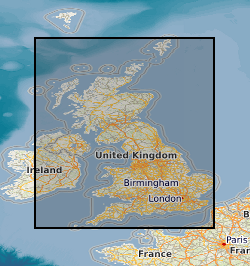
The UK Onshore Geophysical Library was established in 1994 in conjunction with the Department of Trade and Industry (DTI) and the UK Onshore Operators Group (UKOOG). The Library manages the archive and official release of seismic data recorded over landward areas of the UK. By agreement with the DTI and HMSO, the Library operates as a registered charity, funded by revenues raised from data sales and donations, with the long term objective of bringing all available UK onshore digital seismic data into secure archival storage, whilst providing efficient access to all interested parties. BGS has access to the data at cost of copying only for science budget work. Data index on the BGS Geoscience Data Index.
-
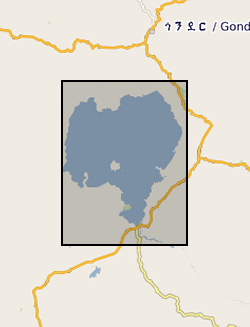
This is Seistec Boomer data acquired on Lake Tana. If not familiar with this variant of standard Boomer, it has a line-in-cone.
-
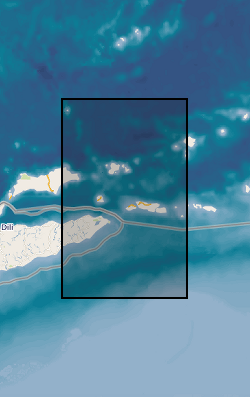
In 1992, BIRPS joined with the Indonesian Marine Geological Institute to record two long multichannel normal-incidence reflection profiles, one of which is DAMAR, the other TIMOR, and one short profile (API) close to the volcano Gunung Api. The survey provides a modern analogue to tectonics hypothesized to have occurred across the Iapetus suture zone of northern England 450-400 Ma. The Banda Arc of Indonesia near the island of Timor is widely recognized as the premier example of the active subduction of continental crust and lithosphere beneath oceanic lithosphere. The crossing of a modern island arc and close passage to active volcanoes was intended to image reflections associated with magma in the crust and uppermost mantle.
-
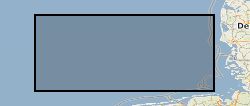
MONA LISA (Marine and Onshore North Sea Acquisition for Lithospheric Seismic Analysis) seismic data was acquired by BIRPS (the British Institutions Reflection Profiling Syndicate) across the Ringkobing-Fyn High of the central North Sea were designed to study the crust near a hypothesized Caledonian age triple junction associated with the colliding continental crust of Laurentia, Avalonia (Gondwanaland) and Baltica. The specific target was the eastward continuation of the Caledonian Front (Iapetus Suture), as previously recognised on NEC (North East Coast line), MOBIL (Measurements over Basins to Image Lithosphere), NSDP (North Sea Deep Profile) and BABEL (Baltic and Bothnian Echoes from the Lithosphere) profiles, in northern Europe. 1112 km of data were acquired, recorded to 26 s two-way time.