
Marine geology
Type of resources
Available actions
Topics
Keywords
Contact for the resource
Provided by
Years
Formats
Representation types
Update frequencies
Service types
Scale
Resolution
-
The SEA portal is managed by the BGS on behalf of DECC and provides free access to downloadable data, information and reports which have been produced through the SEA process. The Department of Trade and Industry (now DECC) began a sequence of sectoral SEAs of the implications of further licensing of the UK Continental Shelf (UKCS) for oil and gas exploration and production in 1999. The SEA Process subdivided the UKCS into eight areas shown; beginning in 2008, integrated Offshore Energy SEAs have been undertaken that cover the whole UKCS. An integral part of the SEA programme has been a series of research and monitoring surveys commissioned to acquire new data about the offshore environment and used to help inform the relevant SEAs. Many files can be downloaded directly from portal. Those that are too large to download can be ordered via the website for postal delivery from BGS.
-
This is a digital version of the paper based 1:1M scale Offshore Quaternary map, North and South sheets. Customers should be aware that, given the age of the paper based maps, the digital version is not quality assured and BGS can accept no liability for the information held on the digital map. In addition, published 1:250,000 Quaternary maps are available. These contain more detailed subdivision of the Quaternary succession. The original paper based map covers the UK Continental shelf. The paper map is symbolised using lithology and chronology. The lithological boundaries were compiled from the data published in the BGS 1:250,000 Quaternary Geology map series and from revised interpretation of core and borehole data. Core and borehole sites are commonly 5 to 20 km apart, thus the lithological divisions are generalised. The formations and sequences identified by BGS have been grouped into Quaternary age ranges. The geological codes assigned to the digital version of the map have been compiled using the key information held on the paper map. The LEX-ROCK style codes combine the lithology and chronology and have been subject to the standard BGS approval process.
-
The Quaternary deposits thickness dataset is a digital geological map across the bulk of the UK Continental Shelf (UKCS), for areas up to a water depth of 200m, which shows the thickness of the deposits over bedrock in three categories: <5 m, 5 - 50 m, and >50 m Quaternary cover. These depth bands were picked because they represent the horizons that have impact on offshore infrastructure deployment. The map is derived from (unpublished) BGS 1:1000000 scale Quaternary digital geological mapping. The map was produced in 2014 in collaboration with, and co-funded by, The Crown Estate as part of a wider commissioned project to assess seabed geological constraints on engineering infrastructure across the UKCS. The data are held by the BGS as an ESRI Shapefile.
-

This dataset is now superseded by Marine bedrock dataset (DiGRock250k) version 3. The BedRock data shows polygonal and selected linear geological information, sourced from published BGS 1:250 000 scale maps. Geological units are identified using BGS LEX-ROCK nomenclature that may differ from that on the printed maps. UK waters coverage is available with additional information from surrounding nations. The data is available in vector format. BGS licensing terms and conditions apply to external use of the data.
-
The NERC-funded QICS controlled CO2 release experiment (located offshore Oban, Scotland) mimics the formation of a new CO2 seep in the marine environment. At the site, CO2 is injected at an onshore well head, and a stainless steel pipe transports the CO2 under the seabed. Approximately 350 m offshore, the CO2 is released through a perforated screen into the 12 metres of overlying marine sediment, which is at approximately 10 metres water depth. During spring/summer 2012, 4.2 tonnes of CO2 was released at the QICS experimental site. CO2 bubbles emerged from the seafloor ~30m to the west of the site and individual plumes covered a total area of ~ 350m2. Bubble stream location was recording using audio (acoustic) and visual techniques (photography, video). Both techniques are useful for recording the general location of plumes. However their 2D nature made it hard to characterise individual plumes and their exact locations. The QICS1 experiment included 200 deployments/recoveries of instruments, collection of 1,300 samples, and installation of 1600 m of cable and placement of 24 cages of indicator species on the seabed. In order to aid planning and operation during potential further experiments at the site it would be beneficial to utilise a robust and accurate method of recording the locations of equipment, samples and CO2 bubble streams. In this review, the four main types of submarine geolocation technologies are detailed and compared, and best available models (as of June 2013) are detailed. Grant number: UKCCSRC-C1-31.
-
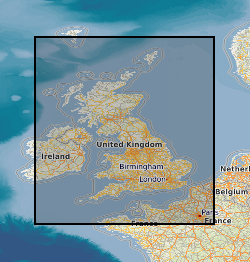
The Bedrock summary lithologies dataset is digital geological map across the bulk of the UK Continental Shelf (UKCS), for areas up to a water depth of 200 m, which groups the bedrock lithologies (rock types) into classes based on similar engineering geology characteristics. The map is derived from the 1:250 000 scale digital bedrock map of the UKCS (BGS Offshore Bedrock 250k), which is available separately from BGS. The map was produced in 2014 in collaboration with, and co-funded by, The Crown Estate as part of a wider commissioned project to assess seabed geological constraints on engineering infrastructure across the UKCS. The divisions on the map combine the bedrock formations into 8 classes (with several subdivisions) of similar strength and lithological variability, each with a 'Category' title that summarises their main lithological character: Class1 – Igneous; Class 2 - Tertiary Sandstone and Limestone; Class 2.5 - Tertiary Sandstone and Limestone Interbedded; Class 3 - Tertiary Mudstone; Class 4 - Mesozoic Sandstone and Limestone; Class 4.5 - Mesozoic Sandstone and Limestone Interbedded; Class 5 - Mesozoic Mudstone; Class 6 – Chalk; Class 7 – Metamorphic; Class 8 - Palaeozoic Sedimentary. The data are held by the BGS as an ESRI Shapefile.
-
The Marine Reports Archive held by BGS includes published and unpublished reports created by BGS and acquired from various sources. The reports which date from the 1960s onwards include the BGS Marine Reports Series, Marine Commercial reports and associated records, Palaeontology reports and other specialist reports. Examples of report types are data acquisition and processing reports, site investigation reports and interpretation reports. The reports are primarily for the UKCS (United Kingdom Continental Shelf). The coverage of some reports is the entire UKCS whilst other have only regional or very localised extent. The reports are applicable to a wide range of uses including environmental, geotechnical, geophysical and geological studies.
-
Data from the British Geological Survey's GeoIndex Offshore theme are made available for viewing here. GeoIndex is a website that allows users to search for information about BGS data collections covering the UK and other areas world wide. Access is free, the interface is easy to use, and it has been developed to enable users to check coverage of different types of data and find out some background information about the data. More detailed information can be obtained by further enquiry via the web site: www.bgs.ac.uk/geoindex.
-
BGS offshore marine products are made available to view via this web map service. The 1:250 000 scale offshore geological maps in the UTM series (Universal Transverse Mercator projection) are available digitally as two themes: bedrock geology (DigRock250) and sea-bed sediments (DigSBS250). Marine Hard Substrate Dataset (DiGHardSubstrate250k) is also made available via this service.
-
Data from the British Geological Survey's GeoIndex Offshore (cultural data) theme are made available for viewing here. GeoIndex is a website that allows users to search for information about BGS data collections covering the UK and other areas world wide. Access is free, the interface is easy to use, and it has been developed to enable users to check coverage of different types of data and find out some background information about the data. More detailed information can be obtained by further enquiry via the web site: www.bgs.ac.uk/geoindex.