
Gypsum
Type of resources
Available actions
Topics
Keywords
Contact for the resource
Provided by
Years
Formats
Representation types
Update frequencies
Scale
-
Fluid flow in the Earth: the influence of dehydration reactions and stress (NERC grant NE/J008303/1)

Text files of physical parameters controlled or measured in rock heating and deformation experiments; jpg and tif files of optical and electron microscope images of experimental products; xome xlsx spreadsheets related to data interpretation.
-

This dataset provides an assessment of the potential for dissolution within a geological deposit. Ground dissolution occurs when certain types of rock contain layers of material that may dissolve if they get wet. This can cause underground cavities to develop. These cavities reduce support to the ground above and can lead to a collapse of overlying rocks. Dissolution of soluble rocks produces landforms and features collectively known as 'karst'. Britain has four main types of soluble or 'karstic' rocks; limestone, chalk, gypsum and salt, each with a different character and associated potential hazards. Engineering problems associated with these karstic rocks include subsidence, sinkhole formation, uneven rock-head and reduced rock-mass strength. Sinkhole formation and subsidence has the potential to cause damage to buildings and infrastructure. Complete Great Britain national coverage is available. The storage formats of the data are ESRI Shapefiles and MapInfo but other formats can be supplied. The GeoSure data sets and reports from the British Geological Survey provide information about potential ground movement or subsidence in a helpful and user-friendly format. The reports can help inform planning decisions and indicate causes of subsidence. The methodology is based on 'BGS Geology' (Digital Map) and expert knowledge of the behaviour of the formations so defined.
-
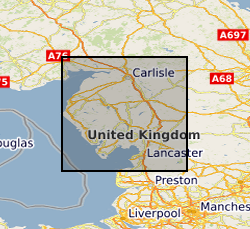
The collection comprises photographic half plate black & white negative and 35mm colour transparency copies of plans of mine workings for haematite, gypsum, limestone, baryte and metalliferous minerals for Cumbria dating from 1872 onwards. The plans were originally deposited in compliance with the Coal and Metalliferous Mines Regulation acts. The original plans are currently held by Cumbria County Record Office on behalf of the Health & Safety Executive (HSE) and total about 1240 plans. No digital index is available but a paper catalogue is provided by the Health & Safety Executive. As the collection relates to plans of mines abandoned after the 1872 Act, the holdings are fairly complete after this date. Note however, that the Metalliferous Mines Act originally applied only to mines employing more than 12 men, (eg. some limestone mines). Coal Authority may hold non-coal mine plans not covered by Mine Abandonment Plan collection.
-

Data detailing the distribution and nature of springs in the UK. Originally constructed to hold data relating to karst geohazards, the database has been extended from the Limestone, Chalk, Gypsum and Salt areas to include all springs. The data is stored locally as ArcView shape and .dbf files (for information gathered through the karst geohazards - ground movements: dissolution project) with the data copied to ORACLE. Data can also be input directly into ORACLE. The database is an important component part of the karst geohazards database.
-

**NO LONGER EXISTS**Data detailing the distribution and severity of dissolution (karst) features throughout the UK. The data is stored locally as ArcView shape files with associated database information detailing the severity of the karst geohazards ranked from 1-5. The dataset is under construction, but will eventually cover the karst geohazards related to Limestone, Chalk, Gypsum and Salt. Consistent data, but some variability depening on the age of the source digital maps.
-

The current database was developed to record Karst Geohazard information acquired as part of its onshore core and commissioned mapping programmes. Information held on the database includes details on stream sinks, sinkholes, natural cavities and associated building damage. The database is being compiled when staff and project funds are available to do the work. The dataset is currently updated on an irregular basis as new karst geohazard information is received from field surveys. Karst geohazard details observed and measured in the field are recorded on a standard proforma or digitally using the BGS•SIGMAmobile tablet computers or in the office via a GSD (Geological Spatial Database) to ensure consistency of information and to allow easy entry into the database. The database currently holds details of karst geohazards in: The limestone areas of the Mendip Hills, Bath, Bristol, Monmouth, Plymouth, Derbyshire Dome,and South Wales (North Crop), North Pennines (Malham to Hawes and Weardale: Rookhope to Cornriggs). The chalk of Southern England (especially in Dorset, and the Salisbury, Winchester, Andover, Basingstoke, Dorchester, Hungerford and Alresford, Worthing, South London (Leatherhead-Croydon-Bromley), Newbury, Maidenhead, Hemel Hempstead, St Albans, Hatfield. Jurassic limestone areas from Grantham to Stamford. Gypsum areas in Yorkshire, Cumbria and Darlington. Salt areas in Cheshire and Stafford (natural and brine extraction-induced sinkholes). The database is eventually intended to hold information on karst geohazards throughout Great Britain and about half of the country is now included.