
University of Manchester
Type of resources
Available actions
Topics
Keywords
Contact for the resource
Provided by
Years
Formats
Representation types
Update frequencies
status
Resolution
-
Seedlings were grown in soil collected from an experiment at Hambleton Forest, North Yorkshire. Soils originated from plots containing either Scots pine or birch monocultures, or a mixture of both species. In the lab, pairs of seedlings of birch and Scots pine were grown as monocultures and mixtures from each of the three plot treatments. The data represent the biomass, leaf C:N ratio and mycorrhizal status determined after 20 weeks. Full details about this dataset can be found at https://doi.org/10.5285/7991871e-382f-422f-b5b2-91b4f6d8598f
-
This dataset contains the location, dimension, and ecological characteristics of 492 gully blocks on Kinder Scout, an upland peatland in the UK. Stone and timber dams were installed in 2013-2014 as part of peatland restoration works on Kinder Scout. The survey was undertaken to determine the longer-term (7-8 years) evolution of gully blocks. Location data for dam points was collected using a differential GPS (dGPS). Field measurements of dam dimensions and vegetation were carried out. Some dam characteristics were derived using geospatial methods. Ancillary vegetation data are provided in a separate file to the main dam survey data and can be matched on the dam identification number. Full details about this dataset can be found at https://doi.org/10.5285/6ab9c89d-7ba1-4bc8-afc6-c2563f4ff49b
-
This dataset contains depth to water table measurements from ten experimental microcatchments (0.4-3.9 hectares) on Stalybridge Moor, an upland peatland in the Peak District, UK. The data extend from 2019 to 2022, covering a period before and after gully blocking took place in six microcatchments, with four microcatchment kept as a non-restored control. Monthly measurements from October-February, summer/autumn. Full details about this dataset can be found at https://doi.org/10.5285/e9ffe8aa-3c17-4f3a-a3e7-5ab3add0af07
-
These data show images recorded using a variety of methods of a model system of bacterial metal reduction. In all cases the bacteria grew from a pure culture of Geobacter sulfurreducens, and grew undisturbed on thin films of amorphous Fe oxyhydroxide – ferrihydrite. The different imaging methodologies have highlighted different features of this interaction. AFM shows the surface texture of the bacteria and ferrihydrite films; epifluorescence was used to allow counting of the cells at different time points from 0 to 12 days post inoculation (cell counts available in excel spreadsheet); and confocal imaging allow visualisation of the redox patterns surrounding cells and to identify areas of bioreduced Fe(II) (quantification of Fe(II) available in excel spreadsheet). The following data is included: 1. 9 x AFM images of Geobacter sulfurreducens bacteria growing on ferrihydrite films 2. 5 x epifluorescence images of Geobacter sulfurreducens bacteria growing on ferrihydrite films over time 3. spreadsheet bacterial counts associated with epifluorescence images 4. 7 x confocal images of Geobacter sulfurreducens bacteria growing on ferrihydrite films with redox green staining of appendages 5. 5 x example confocal images of Geobacter sulfurreducens bacteria growing on ferrihydrite films with Fe(II) highlighted by RhoNox-1 6. Spreadsheet of quanitfication of RhoNox intensity against bacteria and Fe co-location Data is presented which shows the formation of precious metal nanoparticles on the surface of geobacter sulfurreducens cells. The images were produced by CryoTEM. Full details of the experiment are available in this publication http://onlinelibrary.wiley.com/doi/10.1002/ppsc.201600073/full 7. Powerpoint presentation of TEM images of precious metal nanoparticles formed on the surface of Geobacter cells
-
Direct geological observations made during field work, tied to positional information collected by hand-held GPS.
-
The UK Government has set targets for the reduction of CO2 emissions of 80 % by 2050. Post-combustion capture of CO2 from power plants is key if we are to achieve these targets. Post-combustion CO2 capture is challenging due to the low concentration of CO2 in the waste stream and the presence of impurities (H2O, NOx, SOx, etc). Post-combustion capture adds energetic cost via the requirement to capture and compress the CO2. Amine-based scrubbing processes are being evaluated for post-combustion CO2 capture. This is a costly process, and the amines are corrosive. Other candidate technologies include physical adsorption into solid sorbents coupled with pressure-swing or temperature-swing adsorption/desorption. In principle this may lower the energy overhead, but the volume of sorbent required is extremely large, limiting the range of sensible materials. Membrane-based processes have potential advantages over the above. In particular, there are no losses due to heat required to regenerate and release CO2 from the spent sorbent or solvent, and the footprint for the technology and amount of material required is comparatively small. Here, we will develop advanced mixed matrix membranes (MMMs) technology utilising organic fillers, rather than inorganic fillers, that could be cost-effectively fitted to power plants to separate and capture CO2. There has been much research on inorganic-organic MMMs, using fillers such as zeolites and MOFs. However, it is challenging to achieve a homogeneous dispersion of the inorganic filler particles in the polymer matrix. This is exacerbated by the lack of compatibility between most fillers, which are frequently crystalline inorganic or metal-organic materials, and the membrane polymers, which are invariably amorphous and organic. We build therefore on our unique report of organic-organic MMM (Angew Chem Int Ed, 2013) , where excellent dispersion of the organic filler was found and there was good adhesion between the organic polymer and the organic filler, both of which are predominantly aromatic structures. We address this by bringing together two UK groups who have pioneered in the development of novel porous membranes (Budd) and new microporous organic materials (Adams, Cooper). Grant number: EP/M001342/1.
-
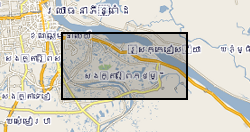
The dataset comprise hydrogeochemical, isotopic and environmental geophysics data from surface waters and groundwater and sediments from scientific boreholes drilled into arsenic-prone aquifers in the Mekong River Basin. The data is divided into 5 categories: Geophysical data Hydrogeochemical data Isotopic data Sedimentary data Outreach and Dissemination Publications to date - open access linkages The data pertain to samples obtained from northern Kandal province just south of Phnom Penh in Cambodia. The data were collected over the period 2013-2016. The hydrogeochemical data were obtained by one of more of (i) in situ analytical techniques; or (ii) instrumental geochemical techniques, notably IC, ICP-AES, ICP-MS and GC-MS in the Manchester Analytical Geochemistry Unit, University of Manchester following methods as described in Richards et al. (2015, 2017). The geophysical data were obtained as described in Uhlemann et al. (2017). The data were obtained as part of a project funded by NERC Standard Research Grant NE/J023833/1 the major purpose of which was to determine the extent to which surface derived organics may be driving arsenic mobilisation in shallow circum-Himalayan aquifers, an exemplar of which is norther Kandal Province's largely Holocene aquifers to which these data refer. The data were obtained and interpreted by the University of Manchester except as follows: environmental geophysics data were obtained and interpreted by Oliver Kuras and Sebastian Uhlemann of the British Geological Survey GTOM team; tritium data were generated by Jurgen Sultenfuss of the University of Bremen; oxygen and hydrogen isotope data by SUERC, East Kilbride and carbon-14 data by the NERC Radiocarbon Laboratory at East Kilbride.
-
Experimental mechanical data for single crystal shear experiments. Grant abstract: In 2011, NERC began a scoping exercise to develop a research programme based around deep Earth controls on the habitable planet. The result of this exercise was for NERC to commit substantial funding to support a programme entitled "Volatiles, Geodynamics and Solid Earth Controls on the Habitable Planet". This proposal is a direct response to that call. It is widely and generally accepted that volatiles - in particular water - strongly affect the properties that control the flow of rocks and minerals (their rheological properties). Indeed, experiments on low-pressure minerals such as quartz and olivine show that even small amounts of water can weaken a mineral - allowing it to flow faster - by as much as several orders of magnitude. This effect is known as hydrolytic weakening, and has been used to explain a wide range of fundamental Earth questions - including the origin of plate tectonics and why Earth and Venus are different. The effect of water and volatiles on the properties of mantle rocks and minerals is a central component of this NERC research programme. Indeed it forms the basis for one of the three main questions posed by the UK academic community, and supported by a number of international experts during the scoping process. The question is "What are the feedbacks between volatile fluxes and mantle convection through time?" Intuitively, one expects feedbacks between volatiles and mantle convection. For instance, one might envisage a scenario whereby the more water is subducted into the lower mantle, the more the mantle should weaken, allowing faster convection, which in turn results in even more water passing into the lower mantle, and so on. Of course this is a simplification since faster convection cools the mantle, slowing convection, and also increases the amount of volatiles removed from the mantle at mid-ocean ridges. Nevertheless, one can imagine many important feedbacks, some of which have been examined via simple models. In particular these models indicate a feedback between volatiles and convection that controls the distribution of water between the oceans and the mantle, and the amount topography created by the vertical movement of the mantle (known as dynamic topography). The scientists involved in the scoping exercise recognized this as a major scientific question, and one having potentially far reaching consequences for the Earth's surface and habitability. However, as is discussed in detail in the proposal, our understanding of how mantle rocks deform as a function of water content is remarkably limited, and in fact the effect of water on the majority of mantle minerals has never been measured. The effect of water on the flow properties of most mantle minerals is simply inferred from experiments on low-pressure minerals (olivine, pyroxenes and quartz). As argued in the proposal, one cannot simply extrapolate between different minerals and rocks because different minerals may react quite differently to water. Moreover, current research is now calling into question even the experimental results on olivine, making the issue even more pressing. We propose, therefore, a comprehensive campaign to quantify the effect of water on the rheological properties of all the major mantle minerals and rocks using a combination of new experiments and multi-physics simulation. In conjunction with 3D mantle convection models, this information will allow us to understand how the feedback between volatiles and mantle convection impacts on problems of Earth habitability, such as how ocean volumes and large-scale dynamic topography vary over time. This research thus addresses the aims and ambitions of the research programme head on, and indeed, is required for the success of the entire programme.
-
The mechanical data (confining and injection pressures) recorded during Vickers indentation experiments on samples of shale materials. These experiments were conducted on the I12 beamline, Diamond Light Source, Harwell as part of beamtime EE17606-1 between 31/01/18 and 05/02/18.
-
This dataset contains rainfall and runoff records, from pre- and post-restoration microcatchments (0.4-4 hectares), at two peatland sites in the Peak District, UK. Discharge data are provided as litres per second and rainfall data as millimetres. The Kinder Scout site contains 3 microcatchments with discharge records covering 2010-2021 at 10-minute timesteps. The Stalybridge site contains 10 microcatchments covering 2019-2022 at 5-minute timesteps. Different microcatchments had different restoration treatments, please refer to documentation for specific details. Full details about this dataset can be found at https://doi.org/10.5285/91cabe3d-877d-4fca-91a0-900cce793607