 NERC Data Catalogue Service
Digital data
Type of resources
Topics
Keywords
Contact for the resource
Provided by
Years
Formats
Representation types
Update frequencies
Scale
-
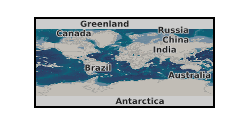
The BGS 3D scans store holds digital 3-dimensional scans of BGS palaeontological and petrological specimens. The data include 3-dimensional meshes and 2-dimensional images exported by the scanning hardware and software. Data are stored in software-independent 3D modelling formats such as .OBJ and .PLY. These scans are useful for research purposes, for example allowing members of the broader geoscience community to interactively view a particular specimen, and for publicising BGS specimen holdings.
-

This dataset provides digital spatial information on the location and distribution of metallic mineral occurrences in Wales at a scale of 1:50 000. While the broader term ‘mineral resources’ encompasses a wide range of geological materials, this dataset focuses solely on metallic minerals. These are defined in accordance with international mineral resource standards to include both geological characteristics and potential economic considerations. The dataset is based primarily on mapped geology, with limited assessment of economic viability, and is intended to show the distribution and extent of metallic mineral occurrences rather than potential extraction areas or mineral reserves. The Welsh Assembly Government recognised the importance of managing mineral resources at a national level to maintain an appropriate balance between mineral supply and demand. In response, the British Geological Survey (BGS) was commissioned in 2009 (contract 252/2009/09) to provide a comprehensive and accessible information base to support sustainable mineral resource management across the 25 Unitary and Mineral Planning Authorities of Wales. This work formed part of the National Minerals Map of Wales and Aggregate Safeguarding Map of Wales, funded through the Welsh Aggregate Levy Sustainability Fund and co-funded by the BGS Sustainable Mineral Solutions project. This metallic minerals dataset is a thematic subset of the wider Welsh mineral resources dataset and was derived using the same methodology. Data production was completed in 2010, with minor revisions to geometry and attributes undertaken in 2020. The dataset enables users to visualise broad patterns in the distribution of metallic mineral occurrences across Wales and to consider their spatial relationship with other land-use designations, infrastructure, environmental constraints and conservation data. It is suitable for regional-scale planning and safeguarding assessments but does not indicate economically viable reserves, designate extraction areas, or confer planning status. Only onshore mainland occurrences are included. The data quality varies spatially and reflects the availability and resolution of underlying geological mapping. The presence of a metallic mineral occurrence does not imply current working, planning permission, or economic viability. Point data for metallic mineral occurrences have historically been included within related resource mapping; however, occurrence-level information is more comprehensively represented in other BGS datasets, such as the BGS BritPits database of mines and quarries. This dataset should therefore be used as a regional-scale spatial planning and safeguarding tool rather than as a definitive inventory of all recorded metallic mineral sites in Wales.
-

This dataset provides digital spatial information on the location of mineral resources across the onshore area of the United Kingdom at a scale of 1:50 000. The term ‘mineral resources’ has a definition under international standards that includes both an economic and geological dimension. These data are based primarily on mapped geology with limited assessment of economics. Therefore, the term ‘mineral resources’ is used here in a broad sense. The dataset allows users to visualise the extent and distribution of mineral resources across the UK and to relate them to other forms of land-use (such as urban areas or designated environmentally sensitive areas) or to other factors (such as transport infrastructure and conservation information). The UK dataset has been created by integrating mineral resource datasets originally produced for England, Scotland and Wales through a series of commissioned and grant-funded projects led by the British Geological Survey (BGS) between 1994 and 2010. These national datasets were developed separately, using a consistent geological evidence base and interpretation approach, and have subsequently been harmonised and merged to support UK-wide online spatial delivery. The BGS Mineral Resource data does not determine mineral reserves and therefore does not denote potential areas of extraction. Only onshore, mainland mineral resources are included in the dataset. This dataset has been produced by the collation and interpretation of mineral resource data principally held by the British Geological Survey. The mineral resource data presented are based on the best available information but are not comprehensive and their quality is variable. The dataset should only be used to show a broad distribution of those mineral resources which may be of current or potential economic interest.
-

This dataset provides digital spatial information on the extent of planning permissions for the extraction of minerals across Great Britain. The dataset shows the extent of all known extant and non-extant mineral planning permissions, irrespective of their current planning or operational status. Permissions may include active, inactive and restored mineral workings and, in some cases, permitted but unworked mineral deposits. Planning permission areas represent locations where a commercial decision to extract mineral has been made and where a successful application has been granted through the provisions of Town and Country Planning legislation. The permitted mineral reserve may have been depleted to varying degrees. The dataset was compiled by the British Geological Survey (BGS) using data supplied primarily by Mineral Planning Authorities and supplemented by other available sources. Data were collected at different times between 1997 and 2007. As a result, the dataset represents a historic snapshot of planning permissions and is not fully complete or current. Where available, information on the planning status of permissions (for example valid or expired) is stored in the underlying database and may be accessed through attribute queries. Current planning permission data should be obtained directly from the relevant Mineral Planning Authority. This dataset is intended to support regional and national-scale understanding of the distribution of mineral planning permissions and should not be used as a definitive or current record of permitted mineral extraction.
-

This dataset provides a digital spatial representation of the Mineral Planning Authorities (MPAs) across the United Kingdom. Each polygon represents an administrative area responsible for mineral planning and regulation and is linked to the relevant onshore mineral resource maps and accompanying reports for that area. The Mineral Planning Authority areas broadly align with the administrative units used in the preparation of BGS mineral resource maps. In England and parts of South Wales, these maps were produced following a commission to BGS by the Office of the Deputy Prime Minister (now the Ministry of Housing, Communities and Local Government) through the research project Mineral resource information in support of national, regional and local planning. This work was completed in 2006 and resulted in a series of digitally generated mineral resource maps at a scale of 1:100 000, covering administrative areas across England and parts of South Wales. In Scotland, BGS was awarded funding from the Scottish Government Aggregates Levy Fund in 2007 to develop a comprehensive and accessible mineral resource information base for 18 local authorities within the Central Belt of Scotland. This work was co-funded through the BGS Sustainable Mineral Solutions project and was completed in March 2008. The project outputs included a guide to minerals information for the Central Belt and a series of digitally generated mineral resource maps at a scale of 1:100 000. In Wales, BGS was awarded funding from the Welsh Government-administered Aggregates Levy Sustainability Fund for Wales in 2009 to develop a comprehensive mineral resource information base covering Wales. The project was co-funded through the BGS Sustainable Mineral Solutions team, part of the Minerals and Waste Science Programme, and was led from the BGS Cardiff office. This work was completed in July 2010 and produced a series of six digitally generated mineral resource maps at a scale of 1:100 000, together with supporting mineral resource information for Wales. A primary objective of this work was to provide baseline mineral resource information in a consistent, updateable format to support mineral planning, including use in mineral development plan documents and regional spatial strategies. This Mineral Planning Authority spatial layer provides a framework for accessing these mineral resource maps and reports, supporting mineral planning, land-use decision making and resource management.
-
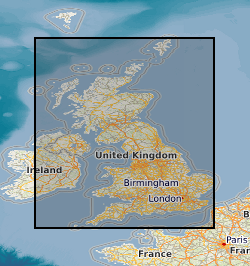
Data from onshore wells provided to BGS as part of an agreement with NSTA/OGA/DECC Digital data (includes, well logs, well reports and downhole data) for oil and gas exploration and appraisal wells drilled in the UK and held on behalf of the North Sea Transitory Authority (formerly the Oil & Gas Authority, formerly the Department of Energy and Climate Change). External data therefore BGS has no control on quality. Provided to OGA/DECC/BGS by oil companies as part of their obligations under licensing regulations, PON 9b regulations notice.
-
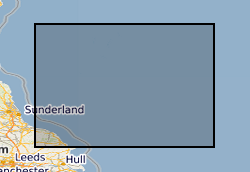
Reports, images, GIS and gridded products describing the Palaeozoic geology and conventional petroleum in and around the Mid North Sea High (Quadrants 25-44). Covering a large area of the Central North Sea from the Forth Approaches to the northern side of the Southern North Sea, the focus is on Devonian and Carboniferous rocks. The peer-reviewed products were produced for the 21CXRM Palaeozoic Project by BGS for DECC/OGA, Oil and Gas UK and oil company sponsors between November 2014 and May 2016, to improve regional digital datasets and knowledge of the underexplored Palaeozoic petroleum systems, and to stimulate exploration. The petroleum systems analysis was based on new interpretations of extensive well, seismic, gravity-magnetic and source rock datasets, integrated with petrophysical studies, basin modelling and UK onshore knowledge. Released data were collated and interpreted, and interpretations of unreleased data were included with agreement of the data owners. Unreleased raw data is excluded, as is the UK Government Seismic data released in 2016. The datasets are applicable for use at scales between 1:750,000 to 1: 3,000,000.
-
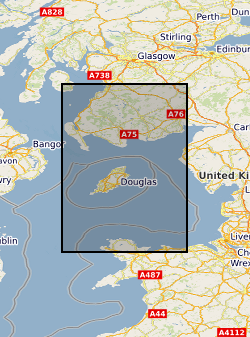
Reports, images, GIS and gridded products describing the Palaeozoic geology and conventional petroleum systems of parts of the UK offshore from the greater Irish Sea area. Carboniferous rocks were the focus in areas from the Firth of Clyde, Solway Basin, Manx-Peel Basin to the East Irish Sea Basin and surrounding areas (Quadrants 110-126). The peer-reviewed products were produced for the 21CXRM Palaeozoic Project by BGS for DECC/OGA, Oil and Gas UK and oil company sponsors between November 2014 and May 2016, to improve regional digital datasets and knowledge of the underexplored Palaeozoic petroleum systems, and to stimulate exploration. The petroleum systems analysis was based on new interpretations of well, seismic, gravity-magnetic and source rock datasets, integrated with petrophysical studies, basin modelling and UK onshore knowledge. Released data were collated and interpreted, and interpretations of unreleased data were included with agreement of the data owners. Unreleased raw data is excluded. The datasets are applicable for use at scales between 1: 750,000 to 1: 3,000,000.
-
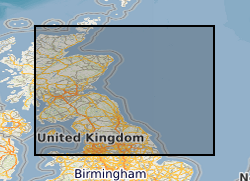
GIS versions of a regional structural summary and palaeogeographic reconstructions describing the Palaeozoic geology of parts of the UK offshore and onshore, plus a set of summary posters and a summary presentation capturing the conventional petroleum systems. Devonian and Carboniferous rocks are the focus in and around the Mid North Sea High, Central North Sea, the Moray Firth and Orcadian Basin. In the greater Irish Sea area, Carboniferous rocks are described. The peer-reviewed products were produced for the 21CXRM Palaeozoic Project by BGS for DECC/OGA, Oil and Gas UK and oil company sponsors between November 2014 and May 2016, to improve regional digital datasets and knowledge of the underexplored Palaeozoic petroleum systems, and to stimulate exploration. The petroleum systems analysis was based on new interpretations of extensive well, seismic, gravity-magnetic and source rock datasets, integrated with petrophysical studies, basin modelling and UK onshore knowledge. Released data were collated and interpreted, and interpretations of unreleased data were included with agreement of the data owners. Unreleased raw data is excluded, as is the UK Government Seismic data released in 2016. The GIS layers were digitised from figures prepared for project reports and are applicable for use at scales between 1:1,000,000 and 1:3,000,000.
-

Reports, images, GIS and gridded products describing the Palaeozoic geology and conventional petroleum systems of parts of the UK offshore from the Orcadian Basin, Moray Firth to northern Forth Approaches (Quadrants 6-21). Devonian and Carboniferous rocks are the focus. The peer-reviewed products were produced for the 21CXRM Palaeozoic Project by BGS for DECC/OGA, Oil and Gas UK and oil company sponsors between November 2014 and May 2016, to improve regional digital datasets and knowledge of the underexplored Palaeozoic petroleum systems, and to stimulate exploration. The petroleum systems analysis was based on new interpretations of extensive well, seismic, gravity-magnetic and source rock datasets, integrated with petrophysical studies, basin modelling and UK onshore knowledge. Released data were collated and interpreted, and interpretations of unreleased data were included with agreement of the data owners. Unreleased raw data is excluded, as is the UK Government Seismic data released in 2016. The datasets are applicable for use at scales between 1:750,000 to 1: 3,000,000