 NERC Data Catalogue Service
Marine sediments
Type of resources
Available actions
Topics
Keywords
Contact for the resource
Provided by
Years
Formats
Representation types
Update frequencies
Service types
Scale
-

These data are described fully in the following publication: S. Barker, J. Chen, X. Gong, L. Jonkers, G. Knorr, D. Thornalley, Icebergs not the trigger for North Atlantic cold events. Nature 520, 333-336 (2015). The dataset comprises planktonic foraminiferal census counts and counts of Ice Rafted Debris (IRD) from sediment samples collected during Ocean Drilling Programme (OPD) leg 162 site 983 in the Northeast Atlantic (60.48°N, 23.68°W, 1,984m water depth). The data were collected between Jan 2011 and Dec 2014. The dataset includes values every 2cm from 2 to 51.5m (metres composite depth) along the ship-board splice. Before counts were performed bulk sediments were spun overnight in distilled water, before sieving over a 63µm sieve. All portions were dried, weighed and stored. Counts were performed on a split of the >150µm fraction. The dataset can be employed to assess changes in surface temperature and presence of rafted ice over the site over the past 440kyr or so. This information is of interest to paleoceanographers and paleoclimatologists. The dataset was created and interpreted by a team at Cardiff University, with additional input from other authors named in the publication. The dataset is complete except for one or two samples that were not received from the repository.
-

Sediment % coarse fraction (>63 microns), and abundance of fish teeth in coarse fraction. 2016 has been a record breaking year in terms of global temperatures. The high temperatures have resulted from a combination of elevated atmospheric pCO2 coupled with the global impacts of a strong El Nino event. There are many important components of the climate system, and the El Nino phenomenon demonstrates the importance of the low latitude Pacific Ocean. The warm pool of water in the western Pacific Ocean has not always had the same characteristics as it has today, and it has been proposed that its evolution over the past 15 million years has had a major impact on global climate. In order to understand how the warm pool might respond to future climate change, it is important to understand the drivers behind its past evolution. Did it respond simply to the changing shape of ocean basins through time? Or did it respond to other components of the climate system, such as sea level or latitudinal temperature gradients? The changes in warm pool structure may also have impacted the biological ecosystems, and hence the cycling of carbon in this region. The carbon cycle is another key component of the Earth's climate system. Understanding the causes and consequences of these long-term changes in the Pacific warm pool requires a two-pronged approach, using modelling in conjunction with proxy records for different parts of the climate system. This proposal aims to generate some key records of past high latitude temperature and ice volume that can be directly compared with changes in the warm pool through time. These records will be derived from geochemical analyses of microscopic marine fossils collected by the International Ocean Discovery Program (IODP).
-
The global carbon cycle - how much carbon is stored in its interconnected reservoirs (ocean, atmosphere, plants and soils on land, sediments in the deep sea) as well as the fluxes between them, is not set in stone. We know from the geological record that the concentration of CO2 in the atmosphere has varied enormously over the last few hundred million years. The chemistry of the oceans also gradually changes with time and the organisms living within it adjust and evolve. As a result, how the carbon cycle 'works', and particularly, how well (or not) atmospheric CO2 (and hence climate) is regulated in the face of disruption, also changes on geological time-scales. This creates challenges to understanding the causes and consequences of past global warming like events and how such events can be related to potential future changes. Sediments slowly accumulating in the deep ocean reflect what goes on around and above them, both chemically and biologically. Of particular interest to us is the mineral calcium carbonate (CaCO3), which can be found in the form of chalk and limestone rocks today. CaCO3 is used by certain marine organisms for constructing shells and skeletons. Hence, the amount of CaCO3 that in buried in sediments tells us something about ancient organisms and ecosystems. In addition, CaCO3 will start dissolving in seawater if the conditions too are acidic or the depth (and thus pressure) too great. How much CaCO3 originally created by organisms at the surface that escapes dissolution in sediments below to be buried and preserved in the geological record can thus tell us something about the chemistry, depth, and when data from many locations is available, the circulation of the ocean in the past. Looking for subtle changes in the composition of ancient mud in the hundreds and hundreds of meters of sediment core recovered from the ocean floor by drill ship would be a little like looking for a needle in a haystack. However, Nature has been kind to us and the transition from white-colored sediments rich in the carbonate shells of dead marine organisms to clays devoid of carbonate is easy to spot. This point represents a fine balance between the amount of shell material being deposited to the sediments and the rate of dissolution of these shells. Hence, this reflects a certain relationship between surface ocean biological processes and deep ocean chemistry and circulation. Any change in these factors will drive sediments rich in CaCO3 or devoid of any trace of carbonate secreting organisms. In this project we will compile the records from many hundreds of different sediment cores that have been recovered since the 1960s. Will identify the 'balance point' in these cores (if one exists) and combine all the confirmation to reconstruct how this balance point has changed in depth and time in the different ocean basins. Because the age of the sediments in some cores extends back to well before the white cliffs of Dover were deposited, we will start our record there. The interpretation of our curve will not be entirely straightforward, because multiple environmental influences all push and pull the balance point in different directions and with different strengths. We will therefore also use a computer model representation of the Earth's climate and oceans, its carbon cycle, ocean chemistry, and the composition of sediments in the deep sea. We will use this model to explore how the different aspects of the global carbon cycle affect the balance point, and by comparing model predictions to our new curve, interpret how the carbon cycling and the sensitivity of atmospheric pCO2 (and hence climate) to being perturbed by massive greenhouse gas release, has changed over the past 150 million years. Hence we will not only be able to answer the question: do we live in a particularly 'lucky' or 'unlucky' time in terms of how sensitive our global environment is burning fossil fuels, but we will know why.
-

The Seabed Geology 10k: Bristol Channel is a digital geological map portraying the distribution of the different geological substrate units (either of bedrock or unlithified deposits) present on the seabed at a 1:10 000 scale. Additionally, to the Seabed Substrate layer, this dataset also includes i) a Geomorphology layer, revealing the presence and distribution of seabed morphological and geomorphological features and ii) a Structural Geology layer, that delineates the principal structural features observed at rockhead. The bedrock geology is divided into seven stratigraphical units: Pembroke Limestone Group (PEMB); Mercia Mudstone Group (MMG); Penarth Group (PNG); the Lias Groups' St Mary’s Well Bay (STM), Lavernock Shales (LVN) and the Porthkerry (PO) members; and the Inferior Oolite Group (INO). The Lexicon code of the stratigraphical units is provided in parentheses, as defined in the ‘BGS Lexicon of Named Rock Units’. The superficial deposits mapped are comprised of only marine sediments that were classified based on their grain size. However, Folk classification was not used to define the sediment classes. The sediments are divided into Gravel (V); Sand and Gravel (XSG); Sand (S); Sand and Mud (XSM); Mud (M); and Gravel, Sand and Mud (XVSM). The RCS code of the stratigraphical units is provided in parentheses, as defined in the ‘BGS Rock Classification Scheme’.
-
The thermal state of marine sediments controls a range of potential dehydration reactions as sediments are subducted. In thick sediment sections it is possible that reactions that would normally occur within a subduction zone start offshore of the deformation front. This scenario may be occurring at the Sumatra subduction zone (e.g. Geersen et al., 2013; Huepers et al., 2017). We have investigated this possibility by modelling the thermal and depth history of sediments offshore Sumatra. We have used a range of different assumptions about how the sediments decompact with depth, as well as testing the dependence on the seismic velocities used for depth conversion of the horizons.
-

The BGS Predictive Seabed Sediments UK v1 dataset includes digital maps of seabed sediment (SBS) composition across the UK Continental Shelf (UKCS). The dataset includes one classified SBS map (Folk sediment class; vector), and three percentage-sediment maps (rasters) giving the proportions of gravel, sand, and mud. The dataset is generated using a machine learning algorithm known as a Distributional Random Forest (DRF). The model uses input data to predictively classify what seabed sediments are most likely to be the dominant sediment present. It does so, using more than 38,000 seabed sediment samples (collated from various sources) with measurements of the proportion of mud, sand and gravel from locations across the study area. The predictions are constrained against covariate variables that are known to influence which sediment is most likely to occur. These include bathymetry data morphometric derivatives (at multiple spatial scales), as well as hydrodynamic data layers (currents and tidal). The dataset was reviewed via a qualitative assessment (QA) protocol by subject-area experts (e.g. contrasting with previous mapping, and local examples of higher-resolution data and mapping), and following methodological improvements based on this feedback, updated SBS map products were prepared. The dataset is presented at a national-scale, with a spatial resolution of approximately 110m, covering the UKCS (slightly modified UKCS area based on data availability).
-

This Offshore Quaternary dataset shows the distribution of interpreted lithostratigraphic units within the shallow subsurface. Large areas of the UK offshore are covered, at a scale of 1:250 000. This dataset was originally published between 1984 and 1992, as a series of paper map sheets. This is the first time that the Quaternary Geology 1:250 000 maps have been made available in digital format. Information from the original map sheets have been included in the attribute fields in this dataset, including a lithological description for each formation. Additional data has also been provided where it was deemed to add value. The BGS lexicon code for each formation has been supplied, so users can research any formation of interest. The maximum and minimum age of each formation, in a variety of formats, has also been added. This key information was sourced from Stoker et al (2011). Our understanding of the Quaternary lithostratigraphy is evolving due to the increased data collection associated with renewable energy development. However, no formal update of the regional lithostratigraphic framework has been completed at time of release. This dataset therefore reflects the understanding at the time of original publication. Inaccuracies in the dataset may have since been resolved and the level of uncertainty regarding the age or character of a formation may have changed. Nonetheless, this dataset contains valuable information, and this digital version will help facilitate access to this for users.
-

Data are either (1) depths and spacings between stylolites and faults within Unit IV, (2) images from IODP drill core image logs of the locations of samples observed, (3) photomicrographs and flatbed thin section scans of thin sections cut from samples, (4) SEM BSE or EDS data collected at Cardiff University. These data form the basis of: Leah et al. "Brittle-ductile strain localisation and weakening in pelagic sediments seaward of the Hikurangi margin, New Zealand", Tectonics, Submitted. Images and data from samples collected at IODP Expedition 375 Site U1520 (38°58.1532'S, 179°7.9112'E, 3522.1 mbsl). This is just seaward (east) of the trench of the Hikurangi Margin, New Zealand.
-
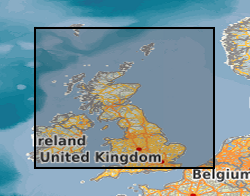
The concentrations of up to 30 trace elements in approximately 9,000 sea-bed samples from the UK Continental Shelf were determined by BGS using a variety of analytical techniques. In some cases samples were tested using more than one method. The analyses were carried out on freeze-dried samples of the sand and mud fractions of the samples. The data are stored as part of the National Geoscience Data Centre (NGDC) and the Marine Environmental Data and Information Network (MEDIN) Data Archive Centre (DAC) for Geology and Geophysics. Data are delivered via the BGS Offshore GeoIndex www.bgs.ac.uk/GeoIndex/offshore.htm geochemical layers. References: Stevenson, A G (2001) Metal concentrations in marine sediments around Scotland: a baseline for environmental studies, Elsevier Science; Stevenson, A G et al (1995) The geochemistry of sea-bed sediments of the United Kingdom Continental Shelf : the North Sea, Hebrides and West Shetland shelves, and the Malin-Hebrides sea area (http://nora.nerc.ac.uk/507899/).
-
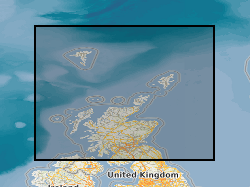
Results of geotechnical testing carried out, at various depth intervals, on shallow cores or boreholes collected by BGS from the UK Continental Shelf (UKCS). The bulk of the data north of 56N are in digital form and result from testing carried out onboard survey vessels using hand-held test equipment (penetrometers and shear vanes). These values are averaged for each test interval, and are expressed in kilopascals (kPa). There are approximately 6,000 test results in the dataset. Some more detailed test information, in non-digital and report form, is held for selected sites. For most sites where digital data are not available, geological descriptions of core material contain semi-quantitative information on the stiffness of the material. Geotechnical knowledge is required to understand and interpret the results if they are to be used as a basis for engineering studies. Core material is managed as part of the BGS materials collection and is available for examination, testing or subsampling. The data are stored as part of the National Geoscience Data Centre (NGDC) and the Marine Environmental Data and Information Network (MEDIN) Data Archive Centre (DAC) for geology and geophysics. Data are delivered via the 'Offshore samples: geotechnical data' layer on the BGS GeoIndex. Reference: Fannin, NGT. (1989) Offshore Investigations 1966-87. British Geological Survey Technical Report WB/89/2, British Geological Survey.