
Marine surveys
Type of resources
Available actions
Topics
Keywords
Contact for the resource
Provided by
Years
Formats
Representation types
Update frequencies
Service types
Scale
-
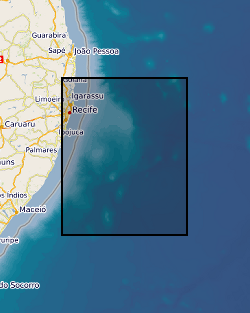
The dataset consists of: (1) Listing of full site survey package of geophysical data held in the IODP Data Bank in support of proposal 864. Details of how to obtain existing freely available or commercial proprietary data are included. (2) Final version of Full Science Proposal 864, which contains: description and illustrations of the regional stratigraphy of Pernambuco Plateau, as interpreted by the Virtual Site Survey project; site summary sheets for all proposed drill sites based on the Virtual Site Survey. (3) A complete list of all deliverables associated with this project is provided in the Data Archiving Report.
-
The Marine Reports Archive held by BGS includes published and unpublished reports created by BGS and acquired from various sources. The reports which date from the 1960s onwards include the BGS Marine Reports Series, Marine Commercial reports and associated records, Palaeontology reports and other specialist reports. Examples of report types are data acquisition and processing reports, site investigation reports and interpretation reports. The reports are primarily for the UKCS (United Kingdom Continental Shelf). The coverage of some reports is the entire UKCS whilst other have only regional or very localised extent. The reports are applicable to a wide range of uses including environmental, geotechnical, geophysical and geological studies.
-
The Marine Maps and Chart Archive held by BGS contains maps created by BGS (the majority of which result from BGS offshore mapping projects) and also maps acquired from various other sources (e.g. UK Hydrographic Office and MCA Civil Hydrography Programme survey charts). The maps which date from the 1960s onwards are very variable in subject type and scale ranging from survey navigation to geological interpretation. The maps are primarily for the UKCS (United Kingdom Continental Shelf). The coverage of some map types is the entire UKCS whilst other have only regional or localised extent. The maps which are a mix of paper and digital are applicable to a wide range of uses including environmental, geotechnical, geophysical and geological studies. range of uses including environmental, geotechnical, geophysical and geological studies. Scanned maps can be viewed via the BGS maps portal http://www.bgs.ac.uk/data/maps.
-
[This metadata record has been superseded, see http://data.bgs.ac.uk/id/dataHolding/13480158] This document data set contains paper copies of selected geophysical borehole logs made from the master data set held by the BGS National Geological Records Centre (NGRC) at Keyworth. These have been made for interpretation. Most data are within the UK onshore area; although there are some UK near-shore and offshore (North Sea, Irish Sea) and foreign data. Most data were acquired for commercial hydrocarbon exploration and subsequently provided to BGS for use on specific projects. Some data were acquired by BGS and other public-sector bodies for research purposes (e.g. geothermal energy). The documents are dyeline prints or plain-paper photocopies. They are stored folded in boxes, approx 20 logs per box, approx 500 boxes. There are some duplicates. Only a sub-set of the available borehole logs have been copied, usually for deep boreholes or boreholes of special significance in the interpretation of seismic data. Mostly concentrated in areas prospective for coal, oil and gas.
-

This Web service provides layers containing offshore digital mapping datasets compiled by the British Geological Survey which have coverage across the UK Continental Shelf (UKCS), mostly at scales smaller than 1:250 000. It provides view and download services for the following datasets: - BGS Offshore Bedrock 250k - BGS Seabed Sediments 250k (including the Marine Hard Substrate Dataset) - BGS Offshore Quaternary 250k - 1:1 000 000 scale geological factor map: bedrock summary lithology - 1:1 000 000 scale geological factor map: Quaternary deposit summary lithology - 1:1 000 000 scale geological factor map: Quaternary deposit thickness - BGS Predictive Seabed Sediments (UK) For more information, contact BGS Marine Enquiries (offshoredata@bgs.ac.uk).
-

Corrected and smoothed ship gravity, magnetics and bathymetry data acquired by various commercial and academic bodies. Provided to BGS for various reasons. May be available for distribution.
-
The Marine Photographs Archive held by BGS includes photographs of hydrocarbon well and (non-hydrocarbon) marine boreholes, cores and other samples. There are also photographs of the seabed and survey operations. The photos are primarily for the UKCS (United Kingdom Continental Shelf) and surrounding areas and date from the 1970s onwards. The photographs, which are a mix of prints, negatives and digital are applicable to a wide range of uses including environmental, geotechnical and geological studies. There are also some x-rays of cores.
-
The British Geological Survey hold a collection of data recorded during marine geophysical surveys which includes digital data and analogue records. These data result from approximately 350,000 line kilometres of multi-instrument geophysical survey lines. The dataset includes seismic, sonar, magnetic, gravity, echo sounder, multibeam bathymetry and navigation data. The seismic data are mainly airgun, sparker, boomer and pinger data. Most of the data were collected by BGS, but the collection also includes some third party data. The data are primarily from the UKCS (United Kingdom Continental Shelf). The data are stored within the National Geoscience Data Centre (NGDC) as the Marine Environmental Data and Information Network (MEDIN) Data Archive Centre (DAC) for Geology and Geophysics. The majority of legacy geophysical paper records are available as scanned images. Other records can be scanned on request. Older records are of variable quality. Data not yet available online, including digital SEG-Y data, are available on request from enquiries@bgs.ac.uk. The data are applicable to a wide range of uses including environmental, geotechnical, geophysical and geological studies. For more information, refer to Fannin, N. G. T. (1989) Offshore Investigations 1966-87. British Geological Survey Technical Report WB/89/2, British Geological Survey.
-

Corrected and smoothed ship gravity, magnetics and bathymetry data acquired by MOD Hydrographic Office for which BGS acts as agent. May be available for distribution subject to Hydrographic Office approval.
-
The concentrations of up to 30 trace elements in approximately 9,000 sea-bed samples from the UK Continental Shelf were determined by BGS using a variety of analytical techniques. In some cases samples were tested using more than one method. The analyses were carried out on freeze-dried samples of the sand and mud fractions of the samples. The data are stored as part of the National Geoscience Data Centre (NGDC) and the Marine Environmental Data and Information Network (MEDIN) Data Archive Centre (DAC) for Geology and Geophysics. Data are delivered via the BGS Offshore GeoIndex www.bgs.ac.uk/GeoIndex/offshore.htm geochemical layers. References: Stevenson, A G (2001) Metal concentrations in marine sediments around Scotland: a baseline for environmental studies, Elsevier Science; Stevenson, A G et al (1995) The geochemistry of sea-bed sediments of the United Kingdom Continental Shelf : the North Sea, Hebrides and West Shetland shelves, and the Malin-Hebrides sea area (http://nora.nerc.ac.uk/507899/).