 NERC Data Catalogue Service
Geochemical data
Type of resources
Available actions
Topics
Keywords
Contact for the resource
Provided by
Years
Formats
Representation types
Update frequencies
Service types
Scale
-
Organic and inorganic data extracted from core material spanning over a large area of the Baltic basin (Kostovo-13, Grotlingbo-1, File Haidar-1, Boda Hamn-1, Hamnudden-1, Finngrundet-1, Barstad-2 and Bernstorp-1). Organic data include concentrations in pristane, phytane, phenanthrene, methylphenanthrene and arylisoprenoids. Inorganic data include iron speciation data, concentrations in Fe, Al, P, U, Mo, V, total organic C, and C isotope ratios.
-
Includes XRF elemental abundance data, LECO data, organic geochemical data (GC-MS), and os-isotope and associated Re and Os abundance data. Geographical area - primarily France (Paris and Voncontian Basin), UK (Yorkshire coast), and Japan (Toyora area, Yamaguchi Prefecture). Also includes globally distributed palaeotemperature data.
-
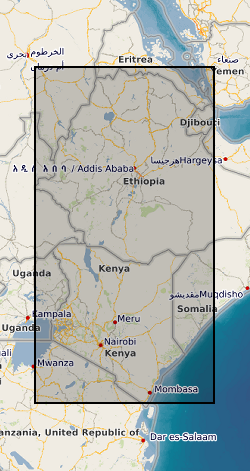
Digitized GIS geological and geochemical datasets taken from maps and reports as part of BGS Overseas Development Research in 1980-90s.
-

The dataset includes whole rock geochemical data collected by X-Ray Fluorescence (XRF), and geochemical analyses of glass and plagioclase microlites collected by electron probe microanalysis (EPMA) at the University of Edinburgh. The samples are volcanic basalt to basaltic andesite and were collected from the Fuego volcano, Guatemala, between 2012 and 2025. The XRF data were produced by the XRF facility in the School of Geosciences at the University of Edinburgh and the EPMA data were collected by Amelia Bain on a Cameca micro-probe in the School of Geosciences.
-
Series of water/rock and water/mineral interaction experiments at a range of temperatures and pressures. Most experimental runs now held in Excel spreadsheets. All runs held as paper records in the laboratory. Analytical results also held in Excel format. Kinetic information held in Access database for a range of minerals. Also have several reference datasets in Hypercard and End Note.
-
Isotope analysis data. Project details: The continental crust is our only archive of Earth history; not just of the crust itself but of the hydrosphere, atmosphere and biosphere, and of the deep Earth through its interactions with the crust. This archive, like the rock record itself, is incomplete and much effort is focused on interrogating the crust to gain a clearer and more complete picture of Earth history. The continental rock record is episodic with, for example, ages of igneous crystallization, metamorphism, continental margins, and seawater and atmospheric proxies distributed about a series of peaks and troughs that in part correspond with the cycle of supercontinent assembly and dispersal. At the core of the debate is what these well-established peaks of ages in the geological record represent and how they develop. The peaks of ages correspond with periods of global assembly of continents to form supercontinents. The project will address whether the peaks of ages are primary features associated with supercontinent assembly or break up, or they are they secondary features representing greater preservation potential at the times of supercontinent assembly. Our work will focus on the Rodinian supercontinent cycle, which extends from initiation of convergent plate interaction around 1.7 Ga, to continental collision at 1.1-1.0 Ga during the Grenville orogeny, to final breakup of the supercontinent by 0.54 Ga. Detrital zircons from sedimentary units throughout the supercontinent cycle provide a record of the magmatic activity for which the igneous rocks are often no longer preserved. We will determine (i) the ages ranges of magmatic activity preserved in the sedimentary rocks in the 600 Ma pre-collision phase, and (ii) how and when the distinctive Grenville peak of ages developed by comparing the zircon record from samples pre-, syn- and post- Rodinian supercontinent assembly with estimated volumes of magma and numbers of zircons produced during the same interval. This will differentiate primary generation processes from secondary processes, constraining when the dominant age peak developed, the tectonic processes that operated, and hence the method by which it developed. The wider implications of when the continental crust formed are considerable. Studies of continental growth continue to uncritically assume that the geological and isotopic record provide insight into processes of crust formation. Until it can be established whether the record is the outcome of generational or preservational processes, or a combination of both, then drawing conclusions on this fundamental question in the Earth Sciences are premature. If the record is a preservational record then this impacts on understanding continental growth through time and on secondary questions of how the crustal record is used to unravel the temporal evolution of the hydrosphere and biosphere, and the distribution of mineral deposits.
-

Data generated by a range of scientific projects, including: UK Geoenergy Observatories in Glasgow & Cheshire: UK future energy monitoring and testing, Cardiff Urban Observatory: monitoring geothermal heat recovery and storage project, Seismic monitoring: a network of more than 100+ seismograph stations, River Thames ground water monitoring. BGS collect data from sensors located throughout the UK and beyond.
-

The main aim of the project is to determine the shrinkage and swelling properties of UK clays and mudrocks and to investigate the relationships between them. Thus leading to a better understanding of the shrink/swell behaviour for the user community. Dataset contains geotechnical, physical, mineralogical and geochemical data.
-
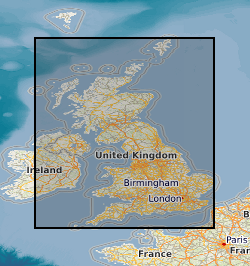
The BGS Geochemical Baseline Survey of the Environment (G-BASE) was the national strategic geochemical mapping programme in Great Britain. The project set out to establish the chemistry of the surface environment by the collection and analysis of stream sediment, stream water and soil samples. Beginning in the late 1960s in northern Scotland and moving southwards across the country, the primary focus was mineral exploration, however, the project quickly developed to address important environmental concerns. The final G-BASE samples were collected in southern England in 2014. The outputs from the G-BASE project provide an invaluable, systematic baseline of geochemical information for Great Britain, serving as a marker of the state of the environment against which to measure future change. The routine collection of regional soil samples was introduced in 1986 in areas of poor drainage density, with an average sample density of one site per 2 square kilometres. Urban soil sampling commenced in 1991, with an average density of four samples per square kilometres, for the urban areas of Belfast, Cardiff, Corby, Coventry, Derby, Doncaster, Glasgow, Hull, Ipswich, Leicester, Lincoln, Manchester, Mansfield, Northampton, Nottingham, Peterborough, Scunthorpe, Sheffield, Swansea, Stoke, Telford, Wolverhampton and York. Topsoil samples were collected between depths of 5 cm and 20 cm, and were sieved through a 2 mm mesh and milled to less than 150 microns. The data include XRF and direct-reading optical emission spectrometry (DR-OES) analyses for some or all of the following elements: Ag, As, Ba, Bi, Br, Ca, Cd, Ce, Co, Cr, Cs, Cu, Fe, Ga, Ge, Hf, I, K, La, Mg, Mn, Mo, Nb, Ni, P, Pb, Rb, Sb, Sc, Se, Se, Sn, Sr, Ta, Te, Th, Ti, Tl, U, V, W, Y, Zn and Zr. Loss on Ignition (LOI) and pH (in a slurry of 0.01 M CaCl2) were also routinely determined on 50% of regional and all urban samples. For more information about accessing these samples and their analytical results, contact BGS Enquiries (enquries@bgs.ac.uk).
-
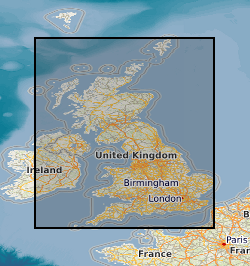
The BGS Geochemical Baseline Survey of the Environment (G-BASE) was the national strategic geochemical mapping programme in Great Britain. The project set out to establish the chemistry of the surface environment by the collection and analysis of stream sediment, stream water and soil samples. Beginning in the late 1960s in northern Scotland and moving southwards across the country, the primary focus was mineral exploration, however, the project quickly developed to address important environmental concerns. The final G-BASE samples were collected in southern England in 2014. The outputs from the G-BASE project provide an invaluable, systematic baseline of geochemical information for Great Britain, serving as a marker of the state of the environment against which to measure future change. Deep soil samples (also known as profile soil samples) were taken from depths of between 35 cm and 50 cm at densities of 1 sample per two square kilometres (rural / regional areas) and 4 samples per square kilometre (urban areas). The G-BASE profile soils were generally sieved to 150 microns before analysis and determined by XRF for some or all of: Ag, As, Ba, Bi, Br, Ca, Cd, Ce, Co, Cr, Cs, Cu, Fe, Ga, Ge, Hf, I, K, La, Mg, Mn, Mo, Nb, Ni, P, Pb, Rb, Sb, Sc, Se, Se, Sn, Sr, Ta, Te, Th, Ti, Tl, U, V, W, Y, Zn and Zr. Since 2003, for both regional and urban sampling, deep soil samples and shallow soil samples were routinely collected from the same sites, but only the shallow soil samples were submitted for chemical analysis. The deep soil samples were archived in the National Geoscience Data Centre. For more information about accessing these samples and their analytical results, contact BGS Enquiries (enquries@bgs.ac.uk).