 NERC Data Catalogue Service
Soil sampling
Type of resources
Available actions
Topics
Keywords
Contact for the resource
Provided by
Years
Formats
Representation types
Update frequencies
Scale
-
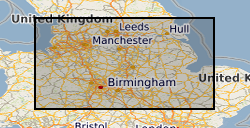
THIS DATASET HAS BEEN WITHDRAWN **This dataset was created for the "Britain beneath our feet" atlas using information extracted from the Geochemical Baseline Survey Of The Environment (G-BASE) For The UK . For Arsenic in soil data please see Geochemical Baseline Survey Of The Environment (G-BASE) For The UK ** Geochemical Baseline Survey Of The Environment (G-BASE) coverage for arsenic in soil. The G-BASE programme involves systematic sampling and the determination of chemical elements in samples of stream sediment, stream water and, locally, soil, to build up a picture of the surface chemistry of the UK. The average sample density for stream sediments and water is about one site per 1.5-2km square. Analytical precision is high with strict quality control to ensure countrywide consistency. Results have been standardised to ensure seamless joins between geochemical sampling campaigns. The data provide baseline information on the natural abundances of elements, against which anomalous values due to such factors as mineralisation and industrial contamination may be compared. Published in Britain beneath our feet atlas.
-
This dataset comprises soil and environmental data for multiple European grassland soil samples which had been subjected to multiple climatic disturbances in the laboratory (including temporal responses to heat, freezing, flooding and drought). The data include information on sample provenance (site, replicate, treatments imposed, site description, etc.); measured metrics including functional measures (greenhouse gas fluxes, enzymes) and soil properties; and accession numbers for molecular data submitted to the European Nucleotide Archive. Full details about this dataset can be found at https://doi.org/10.5285/4ff83dca-b836-469c-864d-69a34ff904f9
-
Data collected as part of the NERC funded Radioactivity and the Environment (RATE), Long-lived Radionuclides in the Surface Environment (Lo-RISE), research consortium.This data comes from the terrestrial workstream group based at the University of Manchester. The data consists of radionuclide measurements of environmental and biological samples including uranium (238), thorium (232) and radium (226), and soil subsurface and surface biota bioprospecting (plants and AM fungi). The data from this first dataset has been published in the following publication: Davies et al. (2018) Multiple environmental factors influence 238U, 232Th and 226Ra bioaccumulation in arbuscular mycorrhizal-associated plants. Science of the Total Environment 640-641:921-934.
-
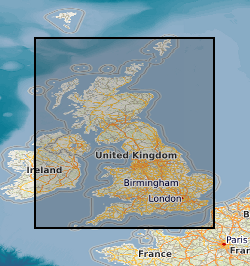
The map shows the location of excess sample materials from the G-BASE (Geochemical Baseline Survey Of The Environment) geochemistry project:- stream sediments, panned heavy mineral concentrates and soils are stored long term in the National Geoscience Data Centre and are available for use in other projects. The Minerals Programme (incorporating the Mineral Reconnaissance Programme) sample collection contains reference samples of drill cores, rocks, tills, soils, stream sediments and panned concentrates. These samples were collected in the period 1974 - to date in mineralised and potentially mineralised areas of the United Kingdom, principally in the northern and western Britain.
-

Tellus Soils For rural soils, samples were collected at an interval of approximately one site per 2 km2 (about one site every 500 acres). Samples were collected from two depths (20 cm and 50 cm) at each site to provide an insight into vertical geochemical variations. The samples were analysed by XRF for Ag, Al2O3, As, Ba, Bi, Br, CaO, Cd, Ce, Cl, Co, Cr, Cs, Cu, Fe2O3, Ga, Ge, Hf, I, In, K2O, La, MgO, MnO, Mo, Na2O, Nb, Nd, Ni, P2O5, Pb, Rb, SO3, Sb, Sc, Se, SiO2, Sm, Sn, Sr, Ta, Te, Th, Tl, TiO2, U, V, W, Y, Yb, Zn, Zr. Au, Pt and Pd were analysed by 10g Fire Assay SO4 by Aqua Regia ICP-MS pH and Loss on Ignition were also recorded. The surveys followed the British Geological Survey's Geochemical Baseline Survey of the Environment (G-BASE) standard developed over many years that defines the specifications for mapping the regional geochemistry of the United Kingdom. For further information visit the Tellus webpages: http://www.bgs.ac.uk/gsni/tellus/
-

Tellus Soil Sample Locations The Tellus geochemical survey began in the summer of 2004 and was completed in 2006. This was a multi-media survey of soil, stream-sediment and stream-water samples in rural and urban areas. The results will establish the natural geochemical baseline signature and any man-made overprint. Tellus Soils For rural soils, samples were collected at an interval of approximately one site per 2 km2 (about one site every 500 acres). Samples were collected from two depths (20 cm and 50 cm) at each site to provide an insight into vertical geochemical variations. The samples were analysed by XRF for Ag, Al2O3, As, Ba, Bi, Br, CaO, Cd, Ce, Cl, Co, Cr, Cs, Cu, Fe2O3, Ga, Ge, Hf, I, In, K2O, La, MgO, MnO, Mo, Na2O, Nb, Nd, Ni, P2O5, Pb, Rb, SO3, Sb, Sc, Se, SiO2, Sm, Sn, Sr, Ta, Te, Th, Tl, TiO2, U, V, W, Y, Yb, Zn, Zr. Au, Pt and Pd were analysed by 10g Fire Assay SO4 by Aqua Regia ICP-MS pH and Loss on Ignition were also recorded. The surveys followed the British Geological Survey's Geochemical Baseline Survey of the Environment (G-BASE) standard developed over many years that defines the specifications for mapping the regional geochemistry of the United Kingdom. For further information visit the Tellus webpages: http://www.bgs.ac.uk/gsni/tellus/
-

Tellus Survey 2005-2006 The Tellus geochemical survey began in the summer of 2004 and was completed in 2006. This was a multi-media survey of soil, stream-sediment and stream-water samples in rural and urban areas. The results will establish the natural geochemical baseline signature and any man-made overprint. Tellus Soils For rural soils, samples were collected at an interval of approximately one site per 2 km2 (about one site every 500 acres). Samples were collected from two depths (20 cm and 50 cm) at each site to provide an insight into vertical geochemical variations. The samples were analysed by XRF for Ag, Al2O3, As, Ba, Bi, Br, CaO, Cd, Ce, Cl, Co, Cr, Cs, Cu, Fe2O3, Ga, Ge, Hf, I, In, K2O, La, MgO, MnO, Mo, Na2O, Nb, Nd, Ni, P2O5, Pb, Rb, SO3, Sb, Sc, Se, SiO2, Sm, Sn, Sr, Ta, Te, Th, Tl, TiO2, U, V, W, Y, Yb, Zn, Zr. Au, Pt and Pd were analysed by 10g Fire Assay SO4 by Aqua Regia ICP-MS pH and Loss on Ignition were also recorded. Tellus Drainage The drainage dataset contains stream waters and stream sediment analysis and are a combination of two surveys. The first, the G-Base survey, was carried out between 1994 and 1996 in the west of Northern Ireland. In 2005 and 2006 a second survey was carried out as part of the Tellus project in the areas not covered by the original survey. Stream waters The G-Base samples (1994-1996) were analysed for the following anions and fluid parameters: Bicarbonate, Chloride, Fluoride, Nitrate, Sulphate, Dissolved Organic Carbon, Conductivity, pH. Samples were analysed for the tracer elements Ag, Al, Al, As, B, Ba, Be, Ca, Cd, Ce, Co, Cr, Cu, Fe, K, La, Li, Mg, Mn, Mo, Na, Ni, P, Pb, Rb, Sb, Se, Si, Sr, Tl, U V, Y, Zn, Zn, Zr. The Tellus samples (2005-2006) were analysed for the following anions and fluid parameters: Bicarbonate, Bromide, Chloride, Fluoride, Nitrate, Nitrite, Orthophosphate, Sulphate, Dissolved Organic Carbon, Alkalinity, Conductivity, pH. Samples were analysed for the trace elements Ag, Al, As, Au, B, Ba, Be, Bi, Ca, Cd, Co, Cr, Cs, Cu, Fe, Hg, Ho, K, La, Li, Mg, Mo, Mn, Na, Ni, P, Pb, Pd, Pt, Rb, Rh, Sb, Se, Si, Sn, Sr, Th, Tl, U, V, Y, Zn, Zr. Stream sediments The G-Base samples (1994-1996) were analysed by XRF for Ag, As, Ba, Bi, CaO, Cd, Ce, Co, Cr, Cs, Cu, Fe, Ga, K2O, La, MnO, Mo, Nb, Ni, P2O5, Pb, Rb, Sb, Se, Sn, Sr, Th, TiO2, U, V, W, Y, Zn, Zr. Au, Pt and Pd were analysed by 10g Fire Assay. B was also analysed. The Tellus samples (2005-2006) were analysed by XRF for Al2O3, Ag, As, Ba, Bi, Br, CaO, Cd, Ce, Cl, Co, Cr, Cs, Cu, Fe2O3, Ga, Ge, Hf, I, In, K2O, La, MgO, MnO, Mo, Na2O, Nb, Nd, Ni, P2O5, Pb, Rb, S, Sb, Sc, Se, SiO2, Sm, Sn, SO3, Sr, Ta, Te, Th, TiO2, Tl, U, V, W, Y, Yb, Zn, Zr. Au, Pt and Pd were analysed by 10g Fire Assay. B was also analysed. The surveys followed the British Geological Survey's Geochemical Baseline Survey of the Environment (G-BASE) standard developed over many years that defines the specifications for mapping the regional geochemistry of the United Kingdom. For further information visit the Tellus webpages: http://www.bgs.ac.uk/gsni/tellus/
-
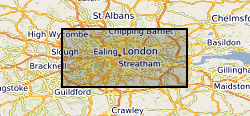
The London Earth data are part of the Geochemical Baseline Survey of the Environment (G-BASE) dataset, a nation-wide project to determine the distribution of chemical elements in the surface environment. London Earth focuses on the soil of the capital city, the limits of the survey being defined by the Greater London Authority (GLA) administrative boundary. Chemical elements have been determined by X-ray fluorescence spectrometry (XRFS) at the laboratories of the British Geological Survey (BGS) in Keyworth, Nottingham. These results are presented as a Microsoft Excel file.