
Carbon isotopes
Type of resources
Available actions
Topics
Keywords
Contact for the resource
Provided by
Years
Formats
Representation types
Update frequencies
-
Carbon Isotopic Signatures of Microbial Lipids in Geothermal Deposits: Elucidating Thermophilic Ecology. Lipid biomarkers were extracted and fractionated using standard methods. They were analysed via GC-MS for identification and determination of lipid distributions and abundances, and via GC-C-IRMS for carbon isotopic compositions. These methods, except for GC-IRMS, are available in in Kaur et al. (2014) DOI: 10.1007/s00792-014-0719-9. GC-IRMS methods are the same as those used in Badger et al. (2013) DOI: 10.1098/rsta.2013.0094 Sinters were collected from six active geothermal systems in the Taupo Volcanic Zone, North Island, New Zealand. Champagne Pool is located in the Waiotapu geothermal system. Opaheke Pool is located in the Reporoa Caldera situated approximately 6 km south of the Waiotapu geothermal field. These two fields are believed to be hydrologically linked (Nairn et al., 1994). Loop Road hot springs are situated in a flat, low-lying alluvial plain, a few kilometres south of Waiotapu. The Orakei Korako geothermal region is approximately 2 km2 in area and is located on the eastern margin of the Moroa Volcanic Centre. OK1 was sampled from the edge of Fred and Maggie Pool, whilst OK2 and OK3 were sampled from the outflow channel; OK1D originates from Diamond Geyser. The Sinter Flat area of Rotokawa is a cluster of geothermal springs on the northern margin of Lake Rotokawa that have created a flat terrace, mostly covered in hot pools. Further details of these sites are available in Kaur et al. (2014) DOI: 10.1007/s00792-014-0719-9.
-
Palynofacies, microcharcoal, clay mineralogical and carbon isotope mass spectrometry measurements from the Late Pliensbachian (934 – 918 mbs) of the Mochras core, Cardigan Bay Basin, NW Wales, UK. Data description: This dataset of the Mochras borehole contains palynofacies, microcharcoal, clay mineralogical data, bulk organic carbon-isotopes, TOC and CaCO3 data from the interval 934 – 918 mbs. This dataset extents the previously published dataset (951 – 934 mbs) deposited at: https://doi.org/10.5285/d6b7c567-49f0-44c7-a94c-e82fa17ff98e and discussed in the published paper by Hollaar et al. (2021) https://doi.org/10.1038/s43247-021-00307-3. The dataset is also linked to the XRF dataset https://doi.org/10.5285/c09e9908-6a21-43a8-bc5a-944f9eb8b97e Damaschke et al. (2021) which also covers the study interval of the here deposited dataset of the Mochras core. This dataset covers part of the Upper Margaritatus Zone in the Mochras core and covers the onset of the Late Pliensbachian positive carbon-isotope excursion. This data was collected, interpreted and analysed by Teuntje Hollaar, Claire Belcher, Stephen Hesselbo, and Jean-Fran?ois Deconinck. The dataset was created within the scope of the JET project (Integrated understanding of Early Jurassic Earth system and timescale) - https://gtr.ukri.org/projects?ref=NE%2FN018508%2F1. This project has received funding from the International Continental Scientific Drilling Programme (ICDP) and the UK Natural Environment Research Council (NERC).
-
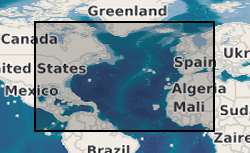
Analysed trace element data and radiocarbon data from five existing marine sediment cores from the NE Pacific margin (45-50N) that intersects the major water masses of the N Pacific, from a depth transect (700-3300m)
-
Organic carbon and total nitrogen isotope data for black shales and U-Pb data for apatite solutes from the Burzyan and Yurmatau groups in the Urals, Russia. For detailed discussion see Stüeken, E.E., Kuznetsov, A.B., Vasilyeva, I.M., Krupenin, M.T. and Bekker, A., 2021. Transient deep-water oxygenation recorded by rare Mesoproterozoic phosphorites, South Urals. Precambrian Research, 360, p.106242.
-
Organic carbon and bulk nitrogen isotope data for black shale samples from six different drill cores with varying distance from the major Zn ore body (HYC) in the McArthur basin. Data show trends with distance in d15N and C/N ratios. A more detailed interpretation is provided in Stüeken, E.E., Gregory, D.D., Mukherjee, I. and McGoldrick, P., 2021. Sedimentary exhalative venting of bioavailable nitrogen into the early ocean. Earth and Planetary Science Letters, 565, p.116963.
-
Organic carbon and bulk nitrogen isotope and abundance data and metal abundance data from the Mesoarchean VMS deposit and associated strata. Detailed information is given in Stueeken, E.E., Boocock, T.J., Robinson, A., Mikhail, S. and Johnson, B.W., 2021. Hydrothermal recycling of sedimentary ammonium into oceanic crust and the Archean ocean at 3.24 Ga. Geology, 49(7), pp.822-826.
-
Organic carbon, total nitrogen, total reduced sulfur and carbonate-associated sulfur isotopes measured on decarbonated stromatolite samples from the Paranoa Group (1.1 Ga).
-
Organic carbon and nitrogen and bulk nitrogen isotope data and metal abundance data for siltstones and shales of the Mesoproterozoic Diabaig Formation. For a detailed description and interpretation, see Stüeken, E.E. and Prave, A.R., 2022. Diagenetic nutrient supplies to the Proterozoic biosphere archived in divergent nitrogen isotopic ratios between kerogen and silicate minerals. Geobiology.
-
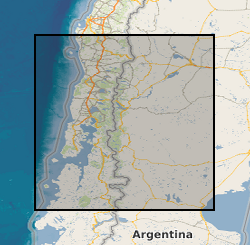
Stratigraphic and ecological data from tidal marsh sites in south-central Chile. Includes stratigraphy, diatom assemblages and radiocarbon dates from fossil cores and diatom assemblages from modern tidal marsh samples. Data were collected to provide evidence for multiple great earthquakes in south-central Chile, and enable the reconstruction of vertical land-level changes associated with these earthquakes. Data are from tidal marsh sites within the 1960 earthquake rupture area along the Chilean subduction zone (37.5 - 46 degrees South).
-
Noble gas and clumped methane data for samples from Anyue gas field, China (NERC Grant NE/T004452/1)
This dataset contains 6 tables covering all analytical data for samples collected from the Anyue gas field, central Sichuan Basin, China. Table 1 includes major gas species and stable carbon and hydrogen isotopes. Table 2 includes results for methane clumped isotopes and calculated methane formation temperatures of gas samples. Table 3 includes noble gas concentrations. Table 4 includes noble gas isotopic ratios. Table 5 includes parameters used in methane emission model and calculating total volume of methane emission. Table 6 includes gas composition and stable carbon and hydrogen isotope characteristics of major gases produced in the pyrolysis experiments (thermally equilibrated methane between 400~500 in theory) and working reference gas, and their methane clumped isotope values.