 NERC Data Catalogue Service
Natural resources
Type of resources
Available actions
Topics
Keywords
Contact for the resource
Provided by
Years
Formats
Representation types
Update frequencies
Service types
Scale
Resolution
-

PROJECT DETAILS ONLY - NO DATA. This proposal seeks to test the hypothesis that a mantle hotspot was responsible for generating boninite magmas in the Izu - Bonin - Mariana (IBM) arc during the middle Eocene. Reconstruction of the plate configuration at that time places the nascent IBM arc close to the location of the present Manus Basin, where a high 3He/4He hotspot has been identified through helium isotope data and tomographic imaging. This project will deliver: 3He/4He data for middle Eocene boninites to resolve the hotspot-present or hotspot-absent models for initiation of the IBM arc. Pb and O isotope ratios and U and Th concentration data to aid in constraining subduction and crustal contamination in the petrogenesis of these rocks. A framework for investigating Archean tectonics and volcanic massive sulphide deposits.
-
The dataset describes the potential of bedrock aquifers across Scotland to sustain various levels of borehole water supply, and the dominant groundwater flow type in each aquifer. There are five aquifer productivity classes: very high, high, moderate, low and very low, and three groundwater flow categories: significant intergranular flow; mixed fracture/intergranular flow; and fracture flow. The dataset is a tool to indicate the location and productivity of bedrock aquifers across Scotland. It may have several uses, including in policy analysis and development; to prioritise aquifer and site investigations; to inform planning decisions; and to improve awareness of groundwater in general. The complexity and heterogeneity of geological formations means that the dataset is only a guide. It is designed to be used at a scale of 1:100,000, and not to assess aquifer conditions at a single point. Latest version: Bedrock aquifer productivity Scotland version 2
-
The dataset describes the potential of superficial deposit aquifers across Scotland to sustain various levels of borehole water supply, based on four productivity classes: high; moderate to high; moderate; and a category to signify that a deposit is 'not a significant aquifer'. All superficial deposits aquifers in Scotland are assumed to have primarily intergranular groundwater flow. The dataset is a tool to indicate the location and productivity of superficial deposit aquifers across Scotland. It may have several uses, including in policy analysis and development; to prioritise aquifer and site investigations; to inform planning decisions; and to improve awareness of groundwater in general. The complexity and heterogeneity of geological formations means that the dataset is only a guide. It is designed to be used at a scale of 1:100,000, and not to assess aquifer conditions at a single point. Latest version : Superficial Aquifer Productivity Scotland version 2
-

This is a subset of the BGS World Mineral statistics database created as a contribution towards the EU funded GeoERA Mintell4EU project and feeds into the electronic European Minerals Yearbook (e-MYB). Data is provided for 40 European countries, namely: Albania, Austria, Belgium, Bosnia & Herzegovina, Bulgaria, Croatia, Cyprus, Czechia, Denmark, Estonia, Finland, France, Germany, Greece, Greenland, Hungary, Iceland, Ireland, Italy, Kosovo, Latvia, Lithuania, Luxembourg, Macedonia (TFYR of), Malta, Montenegro, Netherlands, Norway, Portugal, Poland, Romania, Slovakia, Slovenia, Serbia, Spain, Sweden, Switzerland, Turkey, Ukraine, and the United Kingdom. Data is provided from 2004 to (currently) 2019, but will update annually. Production and Trade (Imports and Exports) data is available, for countries where it is available.
-
A collection of seventy-eight maps covering thirteen National Grid 1:10 560 map sheets in the area of the Lothian oil shale field published between 1977 and 1982. Each map shows the extent of a single oil shale seam. An oil shale seam refers to a layer or deposit of sedimentary rock rich in organic material known as kerogen, which has the potential to yield hydrocarbons such as oil and gas through a process called pyrolysis. Oil shale is different from conventional oil and gas reservoirs in that the hydrocarbons are not present in a liquid or gaseous form but are trapped within the solid structure of the shale rock. The maps were published by the Institute of the Geological Sciences in Edinburgh (previous name for the British Geological Survey). This entry relates to hardcopy maps stored in the National Geological Data Centre (NGDC) and digital files produced by scanning them, as well as any derivative files. These maps are hard-copy paper records stored in the National Geoscience Data Centre (NGDC).
-
The dataset describes the relative vulnerability of groundwater to contamination across Scotland, by means of five relative classes ranging from 1 (lowest vulnerability) to 5 (highest vulnerability). The dataset is a screening tool that can be used to show the relative threat to groundwater quality from contamination across Scotland. It can provide guidance on the vulnerability of groundwater at a regional scale, highlighting areas at comparatively higher risk of groundwater contamination, and can help indicate the degree of specific site investigation required for a new development or activity. It is designed to be used at a scale of 1:100,000 and should be regarded as a tool to aid groundwater risk assessment rather than a complete solution. Latest version: Groundwater Vulnerability Scotland version 2
-
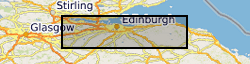
[This metadata record has been superseded, see http://data.bgs.ac.uk/id/dataHolding/13606289] Scanned images of 78 maps covering 13 National Grid 1:10,560 map areas in the area of the Lothian oil-shale field. Each map shows the extent of a single oil shale seam. They were published between 1977 and 1982 by the Institute of Geological Sciences in Edinburgh. The original maps were scanned in 2014.
-
This dataset for the UK, Jersey and Guernsey contains the Corine Land Cover (CLC) for 2012 (CLC2012). This dataset has been created from combining the 2012 land cover layers from the individual CLC files for the UK, Jersey and Guernsey. CLC is a dataset produced within the frame of the Initial Operations of the Copernicus programme (the European Earth monitoring programme previously known as GMES) on land monitoring. CLC provides consistent information on land cover and land cover changes across Europe. This inventory was initiated in 1985 (initial year 1990) and then established a time series of land cover information with updates in 2000 and 2006 the last one being the 2012 reference year. CLC products are based on the analysis of satellite images by national teams of participating countries - the EEA member and cooperating countries - following a standard methodology and nomenclature with the following base parameters: - 44 classes in the hierarchical three level Corine nomenclature; - Minimum mapping unit (MMU) for status layers is 25 hectares; - Minimum width of linear elements is 100 metres; The resulting national land cover inventories are further integrated into a seamless land cover map of Europe. Land cover and land use (LCLU) information is important not only for land change research, but also more broadly for the monitoring of environmental change, policy support, the creation of environmental indicators and reporting. CLC datasets provide important datasets supporting the implementation of key priority areas of the Environment Action Programmes of the European Union as protecting ecosystems, halting the loss of biological diversity, tracking the impacts of climate change, assessing developments in agriculture and implementing the EU Water Framework Directive, among others. Full details about this dataset can be found at https://doi.org/10.5285/32533dd6-7c1b-43e1-b892-e80d61a5ea1d
-

PROJECT DETAILS ONLY - NO DATA. One of the primary processes shaping Earth's surface is the stretching and eventual break-up of continents to create new ocean basins. The processes of stretching and heating of -150 km-thick plates, or layers of rock, are made evident at Earth's surface via earthquakes, volcanoes, hot springs, landslides and rockfalls that occur within and along the margins of narrow, long basins flanked by steep mountain ranges (e.g., East African rift, Gulf of Corinth). Ancient areas of stretching are more difficult to decipher, since the physical processes we wish to understand have since stopped, and competing processes of erosion, sedimentation, and subsidence of the rift zones makes them difficult to image. Finally, studies of continental break-up require an understanding of margins on both sides of ocean basins, which may now be 1000's of km apart (e.g., N. Atlantic). We propose to determine the evolution of continental rifting leading to break-up in the Gulf of Aden, where break-up occurred <20 My ago, and both margins are within a day's shiptime from one another. The short time interval since break-up means that sedimentary strata overlying the stretched, fractured, and heated rock layers of the plate are thin, and we can image clearly using geophysical methods. Our experiment involves the analyses of the travel times of seismic waves through the rock layers of the plates and underlying mantle where rocks are hotter, and where pockets of molten rock may have accumulated. Electronic devices capable of measuring vibrations from earthquakes worldwide (seismometers) will be buried along onshore continuations of profiles across the Gulf of Aden. We intend to use both man-made sound sources generated onboard the French seismic research vessel Marie Dufresne, which will travel along 3 profiles of the Gulf of Aden sending airblasts into the water every 50 metres. Our instruments will also record earthquakes occurring in the Himalayas, the Atlantic mid-ocean ridge, the Mediterranean sea, and the East African rift system. Variations in the arrival times of these sound waves recorded across our array allow us to map out velocity structure of the rocks beneath the array and across the width of the Gulf of Aden. Our aims are to map the geometry of the stretched layers within the plates, as well as their variations in velocity and physical properties. The velocity variations help us detect small variations in temperature and/or composition of the rocks, and help us determine the mechanical properties of the plates as they are stretched. Do the plates come apart along one large fracture, or fault zone, or does the stretching move continually inward to a narrow zone of necking, much like one finds stretching blue tack? Has some of the hot mantle rock which passively rises up to fill the place previously occupied by the plate depressurise and melt to form lavas? Where do these lavas form and rise up? Are these properties continuous along the length of the rift zone, or is the process three-dimensional? All of this information is vitally important to 1) oil explorationists trying to improve predictive models for oil and gas generation and migration 2) planners and government officials who need to evaluate seismic and volcanic hazards in areas of active rifting 3) earth scientists who wish to understand the physical properties of rocks so that we can adequately describe the physics of continental break-up and predict the onset of seafloor spreading. Funds are requested to cover travel to and from Oman to deploy instruments, to download data every 6 weeks (3 months) and every 12 weeks (9 months), plus travel to partner institutions to confer and integrate research results.
-

This server provides OGCAPI endpoints for a selection of BGS open geospatial data. The BGS has a wide range of datasets and wants to increase access to these, publishing as many as possible under Open Government Licence. Not all datasets are available under OGL, please check the metadata record for the dataset to confirm any licence requirements and obligations if not OGL. This is a BETA API service, endpoints and attributes could change at anytime, unscheduled downtime should be expected. Data includes boreholes, earthquakes and mineral statistics