 NERC Data Catalogue Service
Subduction zones
Type of resources
Available actions
Topics
Keywords
Contact for the resource
Provided by
Years
Formats
Representation types
Update frequencies
-

PROJECT DETAILS ONLY - NO DATA. To determine the p-t stability of hydrous phases in ultramafic compositions in subduction zones, and the conditions at which h2o is released from subducting slabs in dehydration reactions; to obtain thermodynamic data for hydrous phases through phase-equilibrium experiments and in situ volume measurements; and to constrain the equation of state of h2o at high pressures. Reversed phase-equilibrium experiments will be conducted on reactions in the systems mgo-sio2-h2o and mgo-al2o3-sio2-h2o; thermodynamic data for hydrous phases wil be extracted from p-t postions of solid-solid reactions; positions of dehydration reactions will constrain the equation of state of h2o; volumes of phases will be measured in situ using synchrotron radiation
-
The data include: 1. Excell spreadsheets from Sites U1517-C; U1518-f; U1519-C. Each spreadsheet contains detailed mineralogical information aquired with QEMSCAN®. 2. QEMSCAN-50 and QEMSCAN-4 images of the analysed samples. 3. Images (png files) of the sediment cores acquired during the IODP Expeditions. 4. A report on the characterisation of gas hydrate bearing sediments at site U1517, by integrating QEMSCAN, core, LWD, and seismic observations.
-
This dataset contains major, trace, and volatile element contents, and sulfur isotope ratio data measured in silicate glasses found in volcanic rocks from the Central American Volcanic Arc. The files have been first published as supplementary data in: Taracsák et al. (2023): Sulfur from the subducted slab dominates the sulfur budget of the mantle wedge under volcanic arcs, Earth and Planetary Science Letters, 601:117948 The data is also accessable via the following DOI: https://doi.org/10.1016/j.epsl.2022.117948
-
These data contain the shear modulus and attenuation of Vermont antigorite serpentinite in the seismic "low" frequency range, as functions of oscillation period (ranging from 1 to 1000s) and temperature during staged cooling from 550 degrees C down to room temperature, at a confining pressure of 200 MPa. This dataset is used and fully described/interpreted in the paper: David, E.C., N. Brantut, L.N. Hansen and I. Jackson, Low-frequency measurements of seismic velocity and attenuation in antigorite serpentinite, submitted to Geophys. Res. Lett.
-

Excel file containing abundance data of planktonic foraminifer from IODP Expedition 375 Hole 1520C (41R-44R)
-
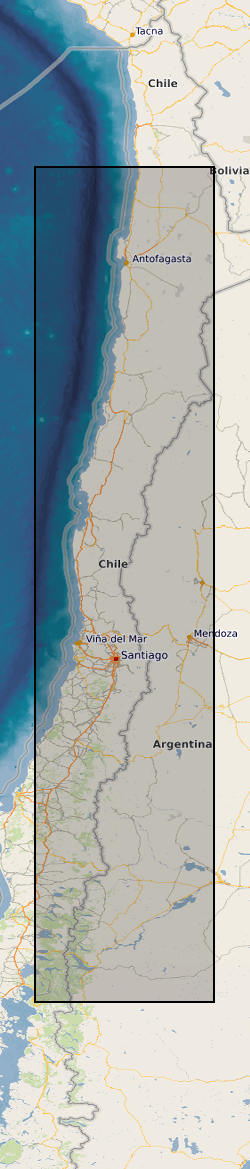
Complete major and trace element analyses of all samples investigated under project component chalcophile element processing beneath arc volcanic systems, within NE/M000427/1 (see Cox et al., EPSL, 2019 https://doi.org/10.1016/j.epsl.2019.06.017 and Cox et al., Geology, 2020 https://doi.org/10.1130/G47562.1). Samples include an extensive dataset from Antuco volcano, Chile, and further analyses of young volcanic rocks from multiple Chilean stratovolcanoes and monogenetic centres. Standard data are also provided.
-

Interpretations of fault positions, geometries and displacements, and seismic stratigraphic horizons. These are provided in the form of Seismic fault and horizon data as ‘Charisma fault sticks’ and ‘Charisma 2D interpretation lines’ ASCII files, respectively, exported from Petrel 2019. Additional CSV and XLSX files containing the compiled coordinate data are included. A readme file is also included explaining the contents of the different files and folders. Interpretations are from seismic profiles of the input oceanic plate section to the North Sumatra subduction zone. Results are published in: Stevens, D.E., McNeill, L.C., Henstock, T.J., Delescluse, M., Chamot-Rooke, N., Bull, J.M., 2020, Intraplate deformation offshore North Sumatra: New Insights from integration of IODP Expedition 362 results with seismic data. EPSL, 538, 116218.
-
The thermal state of marine sediments controls a range of potential dehydration reactions as sediments are subducted. In thick sediment sections it is possible that reactions that would normally occur within a subduction zone start offshore of the deformation front. This scenario may be occurring at the Sumatra subduction zone (e.g. Geersen et al., 2013; Huepers et al., 2017). We have investigated this possibility by modelling the thermal and depth history of sediments offshore Sumatra. We have used a range of different assumptions about how the sediments decompact with depth, as well as testing the dependence on the seismic velocities used for depth conversion of the horizons.
-
The data are from a suite of friction experiments performed on simulated gouges from the Nankai Trough (Japan). The simulated gouges were prepared by crushing cuttings of Nankai accretionary sediments collected during Integrated Ocean Drilling Program (IODP) Expedition 358. The cuttings were crushed to produce a powder (i.e. simulated gouge) with a grain size of >125 microns. These simulated gouges were sheared under a range of effective normal stress (10-75 Mpa) and pore-fluid pressure (5-75 Mpa) conditions while the sliding velocity was stepped between 0.3 and 3 microns/s to calculated the rate-and-state friction parameter (a-b). The Nankai gouge are strongly rate-strengthening and become more rate-strengthening (i.e. more frictionally stable) at elevated pore-fluid pressure. In contrast, varying the effective normal stress has minimal effect on the frictional stability of the gouges.
-

This Excel spreadsheet provides the composition of volcanic glasses (melt inclusions, melt embayment and matrix glasses) analysed as part of NSF-NERC grant "Sulfur Cycling in Subduction Zones". In the spreadsheet is a "readme" worksheet that explains each column and the method of data collection if applicable. These data will be included in future publications. The samples are taken from Central America, Alaska and Northern Mariana Islands.