
Geological data
Type of resources
Available actions
Topics
Keywords
Contact for the resource
Provided by
Years
Formats
Representation types
Update frequencies
Service types
Scale
Resolution
-
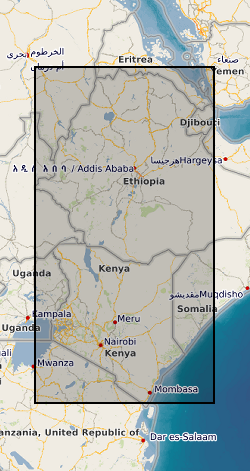
Digitized GIS geological and geochemical datasets taken from maps and reports as part of BGS Overseas Development Research in 1980-90s.
-

Compilation of information gathered by Dr Richard Rumbold for Kingsbridge area of Devon. Collected for revision of geological sheets 355 and 356.
-
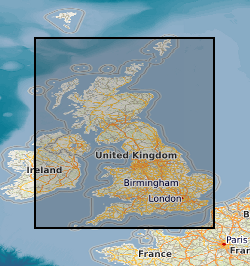
A series of tiled models of superficial thickness covering the UK. The models are derived by direct modelling (natural neighbour interpolation) of BGS borehole records and BGS DiGMapGB-50. For the purposes of modelling, superficial deposits include sediments deposited during the Quaternary, subsequent Holocene rivers and coastal systems and also modern anthropogenic material, i.e. deposits that are less than 2.6 million years old. The 50 m x 50 m grids are overprinted with a minimum value so that areas where no bore data is present, but drift is known to occur, are given a minimum 1.5 m thickness. The superficial thickness models have been created as baseline datasets for the BGS Geohazard programme. They represent the first attempt by BGS to create nationwide models of such data and the models provide only a simple, mathematical interpretation of reality. The complexity of superficial deposits in Great Britain is such that it is only possible to model indicative values of thickness and elevation. The models should never be used as a substitute for thorough site investigation. The SDTM comprises three individual datasets; two datasets describe thickness variation and a third dataset details 'proximity' of the modelled data to the original source information. 1. The ASTM (Advanced Superficial Thickness Model) is a model of thickness variation indirectly derived from archive borehole records and map data. 2. The BSTM (Basic Superficial Thickness Model) is a model of thickness variation directly derived from archive borehole records. 3. The DBUFF (distance buffer) dataset is a calculation of spatial distance to the location of any data point used in the model. This provides the user with an indication as to how far the computer has had to interpolate and extrapolate the data from a measured observation point. For more information, refer to the user guide: The National Superficial Deposit Thickness Model (version 5). BGS Open Report OR/09/49. https://webapps.bgs.ac.uk/data/publications/publication.html?id=19867430
-

This Web service provides layers which are part of the BGS Superficial Deposits Thickness Model (SDTM) series of datasets. It currently includes two layers from the STDM 1 km hex grid dataset, which is available under the Open Government Licence. These two layers are symbolised on the mean and maximum values of the BSTM thickness model within the area of each hexagon. In these two layers, note that the data include a generic value of 1 m thickness for any area where superficial material is present, but is unproven by boreholes (shown on the map by a grey colour).
-
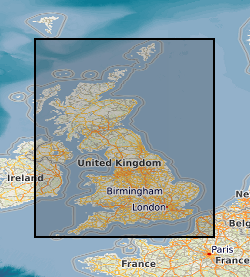
This dataset shows the variation of the thickness of superficial (Quaternary age) deposits across Great Britain. The data are presented as a vector map of interlocking hexagon cells (side length 1 km, area c. 2.6 km2) covering the landmass of Great Britain as a regular grid. Each hexagon cell is attributed with statistics about the thickness of the underlying Quaternary units (average thickness and maximum thickness) for that cell. Additional information relating to the coverage of the underpinning data is also provided. The data are derived from the BGS Basic Superficial Thickness Model (BSTM). The data is all derived by spatially summarising the information within the BGS Basic Superficial Thickness Model (BSTM), which is a 50 m cell size raster model of superficial thickness, first published in 2010.
-

Data identifying landscape areas (shown as polygons) attributed with geological names and rock type descriptions. The data is presented at 1:50 000 scale. Onshore coverage is provided for England, Scotland, Wales and the Isle of Man. Approximately 99% coverage is available and BGS is committed to completing the coverage, and ongoing updates as part of its ongoing national survey. Bedrock geology describes the main mass of solid rocks forming the earth's crust. Bedrock is present everywhere, whether exposed at surface in outcrops or concealed beneath superficial deposits or water bodies. The bedrock geology of Great Britain is very diverse and includes three broad classes based on their mode of origin: igneous, metamorphic, and sedimentary. The data includes attribution to identify each rock type (in varying levels of detail) as described in the BGS Rock Classification Scheme (volumes 1-3). The bedrock has formed over long periods of geological time, from the Archean eon some 4000 million years ago, to the relatively young Pliocene, 5.33 million years ago. The age of the rocks is identified in the data through their BGS lexicon name (published for each deposit at the time of the original survey or subsequent digital data creation). For stratified rocks i.e., arranged in sequence, this will usually be of a lithostratigraphic type. Other rock types for example intrusive igneous bodies will be of a lithodemic type. More information on the formal naming of UK rocks is available in the BGS Lexicon of Named Rock Units. Geological names are based on the lithostratigraphic or lithodemic hierarchy. The lithostratigraphic scheme arranges rock bodies into units based on rock-type and geological time of formation. Where rock-types do not fit into the lithostratigraphic scheme, for example intrusive, deformed rocks subjected to heat and pressure resulting in new or changed rock types; then their classification is based on their rock-type or lithological composition. This assesses visible features such as texture, structure, mineralogy. The data are available in vector format (containing the geometry of each feature linked to a database record describing their attributes) as ESRI shapefiles and are available under BGS data licence.
-

This Web service provides layers containing offshore digital mapping datasets compiled by the British Geological Survey which have coverage across the UK Continental Shelf (UKCS), mostly at scales smaller than 1:250 000. It provides view and download services for the following datasets: - BGS Offshore Bedrock 250k - BGS Seabed Sediments 250k (including the Marine Hard Substrate Dataset) - BGS Offshore Quaternary 250k - 1:1 000 000 scale geological factor map: bedrock summary lithology - 1:1 000 000 scale geological factor map: Quaternary deposit summary lithology - 1:1 000 000 scale geological factor map: Quaternary deposit thickness - BGS Predictive Seabed Sediments (UK) For more information, contact BGS Marine Enquiries (offshoredata@bgs.ac.uk).
-

The BGS Geology 50k datasets are a digital representation of the geological maps of Great Britain at 1:50 000 scale. The data is presented at 1:50 000 scale. Onshore coverage is provided for England, Scotland, Wales and the Isle of Man. Approximately 99% coverage is available and BGS is committed to completing the coverage, and ongoing updates as part of its national survey activities. BGS Geology 50k V9 dataset includes 4 geological themes: bedrock, superficial deposits, mass movement and artificial ground. An additional map component detailing Linear features is also provided. The Bedrock theme describes the main mass of solid rocks forming the earth's crust. Bedrock is present everywhere, whether exposed at surface in outcrops or concealed beneath superficial deposits or water bodies. Geological names are based on lithostratigraphic or lithodemic hierarchy. The lithostratigraphic scheme arranges rock bodies into units based on rock-type and geological time of formation. Where rock-types do not fit into the lithostratigraphic scheme, for example intrusive, deformed rocks subjected to heat and pressure resulting in new or changed rock types; then their classification is based on their rock type or lithological composition. This assesses visible features such as texture, structure, mineralogy. The Superficial theme describes the youngest geological deposits formed during the Quaternary period. They lie on top of older deposits or rocks referred to as bedrock. Superficial deposits were laid down by various natural processes and as such, the deposits are denoted by their BGS lexicon name, which classifies them based on mode of origin (lithogenesis) i.e., 'glacial deposits', 'river terrace deposits' or based on their composition i.e., 'peat'. Most are unconsolidated sediments. The Mass movement theme describes areas where deposits have moved down slope under gravity to form landslips. These landslips can affect bedrock, superficial or artificial ground. Mass movement deposits are described in the BGS Rock Classification Scheme Volume 4. However, the data also includes foundered strata, where ground has collapsed due to subsidence (this is not described in the Rock Classification Scheme). Caution should be exercised with this data; whilst mass movement events are recorded in this layer, due to the dynamic nature of occurrence significant changes may have occurred since the data was released, as such it should be viewed as a snapshot in time (the time frame being defined by the date of survey, not the date of digital map publication). The Artificial theme describes areas where the ground surface has been significantly modified by human activity. Whilst artificial ground may not be considered as part of the 'real geology' of bedrock and superficial deposits it does affect them. Due to the constantly changing nature of land use and re-use/redevelopment, caution must be exercised when using this data as it represents a snapshot in time (the time frame being defined by the date of survey, not the date of digital map publication). The Linear map layer describes linear features that are associated most closely with the bedrock theme, either as an intrinsic part of it (for example, depiction of marine bands) or affecting it (for example depiction of faults between bedrock object). However, landform elements are associated with both bedrock and superficial deposits. The linear features are organised into seven main categories i.e., Alteration Area”, “Bedrock”, “Faults”, “Fold Axis”, “Fossil Horizon”, “Landform”, and “Mineral Vein”, some having additional applicable attribution, for example a LEX-RCS code, or a fault name. All data are available in vector format (containing the geometry of each feature linked to a database record describing their attributes) as ESRI shapefiles and are available under BGS data licence.
-

Data identifying landscape areas (shown as polygons) attributed with geological names and rock type descriptions. The data is presented at 1:50 000 scale. Onshore coverage is provided for England, Scotland, Wales and the Isle of Man. Approximately 99% coverage is available and BGS is committed to completing the coverage, and ongoing updates as part of its ongoing national survey. Superficial deposits are the youngest geological deposits formed during the most recent period of geological time, the Quaternary, which extends back about 2.58 million years from the present. They lie on top of older deposits or rocks referred to as bedrock. Superficial deposits were laid down by various natural processes such as action by ice, water, wind, and weathering. As such, the deposits are denoted by their BGS lexicon name, which classifies them the basis of their mode of origin (lithogenesis) with names such as, 'glacial deposits', 'river terrace deposits' or 'blown sand'; or the basis of their composition such as 'peat'. Most of these superficial deposits are unconsolidated sediments such as gravel, sand, silt, and clay. The digital data includes attribution to identify each deposit type (in varying levels of detail) as described in the BGS Rock Classification Scheme (volume 4). The data are available in vector format (containing the geometry of each feature linked to a database record describing their attributes) as ESRI shapefiles and are available under BGS data licence.
-

Data identifies landscape areas (shown as polygons) attributed with type of artificial or man-made ground. It indicates areas where the ground surface has been significantly modified by human activity. The data is presented at 1:50 000 scale. Onshore coverage is provided for England, Scotland, Wales and the Isle of Man. Approximately 99% coverage is available and BGS is committed to completing the coverage, and ongoing updates as part of its ongoing national survey. Types of artificial ground include: Disturbed ground areas of ill-defined shallow or near surface mineral workings where distinction cannot be made between made and worked ground. Infilled ground areas where original geology has been removed and then wholly or partially back filled includes waste or landfill sites. Landscaped ground areas where surface has been reshaped includes former sand and gravel workings for recreation and amenity use. Made ground man made features including embankments and spoil heaps. Reclaimed ground are areas of land fill, where new ground is created, usually in coastal margins, may be for example a consequence of draining of submerged wetlands and beach rebuilding. Worked ground areas where ground has been removed including quarries and road cuttings. Whilst artificial ground may not be considered as part of the 'real geology' of bedrock and superficial deposits it does affect them. Artificial ground impacts on the near surface ground conditions which are important to human activities and economic development. Due to the constantly changing nature of land use and re-use/redevelopment caution must be exercised when using this data as it represents a snapshot in time rather than an evolving picture, hence the data may become dated very rapidly. The data are available in vector format (containing the geometry of each feature linked to a database record describing their attributes) as ESRI shapefiles and are available under BGS data licence.