 NERC Data Catalogue Service
Sediment transport
Type of resources
Available actions
Topics
Keywords
Contact for the resource
Provided by
Years
Formats
Representation types
Update frequencies
Resolution
-
These data are input files for CAESAR-Lisflood (CL), a numerical hydrodynamic-landscape evolution model. These files were created to support coupled hydrodynamic-landscape evolution modelling to evaluate the geomorphological response of river channels affected by the 7th February 2021 ice-rock avalanche and debris flow in Chamoli District, Uttarakhand, India. They include 10 m digital elevation models (DEMs) of bed rock and land surface topography in a gridded (raster) format. They also include reanalysis-derived river discharge data generated by the GEOGloWS project at the following locations: Rontigad, Rishiganga, Dhauliganga, and Alaknanda. The configuration settings and parameters for CL modelling are also included. Full details about this dataset can be found at https://doi.org/10.5285/4cdd86b3-bf58-457d-b8cf-b57aed2d56d0
-

There is a great deal of uncertainty as to the levels of stability of slope components of the European margin, other than localised detailed surveys completed using a combination of side-scan sonar and swathe bathymetry in recent years. These surveys have revealed that the factors which control the locations of areas of potential slope failure are complex and manifold. Clearly slope gradients, sediment supply, physical oceanographic conditions and sediment type all have major roles to play, but their interaction is far from well understood. One of the problems to be addressed is the lack of a comprehensive and focussed data synthesis with which to derive and test models of slope behaviour. A promising way in which this shortfall could be rectified would be to combine selected parts of the extensive survey database acquired by the telecommunications industry in its search for suitable pathways in which to lay earlier copper-core and now, more recently, fibre-optic cable systems. These data would be interpreted in conjunction with a rigorous analysis of the industry's historical cable-fault database which provides parameters of naturally occuring cable failures (through sediment failure, for example). Together these data will provide an understanding of the geological characteristics of key parts of the European shelf, underpinned with the statistics of active slope processes over the most recent decades. The benefits of such a synthesis to both the telecommunications and hydrocarbon industries cannot be overstated.
-
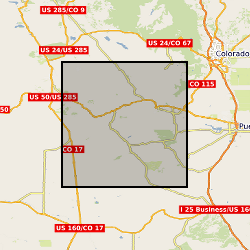
Wind and surface morphological data collected at Medano Creek on the 15th April 2019 to investigate protodune initiation. Surface morphological data: This is terrestrial laser scanned (TLS) data collected of the creek sand surface using three different co-located Leica TLS (C10, P20 and P50). The data is raw point cloud format in text columns of x, y and z coordinate data. It has been orientation into the same local coordinate system. Each data set uses the same coordinate system. Data can be viewed in any spatial software. Data is labelled using C10, P20 or P50, followed by the scan number. Scan times are indicated in a seperate file. Wind data were collected from a fixed point next to the TLS instruments using a Gill 3D sonic anemometer. The data is in csv file format with column titles and can be viewed in any text or database software.