
Geothermal surveys
Type of resources
Available actions
Topics
Keywords
Contact for the resource
Provided by
Years
Formats
Representation types
Update frequencies
Service types
-
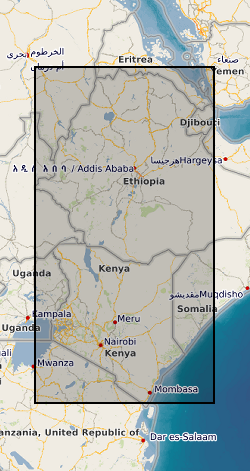
Digitized GIS geological and geochemical datasets taken from maps and reports as part of BGS Overseas Development Research in 1980-90s.
-

Reports on the Geothermal Potential of the UK.
-

The data is a first digital release of the UK legacy geothermal catalogue of temperature measurements, thermal conductivity measurements and heat flow calculations. The geothermal catalogue comprises data contained in numerous historic technical reports from the 1977-1991 Geothermal Energy Programme, delivered by BGS and funded by the then UK Department of Energy and the European Commission. This release contains 11,821 data points derived from 743 sites. This first digital release contains data that has been: spatially located, an identified data source, intellectual property rights (IPR) checked and assessed for release under version 3 of the Open Government Licence (OGL). There are known limitations on the dataset, including that the data is provided as it was listed in the UK legacy geothermal catalogue. Validation of the IPR and copyright status of some of the incorporated datasets was challenging and a take down policy is in operation. Further details can be found in the accompanying report https://nora.nerc.ac.uk/id/eprint/537202
-

This dataset contains the borehole image interpretation of the United Downs 1 borehole, Cornwall (BGSID: 21246966) The acoustic borehole images have been interpreted for faults, breakouts and conductive and resistive fractures. For faults and fractures each line in the file defines a plane passing through the borehole. This includes: • Depth at which the plane intersects the borehole wall, this is defined as the midpoint of the feature as each plane has a top and bottom intersection. • Azimuth, this is the azimuth of the dip direction of the plane, it is at 90 degrees to the strike of the feature. • Dip, this is the dip angle of the plane. • Type, this is a classification of the feature. For breakouts each line represents an individual feature which covers and area of the borehole wall. This includes: • Depth the midpoint depth of the breakout. • Azimuth, this is the orientation of the breakout. • Type, this is a classification of the feature. • Breakout Height, the length of the breakout in meters. • Breakout Width, the width of the breakout in degrees. • Type, this is a classification of the feature. The work was undertaken by BGS as part of the GWatt Project award reference number NE/S004262/1. It was funded by the UKRI Natural Environment Research Council.
-
This dataset contains the acquired distributed acoustic sensing (DAS) and hydrophone datasets from a project investigating the usage DAS at the UK Geoenergy Observatory (UKGEOS) research facility in Glasgow, funded by the UK Unconventional Hydrocarbons (UKUH) small project grant. The UKGEOS site in Glasgow has repurposed an abandoned coal mine to investigate its potential as a heat source and heat sink, and its borehole infrastructure includes pre-installed fibre-optic cables. DAS is a novel seismic monitoring technique that utilizes fibre-optic cables to measure small acoustic and seismic vibrations. Comparable to a very densely spaced hydrophone or geophone array, DAS provides unparalleled data resolution and insights into the subsurface. This dataset provides both active source and passive measurements of DAS at the UKGEOS Site 2 prior to the heat pump installation, providing geophysical baseline measurements of the mine. Alongside the acquired DAS data, data from a hydrophone array co-located to the fibre-optic cable was collected during the active source survey to provide a means of comparison to the DAS. NERC and ESRC jointly funded Unconventional Hydrocarbons in the UK Energy System Programme grant - Baseline seismic monitoring survey for UKGEOS Glasgow geothermal production using Distributed Acoustic Sensing (DAS)
-

This Web service provides the BGS heat flow dataset as a Web Map Service (WMS). The British Geological Survey (BGS) heat flow model (United Kingdom) is derived from a catalogue of legacy heat flow data points and ground-heat modelling. The model portrays heat flow as a continuous modelled surface, interpolated between observation and estimation points. Heat flow data is typically used to determine temperatures beneath the ground surface, and model how much thermal energy may be recovered from or stored within.
-

This dataset shows polygons where there is favourable geology for deep geothermal exploration in the UK and for the sedimentary basins, the areas have been considered in more detailed geothermal studies. Known areas of sedimentary basins or productive aquifers have been excluded, where they have not yet been evaluated for geothermal potential at any level of detail. The areas included are the whole sedimentary basin extents, or extents of granitic intrusions, as opposed to the smaller areas with heat-in-place or proved, recoverable resources over certain temperatures and depths. Coordinate Reference System is British National Grid. Northern Ireland data is also presented in British National Grid because of the UK extent of the information. Additional columns are as required to be supplied for inclusion in the GSEU project (https://www.geologicalservice.eu/). These include a ‘Geothermal Play Code’, ‘Geothermal Play Type’ ‘Plate Tectonic Setting’ ‘Geologic Habitat’ and ‘Geological Controls’ fields following the classification scheme of Moeck, I. S. (2014, Catalog of geothermal play types based on geologic controls. Renewable and Sustainable Energy Reviews, 37, 867-882). Additional fields have been added for BGS for classification, colouring up.