 NERC Data Catalogue Service
Fractured rock
Type of resources
Available actions
Topics
Keywords
Contact for the resource
Provided by
Years
Formats
Representation types
Update frequencies
-
A number of processes, both natural and anthropogenic, involve the fracture of rocks subjected to tensile stress, including vein growth and mineralization, and the extraction of hydrocarbons through hydraulic fracturing. In each case, the fundamental material property of mode-I fracture toughness must be overcome in order for a tensile fracture to nucleate and propagate. Whilst measuring this parameter is straightforward at ambient pressure, estimating the fracture toughness of rocks at depth, where they experience a confining pressure, is technically challenging. Here, we report a new analysis combining results from standard thick-walled cylinder burst tests with quantitative acoustic emission to estimate the mode-I fracture toughness (KIc) of Nash Point Shale at elevated confining pressure, simulating in-situ conditions to approximately 1km. In the most favorable orientation, the pressure required to fracture the rock shell (injection pressure, Pinj) increases from 6.1 MPa at 2.2 MPa confining pressure (PC), to 34 MPa at 20 MPa confining pressure. When fractures cross the shale bedding, the required injection pressures are 30.3 MPa (at Pc = 4.5 MPa) and 58 MPa (at Pc = 20 MPa), respectively. Applying the model of Abou-Sayed (1978) to estimate initial flaw size, we calculate that this pressure increase equates to an increase in KIc from 0.6 MPa.m1/2 at 3.2 MPa differential pressure (Pinj - PC) to 4.1 MPa.m1/2 at 22 MPa differential pressure. We conclude that the increasing pressure due to depth in the Earth will have a significant influence on fracture toughness, which is also a function of the inherent anisotropy.
-
Bibliographic Data - Oral and Poster Presentations given by members of Work Package 5 of the HydroFrame (Hydromechanical and Biogeochemical Processes in Fractured Rock Masses in the Vicinity of a Geological Disposal Facility for Radioactive Waste) project. Presentations given between November 2014 and November 2016.
-

The dataset contains the raw timeseries of broadband magnetotelluric data collected at 10 sites around St Austell, Cornwall and one remote site in Bodmin Moor, Cornwall. Data were collected by BGS staff in March 2023 using Phoenix Geophysics Ultra-wideband MTU-5C systems.
-

This dataset contains the borehole image interpretation of the United Downs 1 borehole, Cornwall (BGSID: 21246966) The acoustic borehole images have been interpreted for faults, breakouts and conductive and resistive fractures. For faults and fractures each line in the file defines a plane passing through the borehole. This includes: • Depth at which the plane intersects the borehole wall, this is defined as the midpoint of the feature as each plane has a top and bottom intersection. • Azimuth, this is the azimuth of the dip direction of the plane, it is at 90 degrees to the strike of the feature. • Dip, this is the dip angle of the plane. • Type, this is a classification of the feature. For breakouts each line represents an individual feature which covers and area of the borehole wall. This includes: • Depth the midpoint depth of the breakout. • Azimuth, this is the orientation of the breakout. • Type, this is a classification of the feature. • Breakout Height, the length of the breakout in meters. • Breakout Width, the width of the breakout in degrees. • Type, this is a classification of the feature. The work was undertaken by BGS as part of the GWatt Project award reference number NE/S004262/1. It was funded by the UKRI Natural Environment Research Council.
-
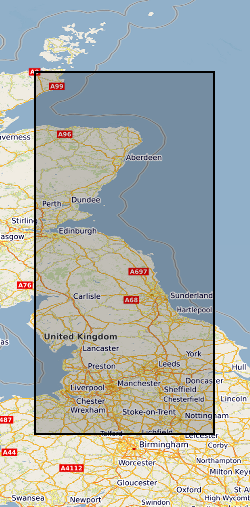
This datasets contains 323 observations of borehole breakouts across and drilling induced tensile fractures from borehole imaging used to re-characterise the UK stress field orientation in 2016. This was published in the Journal of Marine and Petroleum Geology and is openly available using doi:10.1016/j.marpetgeo.2016.02.012 The observations relate to 39 wells from Central and Northern England and are provided with links to screen grabs of the images for clarity. The basic well meta data is supplied along with a description of the dataset. The Images were generated in the IMAGE DISPLAY module of the Landmark RECALL software. and are supplied on an “as shown” basis. Descriptions of the tools and the techniques used are listed in the accompanying paper: KINGDON, A., FELLGETT, M. W. & WILLIAMS, J. D. O. 2016. Use of borehole imaging to improve understanding of the in-situ stress orientation of Central and Northern England and its implications for unconventional hydrocarbon resources. Marine and Petroleum Geology, 73, 1-20.
-
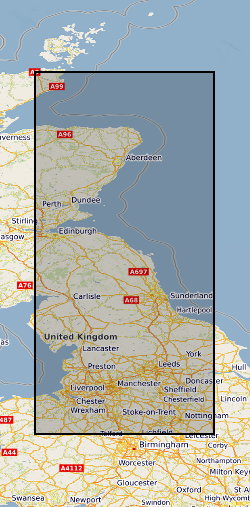
This datasets contains 323 observations of borehole breakouts across and drilling induced tensile fractures from borehole imaging used to re-characterise the UK stress field orientation in 2016. This was published in the Journal of Marine and Petroleum Geology and is openly available using doi:10.1016/j.marpetgeo.2016.02.012 The observations relate to 39 wells from Central England, Northern England and Northern Scotland and are provided with links to screen grabs of the images for clarity. The basic well metadata is supplied along with a description of the dataset. The Images were generated in the IMAGE DISPLAY module of the Landmark RECALL software and are supplied on an “as shown” basis. Descriptions of the tools and the techniques used are listed in the accompanying paper: KINGDON, A., FELLGETT, M. W. & WILLIAMS, J. D. O. 2016. Use of borehole imaging to improve understanding of the in-situ stress orientation of Central and Northern England and its implications for unconventional hydrocarbon resources. Marine and Petroleum Geology, 73, 1-20.
-
This work presents a detailed three-dimensional finite element based model for wave propagation, combined with a postprocessing procedure to determine the fracture intensity caused by blasting. The data generated during this project includes output files of all simulations with detailed fields, geometries and meshes. The model incorporates the Johnson-Holmquist-2 constitutive model, which is designed for brittle materials undergoing high strain rates and high pressures and fracturing, and a tensile failure model. Material heterogeneity is introduced into the model through variation of the material properties at the element level, ensuring jumps in strain. The algorithm for the combined Johnson-Holmquist-2 and tensile failure model is presented and is demonstrated to be energy-conserving, with an open-source MATLABTM implementation of the model. A range of sub-scale numerical experiments are performed to validate the modelling and postprocessing procedures, and a range of materials, explosive waves and geometries are considered to demonstrate the model's predictive capability quantitatively and qualitatively for fracture intensity. Fracture intensities on 2D planes and 3D volumes are presented. The mesh dependence of the method is explored, demonstrating that mesh density changes maintain similar results and improve with increasing mesh quality. Damage patterns in simulations are self-organising, forming thin, planar, fracture-like structures that closely match the observed fractures in the experiments. The presented model is an advancement in realism for continuum modelling of blasts as it enables fully three-dimensional wave interaction, handles damage due to both compression and tension, and relies only on measurable material properties. The uploaded data are the specific simulation outputs for four explosion models occurring on two different rock types, and the specific fracture patterns generated.