 NERC Data Catalogue Service
Electron microprobes
Type of resources
Available actions
Topics
Keywords
Contact for the resource
Provided by
Years
Formats
Representation types
Update frequencies
-
Geochemical analyses of melt inclusions, host minerals, and glasses from the 2014-15 Holuhraun eruption, Iceland. Published in: Hartley ME, Bali E, Neave DA, Maclennan J, Halldorsson SA (2018) Melt inclusion constraints on petrogenesis of the 2014–2015 Holuhraun eruption, Iceland. Contrib Mineral Petrol 173:10. doi:10.1007/s00410-017-1435-0
-

Data consist of electron microprobe, SEM, ICP-MS in laser and solution mode, and images of crystal mounts and thin sections, La Palma 2021. 35 samples of basalt, erupted during the 2021 Cumbre Vieja eruption on La Palma, Canary Islands, were collected in February 2022. The basalt samples were prepared for various kinds of analysis: powdered for ICP-MS (whole rock trace elements including chalcophile elements), made into thin sections for petrological analysis (imaged and mapped using Scanning Electron Microscope), and crushed and crystals picked and mounted for targeted microanalysis of melt inclusions, crystals using Electron Probe Microanalysis (EPMA, for major elements and volatiles S, Cl and F) and laser ablation ICP-MS (for trace elements including chalcophile elements). The overall aim of the project was to look at the chalcophile element abundance and distribution in the magmas feeding the eruption. The data here relate to a NERC Exploring the Frontiers project.
-

This dataset contains experimentally derived measurements of sulfur solubility and speciation in silicate melts, obtained over a temperature range of 1200–1500 °C and a pressure range of 1 bar to 2.5 GPa. The experiments were conducted as part of the NERC-funded project NE/W000660/1 “The chemical behaviour of sulphur in magmas at high temperature and pressure” (2022–2025). For each experiment, the dataset includes the experimental run ID, silicate melt composition, and the experimental conditions under which the run was performed: pressure, temperature, oxygen fugacity (fO?), sulfur fugacity (fS?), and run duration. The dataset also provides raw electron microprobe analyses (EMPA) for each experiment, expressed as elemental weight percentage averages. These analyses represent individual point analyses collected from polished epoxy resin mounts coated with carbon. Measurements were acquired using wavelength-dispersive spectrometry (WDS) on a standard-calibrated electron microprobe. The data are intended to support investigations into the behavior of sulfur in magmatic systems, including solubility mechanisms, redox speciation, and compositional controls on sulfur partitioning between melts and other phases. The data was acquired and analysed by the experimental petrology team, at the University of Oxford, Department of Earth Sciences
-

120 samples of 57 tephra layers identified at IODP Expedition 350 sites (U1436 and U1437) were used in grain size analysis. Some layers have one grain size measurement, others have multiple measurements throughout the tephra layer.
-
NERC Grant NE/M011488/1 Electron microprobe analyses of Mn-oxyhydroxide phases as elemental percentages per point analysis. Mn-oxyhydroxide phases were within limonites from Acoje (Philippines), Caldag (Turkey), Nkamouna (Cameroon), Piaui (Brazil) and Shevchenko (Kazakhstan) laterite deposits. The data were acquired during the NERC SoS Minerals CoG3 project between 2015 and 2018 using a Cameca SX100 electron microprobe at the Natural History Museum, London, UK. Point analyses were performed on samples set within epoxy resin blocks, polished and coated with carbon. All elements were analysed using wavelength dispersive X-ray spectrometers. These data were used to identify the Co and Ni bearing host minerals within each natural resource and to assess the amount and variability of these elements within specific Mn-oxyhydroxide phases. This may be useful within the mining sector, resource assessment, processing or prospecting, geo- or material scientists and processing engineers / metallurgists. The data were acquired in the Core Research Laboratories, Natural History Museum by the NHM CoG3 team. NERC grant: CoG3: The geology, geometallurgy and geomicrobiology of cobalt resources leading to new product streams
-
NERC Grant NE/M011488/1 Electron microprobe analyses of Fe-oxide and Fe-oxyhydroxide phases as elemental percentages per point analysis. The phases were within limonites from Acoje (Philippines), Caldag (Turkey), Nkamouna (Cameroon), Piaui (Brazil) and Shevchenko (Kazakhstan) laterite deposits. The data were acquired during the NERC SoS Minerals CoG3 project between 2015 and 2018 using a Cameca SX100 electron microprobe at the Natural History Museum, London, UK. Point analyses were performed on samples set within epoxy resin blocks, polished and coated with carbon. All elements were analysed using wavelength dispersive X-ray spectrometers. These data were used to identify the Co and Ni bearing host minerals within each natural resource and to assess the amount and variability of these elements within specific Fe-oxide or Fe-oxyhydroxide phases. This may be useful within the mining sector, resource assessment, processing or prospecting, geo- or material scientists and processing engineers / metallurgists. The data were acquired in the Core Research Laboratories, Natural History Museum by the NHM CoG3 team. NERC grant: CoG3: The geology, geometallurgy and geomicrobiology of cobalt resources leading to new product streams
-
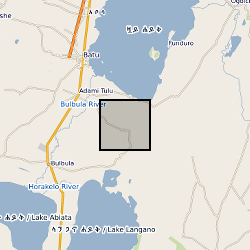
Geochemical analysis of volcanic samples from Aluto, Fentale, and Kone volcanoes, Ethiopia. Data are referenced in Iddon et al., 2018: Mixing and Crystal Scavenging in the Main Ethiopian Rift Revealed by Trace Element Systematics in Feldspars and Glasses; https://doi.org/10.1029/2018GC007836.
-

Geochemical data has been collected on samples from new exposures of the 1883 deposits, revealed by the 2018 tsunamigenic flank collapse of Anak Krakatau, which provides improved stratigraphic context. Whole-rock data taken by X-ray Florescence shows no systematic stratigraphic correlation. Chemical data for transects across, and spot points on, plagioclase phenocrysts, including some trace element data, all obtained using Electron Probe Microanalysis (EPMA), with Backscatter electron (BSE) images of crystals, obtained using Scanning Electron Microscope, reveal complex zoning profiles. However, chemical data for transects across pyroxene phenocrysts, obtained using EPMA, show this phenocryst phase is largely unzoned. The dataset also includes chemical data for spots on Fe/Ti oxides, included on the rims of pyroxene, and obtained using EPMA. Matrix glass chemistry, obtained via EPMA, shows that the early eruptive ash is more evolved than the pyroclastic material that follows, and that there is a slight overall trend to a more homogenous, less evolved melt composition. The 1883 eruption of Krakatau was a large, cardera-forming eruption that caused approximately 36,000 fatalities. It is also the only eruption of its size to have accompanying written accounts.