 NERC Data Catalogue Service
Ediacaran fauna
Type of resources
Available actions
Topics
Keywords
Contact for the resource
Provided by
Years
Formats
Representation types
Update frequencies
-
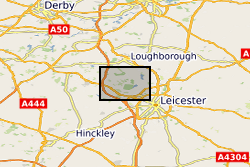
Reflectance Transformation Imaging files for the type specimen GSM105875 [IGSN:UKBGSGSM105875] and two paratypes GSM106040 [IGSN:UKBGSGSM106040] , GSM106112 [IGSN:UKBGSGSM106112] of Hylaecullulus fordi, a new species of rangeomorph from the Bradgate Formation (Ediacaran) of Charnwood Forest, UK. Supporting information for Kenchington, Dunn and Wilby - Modularity and overcompensatory growth in rangeomorphs (late Ediacaran, approx. 580-541 Ma): adaptations for coping with environmental pressures. Current Biology.
-

These data comprise geochemical results from upper Ediacaran organic-rich shales / mudstones from the Yangtze Craton (South China) from the Doushantuo Formation (member IV) and overlying lower Dengying Formation (= Miaohe Member). Ages range from about 570 to 550 Ma. The data consist of iron partitioning (Fe-speciation), phosphorus partitioning (P-speciation), bulk rock metal concentrations, total organic content and pyrite sulfur isotopes. Major and trace element concentrations of all samples were measured by inductively coupled plasma optical emission spectrometry and mass spectrometry, respectively, after quantitative HNO3-HFHClO4 digestion. Fe speciation was performed after the established methodology of Poulton and Canfield to extract operationally defined Fe phases, including Fe associated with carbonates (Fecarb), ferric oxides (Feox), magnetite (Femag), and pyrite (Fepy). The sum of these Fe pools constitutes the proportion of Fe that is considered highly reactive (FeHR) toward dissolved sulfide. Ratios of FeHR/FeT > 0.38 support FeHR enrichment and deposition under anoxic bottom water conditions, whereas values of <0.22 indicate deposition from oxic bottom waters. The intermediate range of 0.22 to 0.38 is regarded as equivocal because of the possibility for rapid sediment deposition or early diagenetic transformation of unsulfidized FeHR to poorly reactive sheet silicate minerals. For anoxic samples (FeHR/FeT > 0.38), the degree of sulfidation of the FeHR pool can be used to distinguish ferruginous (Fepy/FeHR <0.7) from euxinic (Fepy/FeHR > 0.8) conditions, with an intermediate zone ascribed to “possible euxinia”. Recent analyses of Holocene sapropels and the euxinic Lake Cadagno indicate that Fepy/FeHR > 0.6 may be a more suitable threshold for distinguishing ferruginous from possible euxinic conditions. Selected shale samples were analyzed for pyrite sulfur isotopes (δ34Spy), TOC, organic carbon isotopes (δ13Corg), and P phase associations. The P measurements use a sequential extraction method to distinguish the proportion of total P (PTot) associated with detrital apatite (Pdet) relative to potentially bioavailable and reactive (Preac) minerals, including Fe (oxyhydr)oxides (PFe),organic matter (Porg), and authigenic carbonate fluorapatite, biogenic apatite, and CaCO3-bound P (Pauth). For methods, see: S. W. Poulton, D. E. Canfield, Development of a sequential extraction procedure for iron: Implications for iron partitioning in continentally derived particulates. Chem. Geol. 214, 209–221 (2005). Fred T. Bowyer, Alexander J. Krause, Yafang Song, Kang-Jun Huang, Yong Fu, Bing Shen, Jin Li, Xiang-Kun Zhu, Michael A. Kipp, Lennart M. van Maldegem, Jochen J. Brocks, Graham A. Shields, Guillaume Le Hir, Benjamin J. W. Mills, and Simon W. Poulton Biological diversification linked to environmental stabilization following the Sturtian Snowball glaciation. Sci. Adv. 9 (34), eadf9999. DOI: 10.1126/sciadv.adf9999 (2023)
-
3D models of Ediacaran organisms generated using NURBS modelling for use in computer simulations of fluid flow. Models built between 2021 and 2023 using the computer-aided design program Rhinoceros 3D. File names refer to different fossil taxa and surfaces. STP files can be opened with most CAD software, including freely available programs such as Autodesk Fusion 360 and FreeCAD.
-
Reflectance transformation image of a cast (BGS fossil reference number GSM106161) of the holotype of Charniodiscus concentricus. The original fossil is the property of the Geology Department, University of Leicester, and the fossil is on display at New Walk Museum, Leicester
-
This dataset contains LiDAR scans as Faro Scene files of 53 scans which cover 15 different fossiliferous surfaces. The number of scans per surface varies depending on the topology of the bedding plane. These LiDAR scans were made in Newfoundland, Canada, from Mistaken Point Ecological Reserve (10 surfaces), Discovery Geopark (4 surfaces) and Ferryland (1 surface). 45 scans were made in July 2022 and 8 in September 2022. The scans were made in order to enable the mapping of fossil specimens within their communities so that spatial analyses can be used to infer the underlying biological and ecological processes than govern Ediacaran eco-evolutionary dynamics. The dataset is complete to reconstruct the bedding surfaces accurately.
-
Data and associated papers. Ocean acidification and the Permo-Triassic mass extinction. Ediacaran metazoan reefs from the Nama Group, Namibia. NERC Grant Re-inventing the planet: The Neoproterozoic revolution in oxygenation, biogeochemistry and biological complexity.
-
Results files from computer simulations of fluid flow for 3D models of Ediacaran organisms and communities, generated using computational fluid dynamics. Simulations performed using the simulation software package COMSOL Multiphysics. Root folder names refer to initial trials ‘Cylinder Tests’), modern organisms (‘Chondrocladia lyra’), Ediacaran organisms (‘Pectinifrons’ and ‘Pterdinium’), and Ediacaran surfaces (‘Avalon’ and ‘White Sea’ surfaces). Sub-folder and file names refer to simulations performed with different models (e.g., ‘Base’, ‘Filled’ and ‘Flush’ Petridinium models), model orientations (e.g., 0°, 90°, and 180° to the inlet), current velocities (e.g., 0.15, 0.5 and 0.85 m/s), and turbulence models (e.g., Spalart Allmaras, shear stress transport, and large eddy simulation). Further details for Pectinifrons and Pteridinium available in Darroch et al. 2022 (https://doi.org/10.1017/pab.2022.2) and Darroch et al. 2023 (https://doi.org/10.1016/j.isci.2023.105989), respectively. Files can be opened with COMSOL Multiphysics (www.comsol.com) versions 5.6 or 6.0 and above.