 NERC Data Catalogue Service
Birkbeck College
Type of resources
Available actions
Topics
Keywords
Contact for the resource
Provided by
Years
Formats
Update frequencies
-
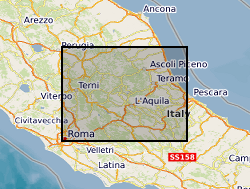
Data derived from NERC grant NE/I024127/1 1) 36Cl data and supporting chemistry. This folder contains the 36Cl concentration data, data on sample locations on fault planes, major and trace element concentrations, and similar data for upper slope samples. 2) Depth versus density data for trenches in colluvium. This folder contains measurements of weights and volumes of colluvial material removed from trenches for some of the 36Cl sites. These data are used to calculate colluvial densities to inform modelling of the 36Cl data. 3) Field Site Documentation. This folder contains field data and field photographs and movies of the sample sites. It also contains a file that summarises interpretations of the data in this folder, to provide numerical values needed to support modeling the 36Cl data to recover fault slip histories. 4) Google Earth Files to locate sample sites. This folder contains kmz files for Google Earth to locate the sample sites. 5) Terrestrial LiDAR data for each 36Cl sample sites. This folder contains Terrestrial LiDAR data (from a LiDAR on a tripod).
-

PROJECT DETAILS ONLY - NO DATA. Mountain belts disrupt atmospheric circulation patterns and profoundly influence climate. Understanding long-term climate change thus requires good definition of timing and growth rate of major mountain belts, but is complicated by high erosion rates which remove much of the early record of mountain formation. Sophisticated geodynamic and climate-atmosphere models describe the evolution and influences of the Himalayan-Tibet orogen. Many geodynamic models predict palaeogene crustal thickening with little or no early exhumation and erosion. Such models need testing. Decades of geological, geophysical and geochemical investigations centred on the continental rock record have failed to produce data sets suitable for testing fully such models because information about the early orogen evolution is missing. Our alternative strategy looks at marine sediments formed from material eroded in the early history of the mountain belt and preserved in the Andaman Islands, Sylhet Trough, Bangladesh and Iranian Makran. These sediments contain a record of their origin and early history in the Himalayas-Tibet which can be recovered using a combination of geochemical and thermochronological methods. Results from this project will provide the groundwork for major international collaborative projects to drill sediments eroded off the Himalayas and deposited offshore in the Indus and Bengal submarine fans.