 NERC Data Catalogue Service
Video (MP4)
Type of resources
Available actions
Topics
Keywords
Contact for the resource
Provided by
Years
Formats
Representation types
Update frequencies
-

This dataset contains high-speed video recordings and particle image velocimetry (PIV) analysis results from granular flow experiments performed on an inclined flume with a fixed rough substrate, at the University of Edinburgh. Included are the high-speed videos (.mp4), a Word document outlining the experimental details and analysis methods, and figures displaying key analytical results of vertical velocity and granular temperature profiles. The flows consist of sand particles with a volumetric mean diameter of 875 µm, propagating over a substrate of coarser sand with a mean diameter of 1063 µm. Experimental conditions include varying slope angles (34°–42°) to investigate the influence of inclination on flow dynamics. PIV was used to analyse the videos, generating vertical velocity profiles and granular temperature profiles. Lens distortion was corrected using MATLAB to ensure accurate measurements. This dataset is relevant to those interested in granular flow dynamics, natural hazard modelling (e.g., landslides, pyroclastic density currents), and granular flow industrial applications.
-

3D simulation results and animations of copper leaching, transport and deposition in sedimentary basins during the synrift stage according to Scenario 1 in Bahlali et al. (2025). Models are built using surface-based modelling approach (doi:10.1007/s11004-018-9764-8). Flow simulations are run with IC-FERST (multifluids.github.io), using unstructured tetrahedral meshes that adapt to geological heterogeneity and flow behaviour throughout the simulation to improve simulation quality and performance. Folder structure: Simulation: Contains 3D unstructured adaptive mesh output in .vtu format (openable with ParaView, www.paraview.org). Time interval between successive outputs is 50,000 years. Animations: Includes Supplementary Video (SV1) visualising brine circulation over the synrift period.
-

3D simulation results and animations of copper leaching, transport and deposition in sedimentary basins during the postrift stage according to Scenario 1 in Bahlali et al. (2025). Models are built using surface-based modelling approach (doi:10.1007/s11004-018-9764-8). Flow simulations are run with IC-FERST (multifluids.github.io), using unstructured tetrahedral meshes that adapt to geological heterogeneity and flow behaviour throughout the simulation to improve simulation quality and performance. Folder structure: Simulation: Contains 3D unstructured adaptive mesh output in .vtu format (openable with ParaView, www.paraview.org). Time interval between successive outputs is 50,000 years. Animations: Includes Supplementary Videos (SV) visualising - SV2: 3D view of salt transport over the postrift period (salinity in kg/kg) - SV3: Brine circulation and copper deposition over the postrift period - SV4: 3D view of Cu transport (rock Cu concentration in kg/kg) - SV5: 3D view of Cu transport (groundwater Cu concentration in kg/kg) - SV6: Top view of Cu mineralisation at the redox boundary (rock Cu concentration in kg/kg)
-

This dataset contains video (841 mp4) and photograph (8674 jpg) data of soft and hard coral communities from Thailand, Japan and Fiji. These data were collected in order to be used to construct 3d models of the coral forests and reefs. The 3D models were creating by extracting stills from the video, and supplementing with added photographs, then using Agisoft metashape to make the photogrammetric reconstructions of the coral communities (as *.psx files). These data will be used to reconstruct the community ecology using spatial point process analyses and Bayesian network inference. There are 128 models from 8 sites taken across 25 days from Phi Phi Islands, Phuket, Thailand. The Thailand models consist of videos taken with a variety of different techniques, and were an exercise in honing the methods of data collection, rather than taking data to be used. There are 14 models from four sites in Okinawa and Shikoku Islands, Japan across 4 days. There are 47 models from nine sites in Rainbow Reef, Tavenui, Fiji across 13 days. This data set is part of an project to understand the eco-evolutionary dynamics of early animal communities using ecological approaches with this data providing modern analogue communities.
-
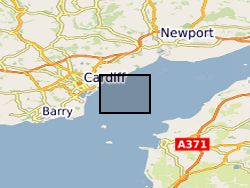
MEDIN Data. Within the project (WFA-CPC EMFF Protecting Our Seas), benthic and geophysical surveys were undertaken in the Severn Esturary/Môr Hafren SAC to explore the location of Sabellaria alveolata reefs, and collected bathymetry, sidescan sonar, AGDS and acoustic imagery data (ARIS) to identify areas of variable ground or potential features. A ten-day survey was undertaken in July 2020 to collect broad-scale acoustic data using an interferometric swath bathymetric system (GeoSwath Plus) and Acoustic Ground Discrimination System (RoxAnn™ AGDS). Twelve secondary survey areas were selected to be investigated in greater detail using high frequency sidescan sonar and an Acoustic Resonance Inspection System (ARIS Explorer 3000) camera in a second ten-day survey conducted in August 2020 (https://www.envision.uk.com/wp-content/uploads/2022/03/2018-1008-NRW-WFA-Protecting_Our_Seas_Final_Report_20210201.pdf) The data sets include: SSS (.tif) collected using Trident SeaStar MBES (.xyz) collected using GeoSwath Plus, AGDS (.csv and .asc) collected using RoxAnn™ AGDS ARIS imagery (.png and .mp4) collected using ARIS Explorer 3000 camera Shapefiles (.shp etc)
-

Supporting data for the paper 'Small-scale capillary heterogeneity linked to rapid plume migration during CO2 storage'. We supply experimental, analytical and numerical simulation data used in the paper. The supplied zipped folders follow the same order as the main paper, with codes to reproduce each figure (and those in the supporting information PDF). There are also video files (in the 5_Field_scale_simulation zipped folder) showing the final CO2 plume evolution from the static images in the main paper Figure 4. Descriptions of each of the folders are given below: 0 - README. This contains detailed instructions on the data and using the supplied files. 1 - Scaling analysis. This contains the scaling analysis analytical methods, with figure generation for Figure 1 in the main paper. 2 - Petrophysics. This contains all the petrophysical experimental data, analysis files and core flood simulation files. This is used to produce Figure 2 in the main paper. 3 - Fine_resolution_simulations. This contains the simulation files, Matlab post processing files and figure generation for the fine resolution simulations, presented in Figure 3 in the main paper. 4 - MIP_upscaling. This contains simulations files, Matlab post processing files and figure generation for the macroscopic invasion percolation scheme. The results of this are presented in the supporting information document. 5 - Field_scale_simulation. This contains the simulations files, Matlab post processing files and figure generation for the final field scale simulations in the main manuscript Figure 4 and in the supporting information. In each folder are separate READMEs containing specific information relevant for the included files.
-
The mechanics of olivine deformation play a key role in long-term planetary processes, including the response of the lithosphere to tectonic loading or the response of the solid Earth to tidal forces, and in short-term processes, such as post-seismic creep within the upper mantle. Previous studies have emphasized the importance of grain-size effects in the deformation of olivine. Most of our understanding of the role of grain boundaries in the deformation of olivine is inferred from comparison of experiments on single crystals to experiments on polycrystalline samples, as there are no direct studies of the mechanical properties of individual grain boundaries in olivine. In this study, we use high-precision mechanical testing of synthetic forsterite bicrystals with well characterized interfaces to directly observe and quantify the mechanical properties of olivine grain boundaries. We conduct in-situ micropillar compression tests at high-temperature (700°C) on bicrystals containing low-angle (4• tilt about [100] on (014)) and high-angle (60• tilt about [100] on (011)) boundaries. During the in-situ tests, we observe differences in deformation style between the pillars containing the grain boundary and the pillars in the crystal interior. In the pillars containing the grain boundary, the interface is oriented at ∼ 45° to the loading direction to promote shear. In-situ observations and analysis of the mechanical data indicate that pillars containing the grain boundary consistently support elastic loading to higher stresses than the pillars without a grain boundary. Moreover, the pillars without the grain boundary sustain larger plastic strain. Post-deformation microstructural characterization confirms that under the conditions of these deformation experiments, sliding did not occur along the grain boundary. These observations support the hypothesis that grain boundaries are stronger relative to the crystal interior at these conditions. This data set is associated with the pre-print manuscript with the DOI: 10.22541/essoar.167979601.17867144/v1