
Rich Text Format (RTF)
Type of resources
Available actions
Topics
Keywords
Contact for the resource
Provided by
Years
Formats
Representation types
Update frequencies
Resolution
-
This dataset contains responses to a set of evaluation questions on flood resilience improvement within communities in the Katakwi District, Uganda. This data were created as part of the NIMFRU project (National-Scale Impact Based Forecasting of Flood Risk in Uganda) and consists of 21 semi-structured interviews. These have been completed by community members from the project target communities of Anyangabella, Agule and Kaikamosing which are all found in the Katakwi district. Five of the interviews were completed by local district officers. The data were collected in December 2020. These data were collected to understand how communities resilience had changed as a result of the NIMFRU project. Full details about this dataset can be found at https://doi.org/10.5285/d5043ca4-5451-42f1-ae38-69e084bfad80
-
This dataset contains time series observations of land surface-atmosphere exchanges of sensible heat (H) and latent heat fluxes (LE), together with supporting meteorological and soil physics data obtained at six eddy covariance (EC) flux tower monitoring sites located across England and Wales. The flux monitoring sites include three croplands (two on peat, one on mineral soils), one grassland on peat, one lowland fen under conservation management, and a relatively intact upland raised bog. Data collection started in January 2023 and ended in January 2024, except for one site in Wales which ended in December 2023. Vegetation data was also collected and consist of manual measurements of canopy height, leaf area index , and biomass. This work was supported by the Natural Environment Research Council award number NE/R016429/1 as part of the UK-SCAPE programme delivering National Capability. Full details about this dataset can be found at https://doi.org/10.5285/b50e7291-b668-49bb-8226-f6371e707714
-
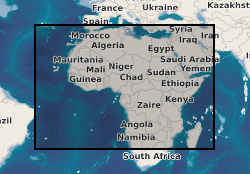
X-discontinuity observations recorded from receiver function stacks of passive-source seismic data. Receiver functions are recorded between January 1990 and October 2021 at numerous seismometers on the African continent (see Pugh et al., 2023 for details). Receiver functions are downloaded, processed using SMURFPy (Cottaar et al., 2020). They are subsequently stacked in the depth and time-slowness domains in 1 degree radius overlapping bins and interpreted for the presence of the X-discontinuity. The dataset comprises 597 stacks, their location, the depth of the X-discontinuity, a classification of the stack and the amplitudes of the X-discontinuity. See Pugh et al., 2023 for further details on the method, the code used to download, process and stack receiver functions can be found at: https://doi.org/10.5281/zenodo.4337258 Pugh et al., 2023 - Multigenetic Origin of the X-discontinuity Below Continents: Insights from African Receiver Functions.
-

This dataset contains the borehole image interpretation of the United Downs 1 borehole, Cornwall (BGSID: 21246966) The acoustic borehole images have been interpreted for faults, breakouts and conductive and resistive fractures. For faults and fractures each line in the file defines a plane passing through the borehole. This includes: • Depth at which the plane intersects the borehole wall, this is defined as the midpoint of the feature as each plane has a top and bottom intersection. • Azimuth, this is the azimuth of the dip direction of the plane, it is at 90 degrees to the strike of the feature. • Dip, this is the dip angle of the plane. • Type, this is a classification of the feature. For breakouts each line represents an individual feature which covers and area of the borehole wall. This includes: • Depth the midpoint depth of the breakout. • Azimuth, this is the orientation of the breakout. • Type, this is a classification of the feature. • Breakout Height, the length of the breakout in meters. • Breakout Width, the width of the breakout in degrees. • Type, this is a classification of the feature. The work was undertaken by BGS as part of the GWatt Project award reference number NE/S004262/1. It was funded by the UKRI Natural Environment Research Council.
-
Scanned and annotated thin sections, in plane-polarised and cross-polarised light. Derivative statistical data for mineral grainsize and spatial distribution.
-
Scanned and annotated thin sections, in plane-polarised and cross-polarised light. Derivative statistical data for mineral grainsize and spatial distribution. Younger Giant Dyke, Tugtutoq, South Greenland.
-
The data are nanoindentation, high-angular resolution electron backscatter diffraction (HR-EBSD), and transmission electron microscopy data collected on samples of synthetic forsterite bicrystals at room temperature. The data were collected in two samples, with high- and low- angle grain boundaries (HAGB, 60°, [100]/(011) and SB, 13°, [100]/(016)). The EBSD data are the basis for the HR-EBSD calculation. The HR-EBSD results are presented as Matlab data files. The nanoindentation data are categorised as a function of sample (‘ol13’ – low-angle grain boundary; and ‘ol60’ – high-angle grain boundary), and indenter tip geometry (spherical (with a 10 or 5 micron radius) and pyramidal (Berkovich). The data are presented in .xls files. The TEM data are presented as .tif files. The TEM data were collected in specific indents with various distances from the interfaces. These data have been published in the manuscript: : The Role of Grain Boundaries in Low-Temperature Plasticity of Olivine Revealed by Nanoindentation, with the DOI: 10.1029/2023JB026763
-

This data includes all of the information provided to the BGS (British Geological Survey) through the National Hydrocarbon Data Archive for the Hutton Field. It includes: Production data and a 3D seismic survey in addition to borehole records from 65 wells across the Hutton Field.