 NERC Data Catalogue Service
Bulk sampling
Type of resources
Available actions
Topics
Keywords
Contact for the resource
Provided by
Years
Formats
Representation types
Update frequencies
Service types
-

This Web service provides a spatial index into the BGS collection of onshore borehole materials in the UK and the Isle of Man, including drillcore, bulk specimens, washed and unwashed cuttings and processed material. The boreholes have been drilled by BGS, or by commercial or public bodies. The name of the borehole, its unique reference code and number (BGS_ID) and the type of material is provided. For some boreholes, multiple types of material are available. Details of the collection are held in the Borehole Materials Database, and may be accessed via the BGS website.
-
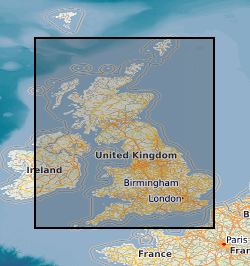
The British Geological Survey onshore borehole collection database of core and sample types and depths contains records of over 15 000 onshore boreholes drilled in the UK by BGS, commercial and public bodies. Material types include continuous drillcore, core samples, individual hand specimens, bulk samples, unwashed cuttings, washed and dried cuttings, plugs, powders and bulk samples. The physical collection and database was developed as part of the British Geological Survey's responsibility to establish and maintain a national borehole collection. Details of the collection are held in the Borehole Materials Database, and may be accessed via the BGS website. The collection was initiated in 1968, and the database is updated daily by the addition of new data and by modification of existing data. Most material is stored at the facility in BGS Keyworth. Some material is held at BGS Edinburgh. The majority of borehole cores and samples are available for study and sub-sampling by bona fide academics and commercial companies. Commercial companies are charged for access; academics will need to complete an academic waiver form. Some boreholes, especially recent hydrocarbon wells, are confidential, and depths and sample details may not be given. If you require further information about these boreholes, contact kwcorestore@bgs.ac.uk for details of the owner. In a few cases, the precise map references are also confidential.
-
This dataset contains raw experimental triaxial testing data as outlined in "Castagna, A., Ougier‐Simonin, A., Benson, P. M., Browning, J., Walker, R. J., Fazio, M., & Vinciguerra, S. (2018). Thermal damage and pore pressure effects of the Brittle‐Ductile transition in Comiso limestone. Journal of Geophysical Research: Solid Earth, 123(9), 7644-7660.s, http://dx.doi.org/10.1029/2017JB015105". The data is provided in a .zip folder containing the files of 16 experiments that are accompanied by a README file for introduction. Files format is Microsoft Excel Worksheet (.xlsx) and data are tabulated. Each file contains the corresponding relevant sample’s details, and each column of data is clearly labelled, units included. For each experiment, time, radial and axial pumps volume displacements and pressures, top and bottom pore fluid pumps volume displacements and pressures, internal temperature, LVDT signals were recorded. Twenty right cylindrical samples of ‘Comiso’ limestone (Ragusa Formation; Sicily) were tested in triaxial compression at a range of confining pressures simulating depths of 290 m, 620 m, 1.2 km, and 2.0 km respectively, assuming an average density of the over-burden load of 2470 kg/m3. Prior to strength test, each sample was either oven dried (ca. 12 hours at 85 °C followed by cooling in a desiccator for 1 hour) or water saturated (samples in distilled water under vacuum for 24 hours). A subset of these samples has also been thermally treated at 150, 300, 450 and 600oC to induce thermal cracking prior to the mechanical testing. All tests were conducted at 10-5 s-1 axial strain rate in assumed drained conditions when relevant, and at room temperature. For saturated tests, the initial loading was applied in two steps, first by increasing Pc hydrostatically (σ1=σ2=σ3) until the desired confining pressure was reached, and then introducing pore fluid pressure, as per the functionality of the experimental set-up. The experiments were conducted by Drs A. Castagna, M. Fazio and P. Benson using the Snachez triaxial cell at the Rock Mechanics Laboratory of the University of Portsmouth. All responsible for the collection and initial interpretation of the data. Only 17 experiments are reported in this set of data; the missing 3 datasets are believed to be only available on the local computer storage of the triaxial apparatus used at that time.