 NERC Data Catalogue Service
Text file (TXT)
Type of resources
Available actions
Topics
Keywords
Contact for the resource
Provided by
Years
Formats
Representation types
Update frequencies
Service types
Scale
-
The dataset contains 15 plots and data for time-dependent pressures and temperatures at various locations along a 2582-m-long well and at various simulation times. The realistic scenarios taken into considerations are applied to the Goldeneye depleted reservoir in the North Sea. Pure CO2 is injected into the well and then discharged in the Goldeneye reservoir. Six different scenarios are considered: three different injection durations (linear ramp-up of the inlet mass flow rate from 0 to 33.5 kg/s over 5 minutes, 30 minutes, and 2 hours) and two different upstream temperatures (278.15 K and 283.15 K). Data is currently restricted until publication.
-

Spatial data for Bishket urban pollution project data on groundwater pollution
-
Data output from the numerical flow modelling in GRL manuscript ""Evidence for the top-down control of lava domes on magma ascent dynamics"", by Marsden, L., Neuberg, J. & Thomas, M., all of University of Leeds. The models were created using the Laminar Flow module in COMSOL Multiphysics v5.4 by L. Marsden. The following files are uploaded: Archive_Reference_Model.txt (Reference flow model: Gas loss function, Initial H2O content = 4.5 wt.% Excess pressure at depth = 10 MPa, Constant corresponding to crystal growth rate = 4e-6 s^-1 ) Archive_High_H2O.txt (Gas loss function, Initial H2O content = 10 wt.% Excess pressure at depth = 10 MPa, Constant corresponding to crystal growth rate = 4e-6 s^-1) Archive_No_Gas_Loss.txt (No gas loss, Initial H2O content = 4.5 wt.% Excess pressure at depth = 10 MPa, Constant corresponding to crystal growth rate = 4e-6 s^-1) Archive_Gamma_Low.txt (Gas loss function, Initial H2O content = 4.5 wt.% Excess pressure at depth = 10 MPa, Constant corresponding to crystal growth rate = 1e-6 s^-1) Archive_Excess_Pressure_0MPa.txt (Gas loss function, Initial H2O content = 4.5 wt.% Excess pressure at depth = 0 MPa, Constant corresponding to crystal growth rate = 4e-6 s^-1) Archive_Excess_Pressure_20MPa.txt (Gas loss function, Initial H2O content = 4.5 wt.% Excess pressure at depth = 20 MPa, Constant corresponding to crystal growth rate = 4e-6 s^-1) The files uploaded include the reference flow model and where a single key parameter has been changed in the flow modelling. We include data where the key parameter is at the upper or lower limit of the values tested. Data are not included where magma ascent is modelled to stall without the extrusion of a lava dome, as a time dependent model is not run in this case. A solution is provided using equilibrium modelling only. The following variables are output, at conduit centre unless specified: Depth (m), Time(s), Ascent velocity (m/s), Bulk Viscosity (Pa s), Crystal Content, Dome height (m), Gas Volume Fraction, Overpressure (Pa), Shear Stress at Conduit Wall (Pa)
-
These data contain time series of stress, strain, confining pressure, pore pressure, pore volume and elastic wave velocities of samples of quartz sand aggregates deformed under hydrostatic and triaxial conditions at room temperature. This dataset is used and fully described/interpreted in the paper: Hangx S. J. T. and N. Brantut,Micromechanics of high pressure compaction in granular quartz aggregates, submitted to J. Geophys. Res.
-
Collection of annual publications from the global network of magnetic observatories. They typically contain tabulations of hourly, monthly and annual mean values of the geomagnetic elements. Contains all magnetic observatory year books held by the World Data Centre for Geomagnetism (Edinburgh).
-
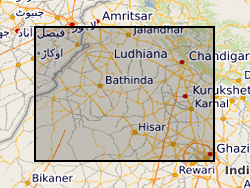
Matlab m-file code to generate a probabilistic model of aquifer-body occurrence in the subsurface of the Indo-Gangetic foreland basin, northwestern India. The accompanying ArcGIS ASCII matrix files give aquifer-body percentages in successive 10 m depth slices for use within the model. File xxx_01.txt is for depths 0-10 m, file xxx_02.txt for depths 10-20 m, etc.
-
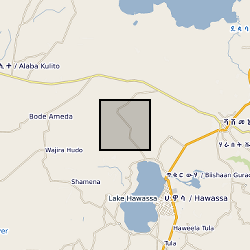
The RiftVolc microgravity network was comprised of a total of 4 benchmarks including a reference benchmark. Benchmark locations, observed gravity changes, dg14 -16, from 2014-2016, corresponding vertical deformation, Uz, free-air effect, and resultant residual gravity changes gr of the microgravity and GNSS network at Corbetti.
-
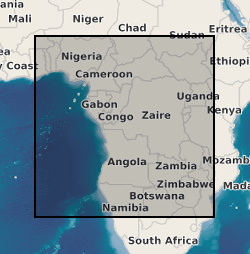
Multi-decadal time series of groundwater levels were compiled by the authors from records of observation wells initiated and maintained by government departments and research institutions in nine countries in sub-Saharan Africa. The pan-African collation of these hydrographs was initiated at the 41st Congress of the International Association of Hydrogeologists (IAH) in Marrakech (Morocco) on 14th September 2014. All records were subjected to a rigorous review by the authors during which the integrity, continuity, duration and interpretability of records were evaluated. This process included dedicated workshops in Benin, Tanzania, and Uganda, and records failing these tests were discarded from the analysis. Procedures included taking of the first time derivative to identify anomalous spikes in records commonly associated with errors of data-entry. Where multiple records in same geographic and climate zone were available (e.g. Benin, South Africa) we prioritized records remote from potential areas of intensive abstraction. Statistical clustering of records was also used in the Limpopo Basin of South Africa to identify the representativity of employed records at Modderfontein and Sterkloop.
-
Text data capturing pore fluid pressures (upstream and downstream), axial stress, axial and radial displacement were conditioned and logged by a high-speed data acquisition unit (NI-DAQ 6341) recording data at 10kHz. Two additional cantilever-type radial strain probes are attached directly to the sample at 90 degrees to each other, with an average output calculated via sqrt[(rA2 + rB2)], where rA and rB are the two radial outputs, to monitor an average radial strain and crack opening displacement.
-
All data dictionaries held in Oracle. They include both administrative (e.g. codes for companies), scientific (e.g. codes for deformation episodes) and geographic (e.g. codes for countries). Typically, they are used to constrain the allowable values held in other Oracle datasets. In some cases they are an implementation of the classifications that the BGS uses in its work.