 NERC Data Catalogue Service
Image (PNG)
Type of resources
Available actions
Topics
Keywords
Contact for the resource
Provided by
Years
Formats
Representation types
Update frequencies
Service types
Scale
-
[This metadata record has been superseded, see http://data.bgs.ac.uk/id/dataHolding/13608329]. This layer of the map based index (GeoIndex) providex an index to 17,500 borehole rock samples (drillcore) from the Mineral Reconnaissance Programme (MRP) and related studies. The UK Government's Department of Trade and Industry (DTI) funded BGS to provide baseline information on areas prospective for the occurrence of metallic minerals in Great Britain. This programme, known as the MRP, ran continuously from 1973 to 1997 and covered particular locations across Great Britain. It was designed to stimulate private sector exploration and to encourage the development of Britain's indigenous mineral resources. Under the programme a number of boreholes were drilled to gather information.
-
Image data published in AGU paper "Estimation of Capillary Pressure in Unconventional Reservoirs Using Thermodynamic Analysis of Pore Images". The images of unconventional shale rock pores were captured using nano-CT and SEM imaging methods. Images are segmented into fluid (or pore) and rock phases and are stored in RGB format as JPG files. Images were used to produce the plots and data presented in the above referenced paper.
-
This layer displays the urban areas for which there is an "urban geochemical mapping" report. An integral part of the G-BASE (Geochemical Baseline Survey of the Environment) mapping programme is to map and establish the soil geochemical baselines of urban areas. These data provide unique soil chemical information for the urban environment and are used to; assess the condition of soils within populated areas, identify and quantify human impact on soils in urban areas through comparison with the rural, natural soil geochemical background and Indicate elevated concentrations of potential harmful elements. 27 urban areas which have been sampled by the project to date.These include Glasgow, Nottingham, Ipswich and Cardiff.
-
This layer of the map based index (GeoIndex) shows the location of available Mineral Assessment Reports, the information for the index has been taken from the BGS UK Sand and Gravel Database. Each report studied the sand and gravel resources of an area of between one hundred and two hundred square kilometres. This layer shows individual polygons of the geographical areas covered by each report. Selecting the individual polygons via the map based index (GeoIndex) application gives details of the corresponding report title, number, author(s), subtitle and the date report was first published. The Department of the Environment commissioned this Report series from the British Geological Survey.
-

This dataset contains high-speed video recordings and particle image velocimetry (PIV) analysis results from granular flow experiments performed on an inclined flume with a fixed rough substrate, at the University of Edinburgh. Included are the high-speed videos (.mp4), a Word document outlining the experimental details and analysis methods, and figures displaying key analytical results of vertical velocity and granular temperature profiles. The flows consist of sand particles with a volumetric mean diameter of 875 µm, propagating over a substrate of coarser sand with a mean diameter of 1063 µm. Experimental conditions include varying slope angles (34°–42°) to investigate the influence of inclination on flow dynamics. PIV was used to analyse the videos, generating vertical velocity profiles and granular temperature profiles. Lens distortion was corrected using MATLAB to ensure accurate measurements. This dataset is relevant to those interested in granular flow dynamics, natural hazard modelling (e.g., landslides, pyroclastic density currents), and granular flow industrial applications.
-
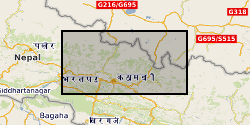
1. Rainfall (0.2 mm tipping bucket), accelerometer (OEM) and extensometer (string potentiometer) data from 10 instruments deployed across ground cracks in Sindhupalchok, Nepal in the aftermath of the 2015 earthquake. Data is provided in *.csv format, to include for each instrument: date, rainfall, extension(raw/min/max/mean/std), x(raw/min/max/mean/std), y(raw/min/max/mean/std), z(raw/min/max/mean/std). 2. Shapefiles of landslide mapping in the Upper Bhote Kosi valley, Sindhupalchok, Nepal, Including immediately post-earthquake (pre-monsoon), and post-2015 monsoon.
-

Data consist of electron microprobe, SEM, ICP-MS in laser and solution mode, and images of crystal mounts and thin sections, La Palma 2021. 35 samples of basalt, erupted during the 2021 Cumbre Vieja eruption on La Palma, Canary Islands, were collected in February 2022. The basalt samples were prepared for various kinds of analysis: powdered for ICP-MS (whole rock trace elements including chalcophile elements), made into thin sections for petrological analysis (imaged and mapped using Scanning Electron Microscope), and crushed and crystals picked and mounted for targeted microanalysis of melt inclusions, crystals using Electron Probe Microanalysis (EPMA, for major elements and volatiles S, Cl and F) and laser ablation ICP-MS (for trace elements including chalcophile elements). The overall aim of the project was to look at the chalcophile element abundance and distribution in the magmas feeding the eruption. The data here relate to a NERC Exploring the Frontiers project.
-

3D simulation results and animations of copper leaching, transport and deposition in sedimentary basins during the postrift stage according to Scenario 1 in Bahlali et al. (2025). Models are built using surface-based modelling approach (doi:10.1007/s11004-018-9764-8). Flow simulations are run with IC-FERST (multifluids.github.io), using unstructured tetrahedral meshes that adapt to geological heterogeneity and flow behaviour throughout the simulation to improve simulation quality and performance. Folder structure: Simulation: Contains 3D unstructured adaptive mesh output in .vtu format (openable with ParaView, www.paraview.org). Time interval between successive outputs is 50,000 years. Animations: Includes Supplementary Videos (SV) visualising - SV2: 3D view of salt transport over the postrift period (salinity in kg/kg) - SV3: Brine circulation and copper deposition over the postrift period - SV4: 3D view of Cu transport (rock Cu concentration in kg/kg) - SV5: 3D view of Cu transport (groundwater Cu concentration in kg/kg) - SV6: Top view of Cu mineralisation at the redox boundary (rock Cu concentration in kg/kg)
-
Apatite as a quantitative tool for tephrochronology and magmatic evolution (NERC grant NE/K003852/1)
Documentation of experiments run to investigate partitioning of H-C-F-Cl (Hydrogen, Carbon, fluorine, Chlorine) in the system apatite-melt. Data include representative images of each experiment, together with a description of run conditions as documented in an accompanying manuscript by Riker et al. (submitted).
-

This collection brings together five interrelated datasets from the University of Hull research program on the turbulent suspension of sediment in stratified shear flows. It includes: numerical simulations of thermally stratified and sediment-laden channel flows performed using open-source NEK5000 v19, with initial conditions and post processed data; experimental measurements from a novel Stratified Flow Facility (SFF), with raw and processed (insitu) ultrasonic and optical equipment; and a full brief of facility design. The collection also links to a GitHub repository containing a Python-based processing suite for stratified flow simulations and experiments. Together, these datasets provide raw and processed data, experimental metadata, and technical documentation to support the study of turbulence, internal waves, particle transport, and measurement methodologies in stratified fluid dynamics.