 NERC Data Catalogue Service
Image (JPEG)
Type of resources
Available actions
Topics
Keywords
Contact for the resource
Provided by
Years
Formats
Representation types
Update frequencies
Service types
Scale
-
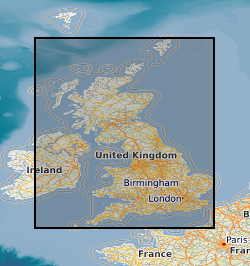
Field photographs of rock formations or modern precipitates from the sedimentary environment. Samples were collected throughout the UK. This data was collected between February 2019 and November 2019. This data was collected to better understand the low temperature cycling of Telurium (Te) and Sellenium (Se) in the geological environment. For example, a range of ochre samples were included in this data. Ochres are a modern precipitate commonly found in rivers and streams which flow through geographical areas with a history of mining resources which are rich in sulphides. Iron from the sulphides are leached out and deposited downstream, coating river and stream beds, giving a red, yellow or orange colouration. Ochres can be a sink for trace metals such as Te and Se, therefore studying these environments could be informative from a resource perspective but also from an environmental hazard perspective. This data would be useful for researchers who require reference photographs for similar studies or as an aid for resampling.
-
Photos and videos collected during earthquake damage surveys of the village of Amatrice, central Italy. The earthquake struck on the 24th of August 2016 at 3:36 am local time, a Mw 6.2 earthquake struck a mountainous region of central Italy on the borders between Umbria, Marche, Lazio and Abruzzo. The Earthquake Engineering Field Investigation Team (EEFIT) mission ran from the 4th to the 15th of October 2016. The three main aspects investigated were the ground surface effects caused by the earthquake, the structural damage of masonry buildings and bridges and the effects of the earthquake on reinforced concrete structures and infrastructure.
-

This image dataset was captured as part of the operation of an automated weather station at the Virkisjökull-Falljökull Glacier, SE Iceland. The station formed part of the BGS Iceland Glacier Observatory network of sensors, deployed between 2009 and 2020 in order to characterise and identify glacial, geomorphological and hydrological drivers and processes and their timescales across the deglaciating Virkisjökull-Falljökull catchment in SE Iceland. This image time series was generated alongside the continuous operation of two further weather stations, river gauging, a network of groundwater level gauges and numerous other forms of monitoring. The records presented here begin in September 2011 with the installation of the camera on the weather station, and continue to December 2019. The data complements the published groundwater and river gauging datasets published here, and will be of use to researchers, teachers and students wishing to see an excellent example of glacier flow, or those interested in the processes observed in a rapidly deglaciating landscape, including anyone interested to follow up on the various research studies published from this site in the international literature. The BGS project was led and coordinated by Dr Jez Everest, and during earlier years Tom Bradwell (Uni of Stirling, formerly BGS). Technical support and implementation was provided by Heiko Buxel and Tom Shanahan. The dataset is not fully continuous as certain periods were lost due to equipment downtime. Enquiries are welcome and should be directed to Dr Everest.
-
Measurements of the aspect ratio of plagioclase grains in dolerites from sills. Photomicrographs (several per sample across each of the sills, at a magnification such that the long side of the field of view is 4.5mm long) are each accompanied by a drawing showing a pair of lines for each observable grain, giving the long and short axis of the grain intersection as viewed in thin section, together with a drawing showing only the long axes of each grain. A summary file provides the number of grains measured in each sample, together with the average aspect ratio, with 1σ uncertainties calculated using a bootstrap method. The grain size is reported for all grains measurable in the set of photomicrographs (in mm), and is taken as the length of the long axis for each grain intersection in thin section. The average grain size and the skew of the population is also provided. The choice of the area in each thin section to photograph and analyse was random, although any areas of late-stage alteration were avoided. This dataset is useful to anyone seeking to quantify plagioclase grain size in tabular mafic intrusions.
-
Digital images of petrology rock thin sections from samples that are referenced in the BGS Petrological Collection Database (Britrocks). Two reference images are being captured for each thin section, one taken in Plane Polarized Light (PPL) and the other in Crossed Polarized Light (XPL). The Britrocks database provides an index to the BGS mineralogical & petrological collection. The computer database covers samples in the UK onshore mapping collection together with worldwide reference minerals and the Museum Reserve collection. The first England and Wales collection sample is from circa 1877, Threshthwaite Comb, Cumbria (collected by the Reverend Clifton Ward). The addition of new samples, transfer of records from registers and updates of existing records is ongoing on a regular basis. Internet access to the database is provided on the BGS web site. Capture of the Scottish Collections began February 2012. Capture of the English and foreign collections began in December 2012.
-

Imagery taken with a DJI Phantom 4 Pro drone using the as supplied RGB camera for part of the slopes above the A83 Rest and Be Thankful, Scotland in 2016. Images cover part of the slopes affected by Storms Desmond and Frank.
-
Pictures of sulphides and trace element concentrations from ore minerals in the El Teniente porphyry Cu-Mo deposit, Chile. Samples were picked for analysis from the Natural History Museum London’s ore collection. This data contains petrological photographs and trace element concentration of ore minerals. This data was collected as part of the TeaSe consortium NERC grant in order to determine the concentration and hosting of critical and precious metals in various types of ore deposits and barren rocks from different geological environments. This data was collected and interpreted by researchers at Cardiff University.
-
The Marine Photographs Archive held by BGS includes photographs of hydrocarbon well and (non-hydrocarbon) marine boreholes, cores and other samples. There are also photographs of the seabed and survey operations. The photos are primarily for the UKCS (United Kingdom Continental Shelf) and surrounding areas and date from the 1970s onwards. The photographs, which are a mix of prints, negatives and digital are applicable to a wide range of uses including environmental, geotechnical and geological studies. There are also some x-rays of cores.
-
These data consist of spatial and temporal datasets for 11 different small-scale laboratory experiments of fluid-driven fractures, described in the paper Up, down, and round again: the circulating flow dynamics of flux-driven fractures (Chalk and Kavanagh, accepted in Physics of Fluids, February 2024). These experiments, conducted at the University of Liverpool, are analogue models of natural fluid-driven fractures in glacial and magmatic settings. Fractures were created by injecting water or silicone oil into transparent gelatine at a constant rate. The total experimental data set consists of 11 different experiments named: S1,S2,S3,S4,S5,W1,W2,W3,W4,SH,WH. S experiments involve the injection of silicone oil, and W experiments involve the injection of water. The raw data consist of a temporal series of jpegs from camera recordings of each experiment, located in the subdirectory "frames". For all experiments except for WH and SH, the data also consist of a temporal series of csv files containing spatial velocity data of the internal fluid flow, located in the subdirectory "PIV". These data are described in further detail in the metadata file in the raw data directory.
-
Organic carbon and total nitrogen isotope data for black shales and U-Pb data for apatite solutes from the Burzyan and Yurmatau groups in the Urals, Russia. For detailed discussion see Stüeken, E.E., Kuznetsov, A.B., Vasilyeva, I.M., Krupenin, M.T. and Bekker, A., 2021. Transient deep-water oxygenation recorded by rare Mesoproterozoic phosphorites, South Urals. Precambrian Research, 360, p.106242.