 NERC Data Catalogue Service
Delimited ASCII
Type of resources
Topics
Keywords
Contact for the resource
Provided by
Years
Formats
Representation types
Update frequencies
Scale
-
Over 22000 km of corrected aeromagnetic total intensity data from various surveys in offshore petroleum areas in UK Continental Shelf and overseas collected to assist directional drilling. Line separation is 2 km and flight altitude is 80 m above sea level and navigation is by GPS (Global Positioning System). Some surveys have been bought or commissioned on an exclusive basis by BGS and can be used without further ado, others require permission sought from the aeromagnetic survey company or end-client.
-

Geophysical survey data from Fluid Processes and Waste Management projects for UK and European investigations. Data comprise distinct surveys using a variety of geophysical methods and equipment. All data held electronically as XYZ ASCII-type data points.
-

Values of the geomagnetic field vector components computed from measurements made on land, at sea and in the air since 1900 all round the world. Repeat station data (collected at one location over many years and reduced to a magnetically quiet level) are an important part of this dataset. These data are useful for charting the Earth's magnetic field on time scales of years to decades.
-
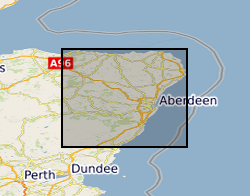
The database contains a range of geochemical data for metamorphosed limestones from the Dalradian of Scotland and Northern Ireland. The data include a) whole-rock geochemical analyses by XRF (X-Ray Fluorescence) for major oxides and a range of trace elements for several hundred samples, b) a number of whole-carbonate O (oxygen) and C (carbon) stable isotope and Sr (strontium) data, c) electron microprobe mineral data on carbonates and calc-silicate minerals and d) ion-probe O stable isotope and mineral trace element data for calcites in a small number of samples. The samples from which the data have been derived were collected from a wide range of outcrops within the Scottish and Irish Dalradian, mainly concentrated in the North East Grampian Highlands of Scotland. The data have been collected mainly to support the mapping and scientific work being undertaken in the Grampian Highlands by BGS since the early 1980s. The database includes some data from the literature. All samples are located by British National Grid coordinates to the nearest 10m or better. The isotope data were acquired as part of a PhD study by C W Thomas in the late 1990s. The database is not currently being added to, but is still being used in various studies. The combined data provide wide-ranging insights into marine chemistry contemporary with deposition of the limestones and the way in which this chemistry changed with time during the Neoproterozoic, and they elucidate subsequent effects of diagenesis and metamorphism and the outcrop and grain-scale. The data set is largely complete with regard to geochemical data, but still requires some editing to bring all fields up to date, particularly with regard to lithostratigraphical assignation. The data are currently held in MS Access tables and can conveniently be displayed via GIS or abstracted in tabular form and used in spreadsheets, statistical analysis and graphing software.
-
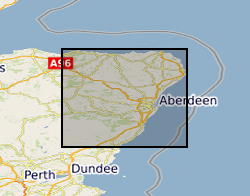
The database contains basic tabulated field data resulting from the work of the BGS East Grampians Project in the early 1980s to mid 1990s. Records include the locations of stations at which field observations were made, structural measurements and sample locations. To this end, the database provides an index to locations and structural data. However, it needs to be stated clearly that labels given to structural elements are largely subjective beyond the identification of bedding. This means that the structural data are largely unusable without a clear understanding of their context and with regard to the primary paper record on which descriptions of the observed structures are recorded. The data are held in MS ACCESS tables which are related via the Station number as the primary key. The coverage is mainly confined to the North East Grampian Highlands of Scotland. The database is currently unused and has not been added to since the end of the East Grampians Project. The station location and structural data are effectively complete. However, fields in the sample database, such as the sample stratigraphy, are largely incomplete because, at the time the data were acquired, the stratigraphy at each station was formally undefined. The most effective way of presenting and investigating the data is via GIS.
-
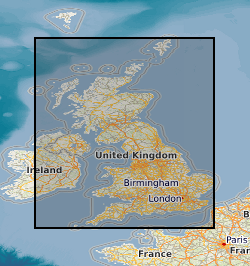
[This metadata record has been superseded, see http://data.bgs.ac.uk/id/dataHolding/13480158] The Geophysical Borehole Log index provides details of all digital geophysical logs available to BGS. The database provides the borehole metadata related to logging and metadata for the logging itself and log data stored in a proprietary hierarchical database system (PETRIS RECALL). Contains most digital geophysically logged bores known to BGS National Geological Records Centre. Scattered distribution of boreholes, locally dense coverage, relatively few logs from Scotland & Central Wales, increasing data density on UK continental Shelf.