
University of Plymouth
Type of resources
Available actions
Topics
Keywords
Contact for the resource
Provided by
Years
Formats
Representation types
Update frequencies
status
Resolution
-
This dataset contains acute and chronic ecotoxicology measurements of Eisenia fetida earthworms exposed to different types and concentrations of bio-based textile-derived microfibres. Acute test (72 hours) measured earthworm mortality across a range of fibre concentrations, following OECD TG 207 standard guidelines. Chronic tests (following OECD TG 222 guidelines), using one fibre concentration were conducted over 28-days and measured mortality, growth, reproductive output (number of egg cocoons and juveniles), oxidative stress and elemental composition of earthworms. Data were collected in order to establish lethal thresholds and sub-lethal effects of different textiles microfibres (bio-based and conventional). This research is part of the BIO-PLASTIC-RISK project, funded by Natural Environment Research Council through the grants NE/V007556/1 and NE/V007246/1. Full details about this nonGeographicDataset can be found at https://doi.org/10.5285/577486c2-c6e1-4588-957d-69c1a3d85628
-
This dataset contains ecotoxicological measurements of coastal plant species Plantago coronopus, following exposure to microplastics and seawater inundation. The variables measured include mortality, growth, reproductive output, necrosis and photosynthetic efficiency, recorded over a total duration of 64-days. This dataset was created as part of an experiment to investigate the effects of exposure to commercial pre-production biodegradable (polybutylene adipate terephthalate, PBAT) and conventional (Polyethylene terephthalate, PET) microplastics (0.2 % w/w). Work was supported by the NERC funded BIO-PLASTIC-RISK project, grant NE/V007556/1. Full details about this nonGeographicDataset can be found at https://doi.org/10.5285/6c95ed4f-bf16-40bb-8a16-ceb56aab1986
-
This dataset contains ecotoxicology measurements of Eisenia fetida earthworms exposed to different types of bio-based teabags, at four concentration levels. Variables measured include mortality, growth, reproductive output (number of egg cocoons and juveniles) and were collected over a 28-day period. This research is part of the BIO-PLASTIC-RISK project, funded by Natural Environment Research Council through the grants NE/V007556/1 and NE/V007246/1. Full details about this nonGeographicDataset can be found at https://doi.org/10.5285/b01a4ec1-90b0-4690-924f-a408a3280149
-
This dataset contains a range of measurements associated with the degradation of Polylactic acid (PLA)-cellulose based teabags, buried in soil. Degradation measurements were calculated following a 7-month burial period from November 2021 to June 2022. Variables measured include: mass change, mass change of PLA, crystallinity change, and pyrolysis gas chromatography-Mass spectroscopy (GCMS) data for each teabag type. This research is part of the BIO-PLASTIC-RISK project, funded by Natural Environment Research Council through the grants NE/V007556/1 and NE/V007246/1. Full details about this dataset can be found at https://doi.org/10.5285/24eddfa6-c97e-4a27-a84f-063ab3981058
-
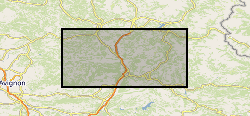
Stable Isotope and trace element analyses (Ca, Sr, Mg, Fe and Mn concentrations) derived from Cretaceous Belemnites including Duvalia tornajoensis, D. cf. lata constricta, D. binervia, D. cf. emericii, Hibolithes, H. cf. jaculoides, Berriasibelus, Castellanibelus and Pseudobelus.
-

Clumped isotope analyses, raw data, replicates and temperatures calculated using the empirical calibration of Wacker et al. (2014), recalculated using the [Brand] isotopic parameters.
-
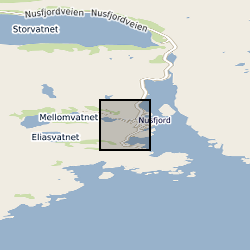
The database contains field measurements and field descriptions of pseudotachylytes and mylonites that formed at lower crustal conditions and that are now exposed on the Nusfjord ridge, Lofoten, northern Norway. The field measurements were used to derive earthquake source parameters associated with the generation of the Nusfjord pseudotachylytes.
-
This dataset (1.5 GB) comprises SO2 emission data (SO2 camera and DOAS) of parts of the active 2013 phase from Colima, as well as Scanning electron microscope (SEM) images and microprobe data of the collected ash from explosions and lava and dome rock. These data were used in the following paper: Cassidy, M., Cole, P.D., Hicks, K.E., Varley, N.R., Peters, N., Lerner, A. 'Rapid and slow: Varying ascent rates as a mechanism for Vulcanian explosions' Earth and Planetary Science Letters. 420: 73-84. doi:10.1016/j.epsl.2015.03.025
-
The dataset contains information on the crystallographic orientation and on the grain size of minerals in the brittle-viscous shear zones. The methodology used to generate it is polarized light microscopy, scanning electron microscopy (SEM) and electron backscatter diffraction (EBSD)
-

Our proposed research is based on cores collected during the recent, and very successful, Integrated Ocean Drilling Program (IODP) Expedition 340. The aims of this expedition were to investigate the volcanism and landslide history of the Lesser Antilles volcanic arc, by collecting a number of cores offshore Montserrat and Martinique. As a shipboard planktic foraminifera (single celled calcareous plankton) biostratigrapher (dating sediment cores using the appearances and disappearances of fossil plankton), Deborah Wall-Palmer (proposed PDRA) has access to these cores during the one year moratorium period. Until IODP Exp. 340, the longest continuous record (~250,000 years) of volcanic activity on Montserrat was a 5.75 m core collected to the south-west of the island in 2002, CAR-MON 2. This core revealed a more extensive and complete record of volcanic activity than that available in terrestrial cores. The longest continuous sediment record collected during Exp. 340 extends this record considerably. At 139.4 m in length, Hole U1396C records events back to 4.5 million years ago. The majority of this Hole will undergo stratigraphic analysis at low resolution, which will be carried out by other Exp. 340 scientists (Andrew Fraass, Mohammed Aljahdali). The upper 7 m section of this Hole is estimated to span 300,000 years and is comparable to the time period recovered in sediments for Holes U1394A/B (0 to 125 cm) and U1395B (0 to 30 cm). Holes U1394A/B and U1395B were collected close to Montserrat, in the main path of eruptive material from the Soufriere Hills volcano and contain a high resolution, but interrupted record of volcanic eruptions and landslides. Our proposed research is to provide a high resolution (every 2000 yrs) age framework across the upper ~300,000 year sections of these three cores. This will be achieved by collecting specimens of the planktic foraminifera Globigerinoides ruber and analysing the stable oxygen isotope ratios contained within their calcium carbonate tests (shells). Oxygen isotope ratios provide information about the global ice volume and global climate, and the standard record can be identified world-wide. Correlation to this record can therefore be used to provide an age framework for sediments, which is more detailed than using the biostratigraphic range of species alone. Producing this age framework is essential for achieving the overall aims of Exp. 340 as it will be used, in collaboration with several other Exp. 340 scientists, to reconstruct the volcanic and landslide history of Montserrat. In addition to this, to ensure the conservative use of samples, some further work will be carried out on samples requested from the upper 7 m of Hole U1396C. This will assist in constructing the low resolution stable isotope and biostratigraphic framework for the remainder of this Hole. The majority of this work is being carried out by Andrew Fraass (University of Massachusetts) and Mohammed Aljahdali (Florida State University). We will analyse the upper 7 m of Hole U1396C, at low resolution, for stable oxygen isotopes of the benthic foraminifera Cibicidoides spp. and for planktic foraminifera datum species.