
University of Leicester
Type of resources
Available actions
Topics
Keywords
Contact for the resource
Provided by
Years
Formats
Representation types
Update frequencies
status
Scale
Resolution
-
This dataset for the UK, Jersey and Guernsey contains the Corine Land Cover (CLC) revised for 2006. This shapefile has been created from combining the 2006 land cover layers from the individual CLC database files for the UK, Jersey and Guernsey. CLC is a dataset produced within the frame of the Initial Operations of the Copernicus programme (the European Earth monitoring programme previously known as GMES) on land monitoring. CLC provides consistent information on land cover and land cover changes across Europe. This inventory was initiated in 1985 (initial year 1990) and then established a time series of land cover information with updates in 2000 and 2006 the last one being the 2012 reference year. CLC products are based on the analysis of satellite images by national teams of participating countries - the EEA member and cooperating countries - following a standard methodology and nomenclature with the following base parameters: * 44 classes in the hierarchical three level Corine nomenclature; * Minimum mapping unit (MMU) for status layers is 25 hectares; * Minimum width of linear elements is 100 metres; The resulting national land cover inventories are further integrated into a seamless land cover map of Europe. Land cover and land use (LCLU) information is important not only for land change research, but also more broadly for the monitoring of environmental change, policy support, the creation of environmental indicators and reporting. CLC datasets provide important datasets supporting the implementation of key priority areas of the Environment Action Programmes of the European Union as protecting ecosystems, halting the loss of biological diversity, tracking the impacts of climate change, assessing developments in agriculture and implementing the EU Water Framework Directive, among others. Full details about this dataset can be found at https://doi.org/10.5285/2d0cf17f-aabd-4be6-859b-55c3403bbd9a
-
The data set consists of rock samples collected from Burnmouth, a core drilled at Norham, from Crumble Edge, Willie's Hole and Nova Scotia from 2012-2016; milled material is included. There is an Excel spreadsheet of sample numbers with location, sample height on log, lithology and fossil content. Scans of field logs from Burnmouth, Crumble Edge, Edington Mill, Pease Bay (UK) and locations in Nova Scotia, and overview drawn-up logs from Burnmouth, Norham, Crumble Edge and Willie's Hole are included. Scans of thin section scans are also included. There is a spreadsheet containing geochemistry data - sample numbers with lithology and %C, %S, d13C. These data were used to interpret the environment in which early tetrapods have been found in the early Carboniferous. Publications include: Bennett et al., 2016 (doi: 10.1111/sed.12280); Bennett et al., 2017 (http://dx.doi.org/10.1016/j.palaeo.2016.12.018 0031-0182); Clack et al., 2016, (DOI: 10.1038/s41559-016-0002); Kearsey et al., 2016 (http://dx.doi.org/10.1016/j.palaeo.2016.05.033) ; Clack et al., 2018, (doi:10.1017/S1755691018000087); Millward et al., 2018 (doi: 10.1111/sed.12465); Ross et al., 2018 (https://doi.org/10.1017/S1755691018000142)
-
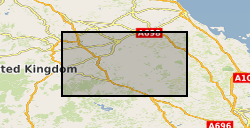
The data set consists of rock samples collected from Coquetdale, Coldstream and Whitrope Burn from 2013-2014; milled material is included. There is an Excel spreadsheet of sample numbers with location, sample height on log, d13C data and %C. There are scans of field logs from Coquetdale, Coldstream and Whitrope Burn, and Illustrator drawn logs from Coldstream which include samples collected at a later date. Scans of thin sections are also included. (thin sections to be kept at Leicester for the time being – still being worked on for papers.) Each locality folder has an Excel spreadsheet detailing samples, sample height, %C and bulk and specific d13C values. These data were used to interpret the environment in which early tetrapods have been found in the early Carboniferous. These data supported the MPhil thesis 'In an alternating marine and non-marine depositional setting, where and how are early Carboniferous tetrapods preserved?' by Sherwin, 2018, and one publication including data from Whitrope Burn - Richards et al., 2018, (https://doi.org/10.1017/S1755691018000166).
-
This dataset is the 2018 Corine Land Cover map, consisting of 44 classes in the hierarchical three level Corine nomenclature. Corine Land Cover (CLC) 2018, CLC change 2012-2018 and CLC 2012 revised are three of the datasets produced within the frame of the Copernicus programme on land monitoring. Corine Land Cover (CLC) provides consistent information on land cover and land cover changes across Europe; these two maps are the UK component of Europe. This inventory was initiated in 1985 (reference year 1990) and established a time series of land cover information with updates in 2000, 2006 and 2012 being the last iteration. CLC products are based on photointerpretation of satellite images by national teams of participating countries – the EEA member and cooperating countries – following a standard methodology and nomenclature with the following base parameters: 44 classes in the hierarchical three level Corine nomenclature; minimum mapping unit (MMU) of status layers is 25 hectares; minimum width of linear elements is 100 metres; minimum mapping unit (MMU) for Land Cover Changes (LCC) for the change layers is 5 hectares. The resulting national land cover inventories are further integrated into a seamless land cover map of Europe. Land cover and land use (LCLU) information is important not only for land change research, but also more broadly for the monitoring of environmental change, policy support, the creation of environmental indicators and reporting. CLC datasets provide important datasets supporting the implementation of key priority areas of the Environment Action Programmes of the European Union as protecting ecosystems, halting the loss of biological diversity, tracking the impacts of climate change, assessing developments in agriculture and implementing the EU Water Framework Directive, among others. More information about the Corine Land Cover (CLC) and Copernicus land monitoring data in general can be found at http://land.copernicus.eu/. Full details about this dataset can be found at https://doi.org/10.5285/084e0bc6-e67f-4dad-9de6-0c698f60e34d
-
This dataset for the UK, Jersey and Guernsey contains the Corine Land Cover (CLC) changes between 2006 and 2012. This shapefile has been created by combining the land cover change layers from the individual CLC database files for the UK, Jersey and Guernsey. CLC is a dataset produced within the frame of the Initial Operations of the Copernicus programme (the European Earth monitoring programme previously known as GMES) on land monitoring. CLC provides consistent information on land cover and land cover changes across Europe. This inventory was initiated in 1985 (initial reference year 1990) and then established a time series of land cover information with updates in 2000 and 2006 with the last one being for the 2012 reference year. CLC products are based on the analysis of satellite images by national teams of participating countries - the EEA member and cooperating countries - following a standard methodology and nomenclature with the following base parameters: - 44 classes in the hierarchical three level Corine nomenclature - Minimum mapping unit (MMU) for Land Cover Changes (LCC) for the change layers is 5 hectares. The resulting national land cover inventories are further integrated into a seamless land cover map of Europe. Land cover and land use (LCLU) information is important not only for land change research, but also more broadly for the monitoring of environmental change, policy support, the creation of environmental indicators and reporting. CLC datasets provide important information supporting the implementation of key priority areas of the Environment Action Programmes of the European Union as protecting ecosystems, halting the loss of biological diversity, tracking the impacts of climate change, assessing developments in agriculture and implementing the EU Water Framework Directive, among others. Full details about this dataset can be found at https://doi.org/10.5285/35fecd0f-b466-448b-94d1-0bba90be450e
-
This dataset is the Corine Land Cover (CLC) change map between 2012 and 2018, consisting of 44 classes in the hierarchical three level Corine nomenclature. The Corine land cover changes between 2012 and 2018 for the UK, Isle of Man, Jersey and Guernsey dataset forms part of the Corine Land Cover Maps collection and is produced within the frame of the Copernicus programme on land monitoring. Corine Land Cover (CLC) provides consistent information on land cover and land cover changes across Europe; this change map is the UK component of the European coverage. This inventory was initiated in 1985 (reference year 1990) and established a time series of land cover information with updates in 2000, 2006 and 2012 being the last iteration. CLC products are based on photointerpretation of satellite images by national teams of participating countries – the EEA member and cooperating countries – following a standard methodology and nomenclature with the following base parameters: 44 classes in the hierarchical three level Corine nomenclature; minimum mapping unit (MMU) of status layers is 25 hectares; minimum width of linear elements is 100 metres; minimum mapping unit (MMU) for Land Cover Changes (LCC) for the change layers is 5 hectares. The resulting national land cover inventories are further integrated into a seamless land cover map of Europe. Land cover and land use (LCLU) information is important not only for land change research, but also more broadly for the monitoring of environmental change, policy support, the creation of environmental indicators and reporting. CLC datasets provide important datasets supporting the implementation of key priority areas of the Environment Action Programmes of the European Union as protecting ecosystems, halting the loss of biological diversity, tracking the impacts of climate change, assessing developments in agriculture and implementing the EU Water Framework Directive, among others. More information about the Corine Land Cover (CLC) and Copernicus land monitoring data in general can be found at http://land.copernicus.eu/. Full details about this dataset can be found at https://doi.org/10.5285/027b6432-f44d-41ab-b349-89fae673d5f5
-
This dataset for the UK, Jersey and Guernsey contains the Corine Land Cover (CLC) for 2012 (CLC2012). This dataset has been created from combining the 2012 land cover layers from the individual CLC files for the UK, Jersey and Guernsey. CLC is a dataset produced within the frame of the Initial Operations of the Copernicus programme (the European Earth monitoring programme previously known as GMES) on land monitoring. CLC provides consistent information on land cover and land cover changes across Europe. This inventory was initiated in 1985 (initial year 1990) and then established a time series of land cover information with updates in 2000 and 2006 the last one being the 2012 reference year. CLC products are based on the analysis of satellite images by national teams of participating countries - the EEA member and cooperating countries - following a standard methodology and nomenclature with the following base parameters: - 44 classes in the hierarchical three level Corine nomenclature; - Minimum mapping unit (MMU) for status layers is 25 hectares; - Minimum width of linear elements is 100 metres; The resulting national land cover inventories are further integrated into a seamless land cover map of Europe. Land cover and land use (LCLU) information is important not only for land change research, but also more broadly for the monitoring of environmental change, policy support, the creation of environmental indicators and reporting. CLC datasets provide important datasets supporting the implementation of key priority areas of the Environment Action Programmes of the European Union as protecting ecosystems, halting the loss of biological diversity, tracking the impacts of climate change, assessing developments in agriculture and implementing the EU Water Framework Directive, among others. Full details about this dataset can be found at https://doi.org/10.5285/32533dd6-7c1b-43e1-b892-e80d61a5ea1d
-
Genetic profiling data relating to studies on Antarctic krill, Euphausia superba, that document the sequence of expression of genes over the moult cycle and the spatial-temporal expression of clock genes. This work was carried out to examine rhythmic behaviour patterns in this species - namely diel vertical migration and the moult cycle - and the functioning of the genes that underlie these behaviours. Circadian entrainment experiments were carried out twice during the Discovery 2010 summer cruise (cruise no JR177) using krill caught in nets at latitudes of 60S and 52S. Krill samples from each net were processed and preserved for subequent analysis using molecular biology technique to isolate canonical clock genes.
-

Through manufacturing, and geophysically characterising the properties and distribution of a range of synthetic gas hydrate morphologies in a range of sediments in the laboratory, protocols will be established for geophysically logging natural sediment-hydrate core preserved in pressure chambers on board ship. Based on pressure cycling, geophysical behaviour responses will be determined during the start of dissociation and formation. On this basis we then propose to develop protocols to characterise and classify hydrates sampled during ODP Leg 204, significantly improving our understanding of the nature and behaviour of these sediments. This new knowledge will enhance geophysical survey data, better constrain estimates of in-situ hydrates and improve the evaluation of hydrate destabilisation on methane release and slope stability.
-

Through manufacturing, and geophysically characterising the properties and distribution of a range of synthetic gas hydrate morphologies in a range of sediments in the laboratory, protocols will be established for geophysically logging natural sediment-hydrate core preserved in pressure chambers on board ship. Based on pressure cycling, geophysical behaviour responses will be determined during the start of dissociation and formation. On this basis we then propose to develop protocols to characterise and classify hydrates sampled during ODP Leg 204, significantly improving our understanding of the nature and behaviour of these sediments. This new knowledge will enhance geophysical survey data, better constrain estimates of in-situ hydrates and improve the evaluation of hydrate destabilisation on methane release and slope stability.