
Dublin Institute for Advanced Studies
Type of resources
Available actions
Topics
Keywords
Contact for the resource
Provided by
Years
Formats
Representation types
Update frequencies
-

Seismic data for four stations located on Seirra Negra volcano, Galapagos Islands, between 2022 and 2025. The stations were maintained and operated by NERC grant NE/W007274/1. The instruments (SN07, SN12, SN14, and SN17) are four GeoBit GeoTiny 'wideband' seismometers. SN17 replaced SN07 in 2023, at a new site ~200m from the old location. The data cover a period of surface uplift at Sierra Negra, driven by magma accumulation following the 2018 eruption. Data are uploaded as miniseed files, in folder structured by station/channel. Files follow a standard naming format e.g. 'EC.SN12..HHZ.D.2022.001' SN07: -0.80719, -91.17005, 1067m SN12: -0.811195, -91.134960, 954m SN14: -0.843680, -91.152610, 917m SN17: -0.805954, -91.170256, 1068m An xml file is also included which contains useful metadata about the station locations and instrument responses.
-
These data represent a series of analyses exploring the seismic behaviours of low-cohesion volcanic sediments – in this case the Neapolitan Yellow Tuff - under varying strain rates. The data include deformation logs from triaxial compression experiments, and the accompanying 12-channel acoustic emission recordings at 10 MHz. These are paired with X-Ray Computed Tomography images of one of the cores from both before and after deformation, to examine damage behaviour. These data include: Deformation logs captured from the triaxial press Acoustic emission event data Processed acoustic emission sonograms for selected events Matlab code for processing of sonograms Matlab code for statistical analysis of the acoustic emission data Before and after X-Ray Computed tomography data for a core which underwent 2% strain at a rate of 4x10⁻⁶ s-1. These data relate to Rowley et al - Deformation controlled Long-Period seismicity in low cohesion volcanic sediments https://doi.org/10.31223/osf.io/7rkzv
-
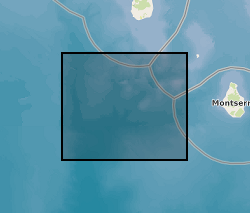
Earthquake hypocenters for all earthquakes detected on Montserrat by the Montserrat Volcano Observatory seismic network from July 1995 to February 2018 inclusive. Information includes: Origin Time, Latitude, Longitude, Depth, Hypocenter Errors, RMS and the number of stations used for each location.