
Water chemistry
Type of resources
Available actions
Topics
Keywords
Contact for the resource
Provided by
Years
Formats
Representation types
Update frequencies
Service types
Scale
Resolution
-
This dataset includes stream and rainfall hydrochemistry of the Plynlimon (Pumlumon in Welsh) research catchments in Mid Wales. The data cover the period from March 2023 to March 2024. Sampling was carried out every four weeks by a team of researchers from UK Centre for Ecology & Hydrology. Stream samples were taken using a grab technique and filtered in the field. Rain samples were collected using bulk precipitation collectors. Data are presented for major anions and cations, pH, conductivity, alkalinity and in-situ measurements for the water temperature and stream flow for the six stream locations and air temperature and volume for the rainfall sites. Full details about this dataset can be found at https://doi.org/10.5285/bd33173b-025f-4c50-aa15-0b853d4774bc
-
This dataset contains information about water conditions at Tatton Mere and Rostherne Mere, Cheshire over Summer 2022. Data was collected weekly as part of a study into the presence of algal blooms and the toxins they may produce. In situ testing recorded temperature, pH, oxygen and conductivity measures. Water samples were also collected and analysed in the laboratory for anion, cation and metal concentrations, chlorophyll-a concentrations and cyanobacteria identification and counts. The work was supported by the Natural Environment Research Council (Grant NE/X011607/1). Full details about this dataset can be found at https://doi.org/10.5285/3fcb8359-9ca3-4319-b680-e0286f59571a
-
This dataset contains information about the development of a paper analytical device for the detection of the microcystin toxin. Water samples were collected weekly from Rostherne Mere and Tatton Park Lake, Cheshire between 20/07/2022 and 12/10/2022. Samples were analysed for the presence of microcystin-producing genes and released microcystin. A paper analytical device incorporating a protein phosphatase inhibition assay was also used to monitor microcystin levels. Preliminary user evaluation of the paper analytical devices and associated mobile photo applications is also provided. The work was supported by the Natural Environment Research Council (Grant NE/X011607/1). Full details about this dataset can be found at https://doi.org/10.5285/5fe25b28-f10b-467b-8812-0b1ee6fd7491
-

This data pack contains processed data from straddle packer pump testing of TH0424 ground investigation borehole at the UK Geonergy Observatory at Thornton Science Park, Cheshire during October 2022. TH0424 (BGS borehole reference NG47NW249) is located at NGR Easting: 344965 Northing: 375857 and drilled to a depth of 101.14 mbgl. Full meta data for the test borehole is included in the borehole information pack (https://doi.org/10.5285/badff3b9-8bc8-4897-b324-7f4653fdd214). This dataset is accompanied by BGS open report OR/23/037 (https://nora.nerc.ac.uk/id/eprint/536445/) which provides context, description, and analysis of the data. Data sets included in this data pack: 1) Groundwater level data as measured by downhole transducers in the isolated packer intervals and outside packer intervals for 20 pump tests at various target depths/zones. Level data includes raw level readings as well as barometric pressure readings at surface and barometrically compensated level data. 2) Pump flow rate data during pump tests 3) Event logs including timestamped events such as packer inflation, pump deployment etc. 4) Hydrochemical data from on-site parameter measurements and analysed groundwater samples collected during constant rate pump tests. 5) Coring/drilling log of TH0410 with timestamped coring progress during the pump testing period. This dataset is included as activities at TH0410 during testing are thought to have significantly impacted data quality. 6) Logged abstraction events from the Thornton Science Park abstraction borehole (Borehole reference SJ47NW25, NGR 344950 375500, ~350m south of TH0424) by means of a pressure transducer attached to the borehole headworks. This dataset is included as abstraction of the TSP borehole is known to drawdown groundwater levels in TH0424.
-

This dataset contains geochemical data from springs, streams and monsoonal rainwater samples, collected from the Melamchi Valley catchment, Nepal, between 2022 and 2025. The data includes analysis of major ions, stable water isotopes and Sr, Li, Si and C isotopes to investigate chemical weathering along mountain flow paths. Filtered water samples were collected across the Melamchi Valley catchment, with springs grouped into sub-linear transects. Additional time series samples span 2023 to 2025 at bi/weekly sampling at 5 sites.
-
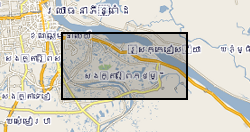
The dataset comprise hydrogeochemical, isotopic and environmental geophysics data from surface waters and groundwater and sediments from scientific boreholes drilled into arsenic-prone aquifers in the Mekong River Basin. The data is divided into 5 categories: Geophysical data Hydrogeochemical data Isotopic data Sedimentary data Outreach and Dissemination Publications to date - open access linkages The data pertain to samples obtained from northern Kandal province just south of Phnom Penh in Cambodia. The data were collected over the period 2013-2016. The hydrogeochemical data were obtained by one of more of (i) in situ analytical techniques; or (ii) instrumental geochemical techniques, notably IC, ICP-AES, ICP-MS and GC-MS in the Manchester Analytical Geochemistry Unit, University of Manchester following methods as described in Richards et al. (2015, 2017). The geophysical data were obtained as described in Uhlemann et al. (2017). The data were obtained as part of a project funded by NERC Standard Research Grant NE/J023833/1 the major purpose of which was to determine the extent to which surface derived organics may be driving arsenic mobilisation in shallow circum-Himalayan aquifers, an exemplar of which is norther Kandal Province's largely Holocene aquifers to which these data refer. The data were obtained and interpreted by the University of Manchester except as follows: environmental geophysics data were obtained and interpreted by Oliver Kuras and Sebastian Uhlemann of the British Geological Survey GTOM team; tritium data were generated by Jurgen Sultenfuss of the University of Bremen; oxygen and hydrogen isotope data by SUERC, East Kilbride and carbon-14 data by the NERC Radiocarbon Laboratory at East Kilbride.
-
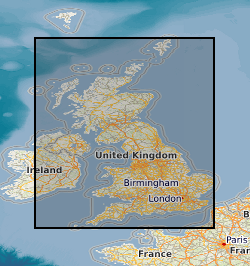
This layer of the map based index (GeoIndex) is a map based index of the National Well Record Archive. This index shows the location of water wells along with basic information such as well name, depth and date of drilling. The index is based on the collection of over 105,000 paper records of water wells, springs and water boreholes. Geological information, construction details, water quality data and hydrogeological data may also be available for some water wells. The amount of detail held on individual sites varies widely and certain fields will have an 'unknown' value where the paper records have yet to be checked for their content. The zero values for the depth represent those for which the depth has yet to be entered into the database from the paper records.
-
This dataset contains weather conditions, water quality, water chemistry and crustacean zooplankton counts sampled at Loch Leven throughout the year 2021. Loch Leven is a lowland lake in Scotland, United Kingdom. The data were collected as part of a long-term monitoring programme, which began in 1968 and is still underway. Sampling occurs roughly every 2 weeks with laboratory analysis and data processing being performed at the UK Centre for Ecology & Hydrology Edinburgh site. The sampling and processing was supported by the Natural Environment Research Council award number NE/R016429/1 as part of the UK-SCAPE programme delivering National Capability. Full details about this dataset can be found at https://doi.org/10.5285/f5dc095c-e3f6-4d9e-be80-40e35c298142
-

Geochemical data, cations, anions and stable and radiogenic strontium isotope data of Nepali rivers collected in 2002 as part of a study now accepted for publication as Stevenson et al. in American Journal of Science. The data set also includes supplementary information with the analytical solutions to the reactive transport equations describing dissolution-reprecipitation reactions in a carbonate matrix, definition of symbols and references that accompany the paper. The paper is authored by Emily Stevenson, Kevin Burton, Ian Parkinson, Rachael James, Basak Kisakürek, Ed Tipper and Mike Bickle.
-
This dataset contains weather conditions, water quality, water chemistry and crustacean zooplankton counts sampled at Loch Leven throughout the year 2022. Loch Leven is a lowland lake in Scotland, United Kingdom. The data were collected as part of a long-term monitoring programme, which began in 1968 and is still underway. Sampling occurs roughly every 2 weeks with laboratory analysis and data processing being performed at the UK Centre for Ecology & Hydrology Edinburgh site. The sampling and processing was supported by the Natural Environment Research Council award number NE/R016429/1 as part of the UK-SCAPE programme delivering National Capability. Full details about this dataset can be found at https://doi.org/10.5285/6dd7ac13-c3e3-4156-a0d8-929227dbf9e8