 NERC Data Catalogue Service
Volcanology
Type of resources
Available actions
Topics
Keywords
Contact for the resource
Provided by
Years
Formats
Representation types
Update frequencies
-

PROJECT DETAILS ONLY - NO DATA. We aim to conduct an in-depth study of the rheology and flow dynamics of foams and bubble suspensions in Newtonian liquids with gas volume fraction in the range 0 to 75% and to apply the results to the flow of vesicular magmas and lavas in various confined and unconfined geometries. We will determine shear and bulk viscosity and viscoelastic properties as a function of bubble concentration and size-distribution. Foam breakdown under shear, flow down slopes and along pipes will be investigated by experiments and numerical models. Results will be applied to magma flow along dykes and up conduits and lava flows down slopes
-

This dataset contains petrophysical characteristics of andesite samples (geometry, porosity, permeability) before and after a series of mechanical tests (which were conducted as part of another project). The data is presented in the publication Lamur et al., 2023 (https://doi.org/10.1038/s41598-022-26721-x). The data were collected at the University of Liverpool, analysed at the University of Liverpool and LMU Munich. All samples were collected on Colima volcano, Mexico. Experiments were conducted in 2021 and data analysed throughout 2021 and 2022. For each experiment, a rock cylinder of 25x50 mm (diameter x height) is prepared. Porosity data is calculated from sample geometry and volume measured in a helium pycnometer. Permeameter data is output automatically from the permeameter when a constant flow rate of helium gas through the sample is achieved, at which point the pressure differential and flow rate are used to calculate permeability. The values are for andesite samples from Colima volcano, pre- and post- mechanical testing. The data show the extent of changes of petrophysical properties possible by mechanical deformation in the brittle regime. Volcanic environments are often subjected to low magnitude; repetitive earthquakes that may contribute to the overall rock mass (or volcanic edifice/dome) fatigue. Understanding how such mechanical oscillations may change the characteristics of the volcanic rocks comprising the edifice can help better understanding associated hazards.
-

PROJECT DETAILS ONLY - NO DATA. This proposal seeks to test the hypothesis that a mantle hotspot was responsible for generating boninite magmas in the Izu - Bonin - Mariana (IBM) arc during the middle Eocene. Reconstruction of the plate configuration at that time places the nascent IBM arc close to the location of the present Manus Basin, where a high 3He/4He hotspot has been identified through helium isotope data and tomographic imaging. This project will deliver: 3He/4He data for middle Eocene boninites to resolve the hotspot-present or hotspot-absent models for initiation of the IBM arc. Pb and O isotope ratios and U and Th concentration data to aid in constraining subduction and crustal contamination in the petrogenesis of these rocks. A framework for investigating Archean tectonics and volcanic massive sulphide deposits.
-
Seismic data from volcano observatories and from laboratory experiments, plus description of novel methods of data analysis and synchronization. 6 papers - Library for volcanology and rock physics data analysis; An innovative platform to allow collaborative research in rock physics and volcanology; Trends in the aggregated rate of pre-eruptive seismicity at Kilauea volcano, Hawaii; Convergence of the frequency-size distribution of global earthquakes; Method for predictability of volcanic eruptions from monitored seismic data and; Evaluation of the failure forecasting model for volcanic eruptions.
-
Reconstructed data - This dataset contains the reconstructed image data. Each sub-folder contains a set of 2D slices that together make up a 3D image from that time point. Not all images from all datasets have been reconstructed, the values in parentheses refer to the scan numbers that have been reconstructed. Raw data - This dataset contains the raw unprocessed image data collected during the development of the XRheo system. Processed data - This dataset contains the post-processing outputs from analysis of the data from the XRheo development experiments. Each sub-folder contains the files generated during filtering, segmentation and separation of the features [M (melt), B (bubbles), X (crystals)], and the post processing analysis for size distributions and tracking. The data sets included are the results of dynamic X-ray tomography experiments performed on multiphase synthesised magmas being deformed under known temperature and strain rates for a concentric cylinder geometry.
-
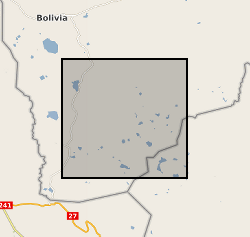
RINEX files of GPS observations obtained in the Uturuncu volcano and surroundings (Altiplano-Puna Deformation Anomaly) during the November 2018 and November 2022 campaigns. In the 2018 and 2022 campaigns, 8 and 10 GPS stations have been installed respectively to help constrain the temporal deformation at Uturuncu volcano. The data contains the GNSS observations made in the 2018 campaign at the stations of Depeche Mode (DEMO), Foo Fighters (FOOF), Jimmy (JIMY), Led Zeppelin (LDZP), Metallica (MTLC), Sex Pistols (SEXP), UBQ4 and UTU Base (UBAS) In the 2022 campaign at the stations of Depeche Mode (DEMO), Foo Fighters (FOOF), IGGY, Jimmy (JIMY), Led Zeppelin (LDZP), Metallica (MTLC), Nirvana (NRVN), Offspring (OFSP), Sex Pistols (SEXP) and UTU Base (UBAS) The following devices were used to obtain these data: -Receiver Leica GR30 (serial numbers 1705008, 1705617 and 1705619) -Antenna Leica AS10 (serial numbers 16071044 and 16151018) -Integrate antenna + receiver Topcon Hiper Pro (serial numbers 326-1106 and 342-0370) -Masts "Nysiros style" and UNAVCO single pin + masts. The duration of data collection ranges from 1 day to 6 days depending on the site of the collection.
-

PROJECT DETAILS ONLY - NO DATA. Since 20 September, 2005, an ~120 km-long segment of the Red Sea rift system in Ethiopia has been rocked by 31 earthquakes detected on seismometers worldwide. Ashes emanating from long, open fissures at the surface have blanketed a much wider area, displacing ~50,000 people and their livestock. Colleagues from Addis Ababa University report new fault scarps, and new displacements along existing fault scarps; these faults provide direct measures of rates of crustal deformation that can only be inferred from routine monitoring. The active rupture zone is much larger than has been associated with other historic sequences in the Afar depression, and other continental rift zones worldwide, suggesting this linked tectonic-volcanic crisis is a major event. Thus, the Boina seismo-volcanic crisis provides a superb opportunity to record directly the processes of continental breakup leading to the formation of a new ocean basin. Routine seismic, volcanic, and geodetic monitoring provides information on the time-averaged deformation, but misses the sometimes catastrophic discrete events that achieve the tectonic processes. This proposal aims to: 1) establish a seismic monitoring network to measure aftershock sequences and lava movement within the plate; 2) investigate reports of new eruptions and measure gas emissions from vents along the length of the rupturing segment and compare them with earlier baseline measurements from Afar; and 3) use space-based radar images acquired prior to, during, and after the crisis to measure the magnitude and extent of deformation across the region. Simple elastic modelling of seismic and radar interferometry results will allow us to estimate the proportion of tectonic vs magmatic deformation associated with continental rupture. Additionally, our measurements will provide a firm basis for hazard mitigation for the Ethiopian government coping with this catastrophe, supplementing the sparse infrastructure established by our Ethiopian colleagues.
-
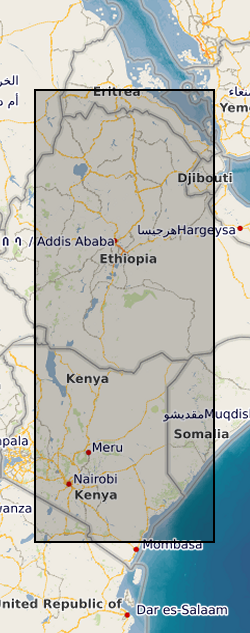
This data set contains a set of 20,740 unwrapped, geocoded interferograms derived from Sentinel-1 InSAR scenes processed over 63 volcanoes within the East African Rift system. A full description of the dataset is provided in the accompanying READMe file. This data set was first published in Albino, F. & Biggs, J. (2020). Magmatic processes in the east African rift system: Insights from a 2015-2020 Sentinel-1 InSAR survey, Geochemistry, Geophysics, Geosystems.
-

PROJECT DETAILS ONLY - NO DATA. Understanding of the fundamental dynamic controls of eruptive behaviour of andesite volcanoes using Montserrat as a case study. Quantitative petrology and geochemistry; thermodynamic models on changes in magma during degassing; experiments to constrain kinetic laws of crystallisation of degassing magmas; mathematical models on the dynamics of lava extrusion and explosive eruption.
-

Primary data, model initial conditions, model results, a compiled database of olivine diffusivity experiments and supplementary tables used in the paper: 'Mutch, E. J. F., Maclennan J., Shorttle, O., Edmonds, M. & Rudge, J. F., (2019), Rapid trans-crustal magma movement under Iceland, Nature Geoscience'. Data_S1 contains electron probe microanalysis (EPMA) profile data of olivine crystals used in this study. This file also includes all of the initial conditions for forsterite content (XFo), Ni and Mn used in the diffusion modelling. Standard deviations are averaged values of standard deviations from counting statistics and repeat measurements of secondary standards. Data_S2 is a compiled database of olivine diffusion experiments used to derive multiple linear regressions for diffusion coefficients and associated covariance matrices. Regressions were only made through [001] data. Data_S3 contains median values for all of the inverted parameters estimated for each crystal profile from the Nested Sampling Bayesian inversion for each type of initial condition and model equation. All of the Monte Carlo realisations for each model are also included in this file. Table_S1 is a supplementary table that contains olivine diffusion equation regression parameters derived and used as part of this study. Table_S2 is a supplementary table that contains covariance matrices for olivine diffusion equations derived in this study. Table_S3 is a supplementary table that contains covariance matrices for aSiO2 (silica activity) dependent olivine diffusion equations derived in this study. Table_S4 is a supplementary table that contains angles between the EPMA profile and the main crystallographic axes in olivine as measured by EBSD. These angles are incorporated into the anisotropy calculation used to determine the apparent diffusivity parallel to the measured profile. angle100P, angle010P and angle001P are the angles between the profile and [100], [010] and [001] respectively. Table_S5 is a supplementary table that contains ,median timescales and 1 sigma errors obtained from the posterior distributions of the Nested Sampling Bayesian inversion conducted on each olivine profile. The results using Al-based initial conditions, constant initial conditions (diffusion only), and aSiO2 based equations using Al-based initial conditions are presented here. The classification of each profile (growth-dominated vs. Al-decoupled) is also shown. See paper (Mutch, E. J. F., Maclennan J., Shorttle, O., Edmonds, M. & Rudge, J. F., (2019), Rapid trans-crustal magma movement under Iceland, Nature Geoscience) for more details.