
Volcanic eruption
Type of resources
Available actions
Topics
Keywords
Contact for the resource
Provided by
Years
Formats
Representation types
Update frequencies
-

These data present volume estimates from images (using the solid of revolution method from the cross-sectional area) of clasts expanding during vesiculation at high temperature. The data also contain clast interior volume estimates without the dense rind around the clasts (formed by diffusive outgassing, and estimated through time),l which is is calculated in Matlab. The methods are provided in more detail in Weaver et al., 2022. These data contain sample measurements (surface area), total clast volume calculation (using solid of revolution from clast cross-sectional area), degassed skin area (using imerode in Matlab and the diffusion data provided in the table) and skin volume (solid of revolution from skin surface area), and core surface area and volume from the difference between total clast and skin volumes/skin area. All data are presented in Weaver et al., 2022 (https://doi.org/10.1016/j.jvolgeores.2022.107550), where further details of the methods can also be found. All data were collected and analysed at the University of Liverpool using clasts from Hrafntinnuhryggur, Iceland. The geographical location of the samples collected is of no relevance to this study, as the samples were selected for their physical attributes. All data were collected and analysed throughout 2021 and 2022. Volcanic glass cylinders of different starting sizes were placed in a furnace at high temperature (1006 oC). Two furnaces were used, either a tube furnace with open ends to allow imaging of the sample silhouette, or a box furnace with a sapphire window to allow imaging of the sample as vesiculation takes place. Cross-sectional areas are then converted to volumes using solid of revolution as vesiculation is isotropic. Diffusion modelling is used to quantify the development of the fully degassed rind around the sample and used to estimate the rind volume through imerode in Matlab and solid of revolution. Total clast, core and rind volumes are thus able to be retrieved. As magmas approach the surface of the Earth, volatile saturation in the melt decreases, which results in volatile exsolution in vesicles (vesiculation) and outgassing. The interplay between the amount of vesicles trapped in the melt and those that diffusively outgas from the surface is dependent on the volume to surface area ratio. Understanding the kinetics of outgassing and vesiculation is key to understand pressure build-up in magmatic conduits and effusive-explosive transitions at volcanoes.
-
lectron probe analyses of the composition of plagioclase macocrysts from the 2021 eruption of the Fagradalsfjall eruption in Iceland. These were collected in profiles from rim-to-core and were designed for diffusion chronometry applications. This will be published in a article (in press in late 2022) in the journal Geology and with lead author Kahl. Analyses of a secondary standard across the many days of analytical sessions are also provided.
-
This dataset contains data from two seismic and one infrasound array deployed at Mt. Etna during the late part of the 2020-2021 eruptive crises (May-November 2021). The arrays were composed as follow: 1) a 7-element array of 3-component, broadband (Trillium T120 compact) seismometers; 2) a 5-element array of 3-component short-period (Lennartz LE-3Dlite-MkII); 3) a 6-element array of broadband infrasound microphones (IST2018). All data were recorded with a sampling rate of 100 Hz and 24-bit resolution using Digos Datacube3 digitizers. The data were collected through a collaboration between the University of Liverpool, UK, and the Istituto Nazionale di Geofisica e Vulcanologia (INGV), Italy, with the purpose of characterizing pre- and syn-eruption tremor signals at Etna, and their links to the timing, style and intensity of paroxysmal eruptive activity at the volcano. The dataset contains records of different examples of paroxysmal activity (i.e., intense episodes of sustained Strombolian explosions accompanied by emission of ash at the vent) as well signals associated with as explosive degassing at the summit vent. Data recovery rates for this experiment were high; there are only very minor gaps in the data owing to periods of scheduled maintenance and data download during the deployment period.
-
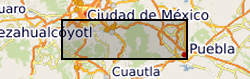
Electron microprobe glass chemistry data from explosive eruption deposits from Popocatépetl, Iztaccíhuatl and Tláloc-Telapón volcanoes in Central México, spanning the last 700 ka. Associated with the following paper: Sunyé-Puchol, I., Hodgetts, A.G.E., Watt, S.F.L., Arce, J.L., Barfod, D.N., Mark, D.F., Sosa-Ceballos, G., Siebe, C., Dymock, R.C., Blaauw, M., Smith, V.C., 2021. Reconstructing the middle to late Pleistocene explosive eruption histories of Popocatépetl, Iztaccíhuatl and Tláloc-Telapón volcanoes in Central México. J Volcanol Geoth Res 421, 107413. https://doi.org/10.1016/j.jvolgeores.2021.107413
-
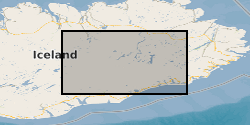
The dataset contains 3-component seismic data from seismometers deployed for one year Sept 204-August 2015 following the dyke intrusion from Bardarbunga which led to a 6 month long eruption at Holuhraun. The data is in miniseed format, archived at SEIS-UK and IRIS. The locations of all the microearthquakes we have identified from this data are published in Supplementary Information of Ágústsdóttir et al. (2016) [approx. 31,000 events from the Bardarbunga dyke], in Greenfield et al. [approx. 70,000 events from the Askja-Herðubreið area], and in Hudson et al. (2017), where they are publicly available for download. Ágústsdóttir, T., Woods, J., Greenfield, T., Green, R. G., White, R. S., Winder, T., Brandsdóttir, B., Steinthórsson, S. & Soosalu, H. (2016). Strike-slip faulting during the 2014 Bárðarbunga-Holuhraun dike Intrusion, central Iceland. Geophysical Research Letters, plus Supplementary Information, 43, 1495-1503, doi: 10.1002/2015GL067423 Greenfield, T., White, R. S., Winder, T. Ágústsdóttir, T. Seismicity of the Askja and Bárðarbunga volcanic systems of Iceland, 2009-2015, Journal of Volcanology and Geothermal Research, submitted 2017. Hudson, T. S., White, R. S., Greenfield, T., Ágústsdóttir, T., Brisbourne, A. & Green, R. G. (2017). Deep crustal melt plumbing of Bárðarbunga volcano, Iceland, Geophysical Research Letters, 44, doi: 10.1002/2017GL074749
-

Broadband seismic data recorded at Fernandina volcano, Galapagos Islands, Ecuador, from December 2022 to November 2023. The data cover a period of epsiodic shallow magma accummulation and associated earthquakes.
-

Compositional and volcanological data from a small-volume explosive-effusive volcanic eruption on Ascension Island, South Atlantic. Multiple samples of pumice and lava spanning the whole eruption sequence were collected from several locations in the area surrounding NE-Bay on Ascension Island. This dataset includes compositional, clast size, abundance, clast density and vesicle texture data for the products of the Echo Canyon eruption. Data was collected between the 12th June 2018 and the 30th August 2020 on Ascension Island and at the University of East Anglia, UK. Compositional data was collected using X-ray fluorescence (XRF), density of pumice clasts using the Archimedes suspension method and textural data by visual inspection of sample vesicle shape and size, all at the University of East Anglia, UK. Clast size and abundance was semi-quantitatively estimated in the field on Ascension Island and later checked against photographs. This data provides a framework through which changes to eruption style were reconstructed and is useful to any persons wishing to study or compare small-volume eruption deposits which record eruptive transitions. The data supports and forms the basis of Davies et al., (2021) (DOI : 10.1007/s00445-021-01480-1) and forms part of B V Davies’ Natural Environment Research Council funded PhD project investigating eruption controls on Ascension Island. Bridie V Davies collected and interpreted the data with assistance from Jane H Scarrow and Richard J Brown on Ascension Island, and Jenni Barclay at the University of East Anglia, Bertrand Leze performed XRF on prepared samples. All data collected is included in this resource.
-
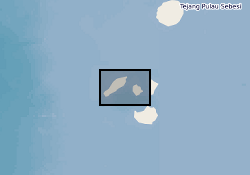
Single Channel seismic data, Sound source - 8kJ Sparker; Recorder - EG&G 8 element marine hydrophone (streamer), stored in jpeg and SEGY files. Multibeam bathymetric data recorded by Teledyne Reson T20-P Multibeam echosounder (MBES) 200 - 400kHz. Positioning system using Differential Global Positioning System (DGPS) Trimble SPS 461 with OmniSTAR signal correction and computer-based navigation/data acquisition system with Qinsy Acquisition software. Hunt, J.E., Tappin, D.R., Watt, S.F.L., Susilohadi, S., Novellino, A., Ebmeier, S.K., Cassidy, M., Engwell, S.L., Grilli, S.T., Hanif, M., Priyanto, W.S., Clare, M.A., Abdurrachman, M., Udrekh, U., 2021. Submarine landslide megablocks show half of Anak Krakatau island failed on December 22nd, 2018. Nature Communications 12, 2827.
-
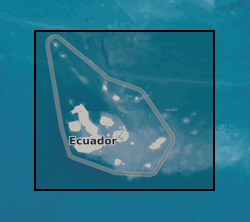
The Investigating Geophysical Unrest at Sierra NegrA (IGUANA) experiment was designed to monitor seismic activity associated with magmatic unrest at Sierra Negra volcano, Galapagos Islands, Ecuador. In late 2017, it was apparent that Sierra Negra was likely approaching a new eruption, and that the volcanic edifice was critically stressed. The experiment captured seismic broadband data during the final approach to eruption, the eruption onset on 26 June 2018, and co-eruptive deflation.
-
Seismic data from volcano observatories and from laboratory experiments, plus description of novel methods of data analysis and synchronization. 6 papers - Library for volcanology and rock physics data analysis; An innovative platform to allow collaborative research in rock physics and volcanology; Trends in the aggregated rate of pre-eruptive seismicity at Kilauea volcano, Hawaii; Convergence of the frequency-size distribution of global earthquakes; Method for predictability of volcanic eruptions from monitored seismic data and; Evaluation of the failure forecasting model for volcanic eruptions.