
Trace elements
Type of resources
Available actions
Topics
Keywords
Contact for the resource
Provided by
Years
Formats
Representation types
Update frequencies
-
A dataset of trace metal concentrations (As, Cu, Cr, Mn, Ni, Pb and Zn) in indoor dust from homes from 11 countries, along with a suite of potentially contributory residential characteristics. A household vacuum dust sample, collected by the study participant using their regular vacuum cleaner, was submitted to the laboratory for analysis by X-Ray fluorescence spectrometry (XRF) on the <250um sieved fraction, along with the completion of an online questionnaire survey. Dust sample collection took place between 2018 – 2021. The Home Biome project is affiliated to the DustSafe community science programme (see mapmyenvironment.com). Sample location data are provided at town/city and Country level. Health risk from exposure to potentially contaminant-laden dust has been widely reported. Given the amount of time people spend indoors, residential environments are an important but understudied environment with respect to human exposure to contaminants. Indeed, the nature of the hazard that house dust presents remains poorly characterized. These data will be of interest to those interested in human exposure to potentially toxic elements and environmental health, as well as to the participants, who received a bespoke report on their sample data and information on key sources and ways to reduce exposure to trace elements in indoor dust.
-

Mush eruptibility and resorption data for Mount St Helens including; - Textural data for plagioclase in crystallisation-resorption experiments - Major element geochemical data for plagioclase and glass synthesised experimentally - Major element and trace element geochemical data for plagioclase phenocrysts from Mount St. Helens volcano - Textural data for plagioclase phenocrysts from Mount St. Helens volcano
-
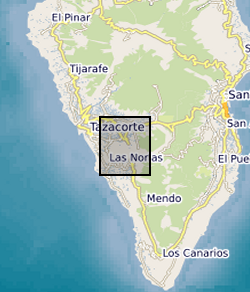
Major and trace element data of lava and tephra samples from the 2021 Tajogaite eruption. Major and select trace element collected by XRF, trace elements collected by ICPMS, both at the University of Granada. Data collected as part of NERC Urgency Grant led by K Chamberlain (Liverpool), in collaboration with M Pankhurst (INVOLCAN), J Scarrow (Granada), D Morgan (Leeds), J Hickey (Exeter), D Neave (Manchester), for understanding how eruptions begin, evolve and end. Samples analysed span the entire September - December 2021 eruptive sequence of Tajogaite, and data were collected between December 2021 and August 2022.
-
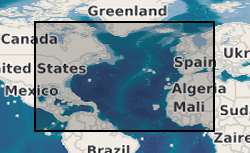
Analysed trace element data and radiocarbon data from five existing marine sediment cores from the NE Pacific margin (45-50N) that intersects the major water masses of the N Pacific, from a depth transect (700-3300m)
-
The <250um fraction of 28 household vacuum dust samples were extracted using high throughput isolation of microbial genomic DNA (21 samples from a national campaign within the UK and 7 samples from Greece, providing samples from two contrasting bioclimatic zones). Both positive and negative reagent controls were included to ensure sterility throughout the processing and sequencing steps, and a randomly selected sample was run in triplicate (DSUK179). These data (raw fastq files: Target_gene 16S and Target_subfragment V4) are available from the European Nucleotide Archive via the study accession PRJEB46920 with individual sample accession numbers ERX6130460 to ERX6130493; https://www.ebi.ac.uk/ena/browser/view/PRJEB46920). A wide range of anthropogenic factors are likely to affect the indoor microbiome and to capture some of this heterogeneity participants were asked to complete a questionnaire. In addition, trace element data were generated using an X-Ray fluorescence spectrometry on the <250um sieved fraction of the household vacuum dust. Sample location data are provided at town/city, Country level. Indoor dust serves as a reservoir for environmental exposure to microbial communities, many of which are benign, some are beneficial, whilst some exhibit pathogenicity. Whilst non-occupational exposure to a range of trace elements and organic contaminants in house dust are a known risk factor for a range of diseases and poor health outcomes, we know far less about the microbial communities associated with our indoor home environments, and their interaction/impacts on human health. Our knowledge of indoor residential bacterial biodiversity, biogeography and their associated drivers are still poorly understood. The data were collected to improve our understanding of the home microbiome.
-

Laser ablation (LA) ICP-MS analyses of olivine-hosted melt inclusions from Fuego volcano, Guatemala eruptions on the 14th, 17th and 23rd October, 1974. Full descriptions regarding the analysed samples are given in Rose et al. (1978) and Lloyd et al. (2013). References Lloyd, A.S., Plank, T., Ruprecht, P., Hauri, E.H. and Rose, W. (2013) Volatile loss from melt inclusions in pyroclasts of differing sizes. Contributions to Mineralogy and Petrology 165, 129-153. Rose, W.I., Anderson, A.T., Woodruff, L.G. and Bonis, S.B. (1978) The October 1974 basaltic tephra from Fuego volcano: Description and history of the magma body. Journal of Volcanology and Geothermal Research 4, 3-53.
-

Major and trace element composition, and stable isotope data for whole-rock samples from alkaline rocks of the Chilwa Province. Samples collected between 2011-2021 in the Chilwa Alkaline Province, Malawi
-

This dataset contains geochemical measurements which quantify the major and trace element concentrations of Precambrian (Proterozoic) and Paleozoic (541–251 Mya) mudstones. Sampled mudstones are listed under their formation name, with information on the locations of each outcrop belt and further details on lithological characteristics, including environment of formation, freely available on the British Geological Survey Lexicon of named rock units (https://www.bgs.ac.uk/technologies/the-bgs-lexicon-of-named-rock-units/) and Government of Canada weblex (https://weblex.canada.ca/weblexnet4/weblex_e.aspx), for UK and Canadian samples, respectively. Stratigraphic age is given in accordance to the GSA geological timescale v.5.0. Following sampling, specific methodologies for preparation for major and trace element analysis, conducted on an Agilent 5100, are provided in the Methodology. The data was collected to understand changes in weathering intensity coeval with the Paleozoic expansion of land plants. The major element data was needed to: 1) determine how much sample was required for subsequent Lithium isotope analyses (data from which are separately uploaded to the repository); and 2) to ensure similarity of source between samples compared across our study. The tabulated major element analyses were compared at different temporal stages of plant evolution through the Paleozoic. Samples were collected by the University of Cambridge. Major element data was obtained by William McMahon, and supervised by Edward Tipper and Mohd Tarique and Emily Stevenson.
-

Laser ablation trace element data for rutile and apatite were recovered from Mindola and Nchanga. At Mindola the Kitwe Formation is the major host to Cu-Co (copper-cobalt) mineralisation at Nkana-Mindola, particularly within the Ore Shale member. The Ore Shale has been subdivided into multiple units based on texture and composition. In summary, a black shale or dolomitic siltstone. often with a schistose or banded texture, passes upwards into a coarser porous sandstone or siliceous dolomite and capped by a massive argillite. Mineralisation across Nkana-Mindola is primarily hosted by dolomitic siltstones, pyritic black shales and schists. At Nchanga samples were analysed from the upper and lower ore bodies hosted within the Lower Roan metasediments which unconformably overlie the basement, transitioning from basal continental, arenaceous clastic rocks to shallow marine argillaceous clastic rocks and mixed platform carbonates. Context of samples and methods described in; Chapters 4 and 5 Kelly, Jamie (2024) Dataset for thesis "Constraining Cu-(Co) mineralisation in sediment-hosted copper deposits using rutile, apatite, and carbonate geochronology". University of Southampton doi:10.5258/SOTON/D3219 [Dataset]
-
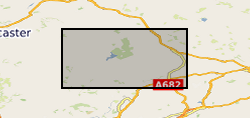
This dataset was acquired as part of a NERC-funded Doctoral Training Partnership (DTP) PhD Studentship at the University of Leicester and British Geological Survey between 2014-2018 [grant no. NE/L002493/1] (see also Emmings, 2018 unpublished PhD thesis). This research was conducted within the Central England NERC Training Alliance (CENTA) consortium. This dataset accompanies a manuscript titled "Late Palaeozoic Phytoplankton Blackout: A 100 Myr Record of Enhanced Primary Productivity". Co-authors and co-workers were: Joseph F. Emmings (University of Leicester, British Geological Survey); Sarah J. Davies (University of Leicester); Simon W. Poulton (University of Leeds); Michael H. Stephenson (British Geological Survey); Gawen R. T. Jenkin (University of Leicester); Christopher H. Vane (British Geological Survey); Melanie J. Leng (British Geological Survey, University of Nottingham) and Vicky Moss-Hayes (British Geological Survey). Nick Riley (Carboniferous Ltd) is thanked for sharing biostratigraphic expertise and assistance. Nick Marsh and Tom Knott are thanked for providing assistance during geochemical analyses. This dataset contains the following data (in Microsoft Excel format). 1) Fe species abundance data measured at the University of Leeds using the sequential extraction method of Poulton and Canfield (2005) and pyrite S extraction method of Canfield et al., (1986); 2) Total Fe, Si, Mn and Al major element concentrations (measured using x-ray fluorescence at the University of Leicester; XRF); 3) Total organic carbon (TOC) and inorganic C (MINC) data measured via Rock-Eval pyrolysis at the British Geological Survey; 4) Cu, Mo and U trace element concentration data (measured via XRF at the University of Leicester) and enrichment factors relative to Post-Archaean Average Shale (PAAS; Taylor and McLennan, 1985). Analyses were coupled on 99 sample powders from three positions in the Craven Basin and spanning ammonoid biozones P2c-d to E1c1. See also http://dx.doi.org/10.5285/9ceadcad-a93c-4bab-8ca1-07b0de2c5ed0 for additional sedimentological and geochemical data from Hind Clough, MHD4 and Cominco S9. These data were also interpreted together with 20 drill-core samples previously acquired from Hind Clough (‘HC01’ prefix). See http://dx.doi.org/10.5285/c39a32b2-1a30-4426-8389-2fae21ec60ad for further information regarding this drill-core dataset. References: Emmings, J. 2018. Controls on UK Lower Namurian Shale Gas Prospectivity: Understanding the Spatial and Temporal Distribution of Organic Matter in Siliciclastic Mudstones. Unpublished PhD Thesis. University of Leicester. Poulton, S. W. & Canfield, D. E. 2005. Development of a sequential extraction procedure for iron: implications for iron partitioning in continentally derived particulates. Chemical Geology 214, 209-221, doi:http://dx.doi.org/10.1016/j.chemgeo.2004.09.003. Canfield D., Raiswell R., Westrich J., Reaves CM, Berner RA. 1986. The use of chromium reduction in the analysis of reduced inorganic sulfur in sediments and shales. Chemical Geology, 54(1): 149-155. Taylor S, McLennan S. 1985. The Continental Crust: Its Composition and Evolution. Blackwell Scientific: London.