
Three dimensional models
Type of resources
Available actions
Topics
Keywords
Contact for the resource
Provided by
Years
Formats
Representation types
Update frequencies
Scale
-
The folders GMPKU2311, GMPKU3089, ELISN108-343 and ELISN31-5 contain data from X-ray tomographic analyses of fossil embryos and post-embryonic stages as described: There is one data folder provided for each specimen, each containing the following: - Raw data: zip archive containing the raw scan data (.tif image stack). - Working files: zip archive containing the segmented slices (.tif image stack exported from Avizo labels). - Avizo project: the Avizo .hx project file. - Avizo labels: the Avizo .am labels file, containing the segmentation information. - 3D model: the 3D surface computed from the segmented labels data (.stl file). In the case of GMPKU2311 only the raw data and 3D model file are provided, as the surface was computed directly from an isosurface of the specimen in Avizo. The individual slices (.tif images) can be viewed with standard graphics software, and the datasets can be studied in 3D using tomographic reconstruction software such as Avizo (www.vsg3d.com/), Spiers (www.spiers-software.org/), VG Studio Max (www.volumegraphics.com) etc. The Avizo project and label files (.hx and .am files) require Avizo software (www.vsg3d.com/) to be opened. The 3D models (.stl files) are widely compatible with 3D freeware packages such as MeshLab (http://meshlab.sourceforge.net/) or Blender (https://www.blender.org/), or with proprietary software, e.g. Avizo (www.vsg3d.com/), Geomagic (http://www.geomagic.com/en/), Mimics (http://biomedical.materialise.com/mimics). The files relate to the following publication: Dong, X.; Vargas, K.; Cunningham, J. A.; Zhang, H.; Liu, T.; Chen, F.; Liu, J.; Bengtson, S. & Donoghue, P. C. J. 2015. Developmental biology of the early Cambrian cnidarian Olivooides. Journal of Paleontology.
-

The BGS GeoSure Shrink Swell 3D data is a regional hazard susceptibility map that identifies areas of potential shrink–swell hazard, in three dimensional space, at intervals down to 20m in the London and Thames Valley area. Shrinking and swelling clays can change volume due to variation in moisture, which can cause ground movement that may affect many foundations. The data provides an indication of variation in Volume Change Potential (VCP) of shrink-swell clays and is classified on an A-E (low to high) range of hazard susceptibility. BGS GeoSure Shrink Swell 3D for London is part of the BGS GeoSure range of natural subsidence products. It is derived from the BGS Geology 50k data, the BGS London Lithoframe 3D model and the GeoSure v7 Shrink-Swell layer.
-

3D geology models have been created for London, Glasgow, Cardiff, Liverpool and Gateshead. Users can create geological cross-sections, synthetic boreholes and horizontal slices through the 3D models. Underpinned by BGS geological data and expertise, the models and reports provide an enhanced understanding of the geological structures and sediments for urban practitioners to inform construction projects, infrastructure design, groundwater assessments and land use planning. These models cover depths from +300 m OD (Ordnance Datum) to -600 m OD. The models which cover Liverpool and London include superficial and bedrock units. The models which cover Glasgow and Cardiff include superficial units on an undifferentiated bedrock base model. The Gateshead Model includes undifferentiated superficial deposits on a bedrock model, but the Superficial Deposits top layer shows the hydro domains map produced for Project Groundwater Northumbria. The models were constructed in the National Geological Model, Urban Geoscience programmes and Project Groundwater Northumbria between 2008-2025 in GSI3D, Groundhog and ASPEN SKUA for deployment to the web viewer. These datasets are managed by the 3D GeoModel project (National Geoscience).
-
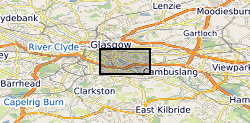
The UK Geoenergy Observatories (UKGEOS) Glasgow 3D coal mine model outputs, created by the British Geological Survey, provide a semi-regional overview of the depth and extent of surveyed and probable coal mine workings, plus stone and coal roads surveyed within the mines. The model allows users to visualise the surveyed and probable coal mine workings to be found beneath this part of Glasgow, applicable at a scale of around 1: 25,000 to 1: 10,000. The data is supplied as grids, triangulated surfaces over a 5 by 4.15 km area, with the depth range to around 300 m below Ordnance Datum. The mine extents are ‘cut out’ of the UKGEOS Glasgow pre-drill bedrock model. This model describes both surveyed (recorded on mine abandonment plan) and probable coal mine workings before the UKGEOS Glasgow boreholes have been drilled, and was used to inform the expected sequence on drilling. Further details and model limitations can be found in the accompanying metadata report http://nora.nerc.ac.uk/id/eprint/522737
-

PROJECT DETAILS ONLY - NO DATA. At sub-continuum scales, pore network geometry strongly influences flow and solute transport. Fractures spaced ~0.1 to ~10m impart continuum scales to fractured aquifers which may exceed the size of many practical problems. Sub-continuum flow models often use statistical simulation of explicit fracture networks, leading to serious problems of system identification an uniqueness. This studentship will address this by determining whether tracer breakthrough curves may be used to characterise fracture topography at different scales, either as the sole evidence or in combination with bulk permeability. The main method will be a systematic exploration of the influence of fracture network topologies and scale on tracer breakthrough, using simulations on 2-D and 3-D models which represent the void space explicitly and create dispersion solely as a product of inhomogeneity in flow rate. Results will be compared with existing tracer data and used to infer the characteristics of the fracture networks involved. The outcome hoped for will be a methodology for using tracer tests to constrain fracture geometry in unknown cases.
-

BGS LithoFrame models provide 3D geological characterisation for parts of the onshore and offshore UK at a range of scales. They present framework geological interpretation consistent with the stratigraphic framing schemes and scales used in BGS geological maps. Models have been constructed under a range of project activities and include local-scale superficial and bedrock models covering sites and focused study areas, medium-scale superficial and bedrock models covering many urban areas, transport corridors and smaller catchments, and regional-scale bedrock models covering large catchments, district areas, and geological basins. The 3D geological models have been constructed in a period between 2003 and 2018 and is managed by the 3D GeoModel project (National and International Geoscience).
-
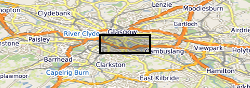
The UK Geoenergy Observatories (UKGEOS) Glasgow superficial deposits GSI3D model outputs, created by the British Geological Survey, provide a semi-regional overview of the depth, thickness and extent of glacial and post-glacial lithostratigraphic units above rockhead. The model allows users to visualise the likely subsurface sequence to be found beneath this part of Glasgow, applicable at a scale of around 1: 25,000 to 1: 10,000. The data is supplied as grids and shapefiles over a 7 by 4.15 km area, with the depth range to around 40 m below Ordnance Datum. This model describes an interpretation of the shallow geology updated to incorporate the results of drilling the 12 UKGEOS Glasgow boreholes (post-drill model). Further details and model limitations can be found in the accompanying metadata report http://nora.nerc.ac.uk/id/eprint/531155/ . DOI: https://doi.org/10.5285/915f690f-32cf-41b7-984e-c32344d3a543
-
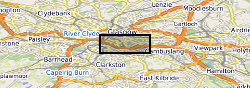
The UK Geoenergy Observatories (UKGEOS) Glasgow superficial deposits GSI3D model outputs, created by the British Geological Survey, provide a semi-regional overview of the depth, thickness and extent of glacial and post-glacial lithostratigraphic units above rockhead. The model allows users to visualise the likely subsurface sequence to be found beneath this part of Glasgow, applicable at a scale of around 1: 25,000 to 1: 10,000. The data is supplied as grids and shapefiles over a 7 by 4.15 km area, with the depth range to around 40 m below Ordnance Datum. This model describes an interpretation of the shallow geology before the UKGEOS Glasgow boreholes have been drilled, and was used to inform the expected sequence on drilling. Further details and model limitations can be found in the accompanying metadata report http://nora.nerc.ac.uk/id/eprint/524556
-
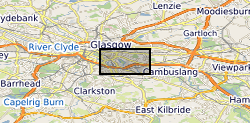
The UK Geoenergy Observatories (UKGEOS) Glasgow 3D coal mine model outputs, created by the British Geological Survey, provide a semi-regional overview of the depth and extent of surveyed and probable coal mine workings, plus stone and coal roads surveyed within the mines. The model allows users to visualise the surveyed and probable coal mine workings to be found beneath this part of Glasgow, applicable at a scale of around 1: 25,000 to 1: 10,000. The data is supplied as grids, triangulated surfaces over a 5 by 4.15 km area, with the depth range to around 300 m below Ordnance Datum. The mine extents are ‘cut out’ of the UKGEOS Glasgow post-drill bedrock model. This model describes both surveyed (recorded on mine abandonment plan) and probable coal mine workings. An area of probable workings has been updated to account for the results of drilling borehole GGC01. Further details and model limitations can be found in the accompanying metadata report http://nora.nerc.ac.uk/id/eprint/531157/
-

Geological model comprising artificial ground and superficial deposits in the city of Cardiff. Undifferentiated bedrock is included beneath the superficial deposits. This model provides a geological framework model and calculated surfaces for the superficial deposits for the city of Cardiff, principally Till, Glaciofluvial deposits, Alluvium and Tidal Flat Deposits.