
Nitrogen isotopes
Type of resources
Available actions
Topics
Keywords
Contact for the resource
Provided by
Years
Formats
Representation types
Update frequencies
-
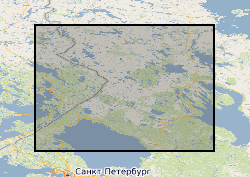
Demonstration of hydrothermal ammonium mobilization in the Paleoproterozoic with possible implications for biological productivity. The data include organic carbon and nitrogen abundances and isotopic ratios, as well as metal abundances. Samples span from sedimentary rocks to altered igneous rocks, where lithologies are provided in the CN data file. The N-enrichment in the usually N-poor igneous rocks indicates transfer of ammonium from organic-rich sediments and can be used to estimate the ammonium concentration of the hydrothermal fluid at the time of deposition. More details are provided in Stüeken, E.E., Kirsimäe, K., Lepland, A. and Prave, A.R., 2023, Astrobiology, 23(2), pp. 195-212.
-
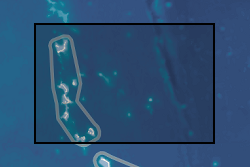
Measurements of nitrogen and carbon abundances and isotopic ratios for deep-marine ferromanganese crusts and nodules from the modern ocean. This reservoir has not previously investigated as an archive of nitrogen isotopes. The results reveal unusually negative values, interpreted as evidence of partial ammonium oxidation succeeded by adsorption of nitrogen oxides to the mineral surface. More details can be found in Stüeken , E E & Bau , M 2023 , Geochemical Perspectives Letters , vol. 25 , pp. 13-17 . https://doi.org/10.7185/geochemlet.2308 Geographical extent: Central Pacific seafloor, between Kiribati and Wallis and Futuna (0° – 10° S and 175° E – 175° W)
-
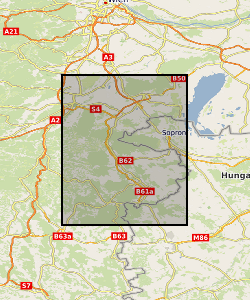
Stable isotope data of organic carbon, nitrogen and sulfur as well as trace elements are used to explore how proxies with differing residence times in seawater respond to changes in the basin’s connectivity to the open ocean. The results show that species with a short residence time, such as nitrate and rare earth elements, may be more sensitive to geologically brief fluctuations in oceanographic conditions than long-lived species like sulfate. Details about the methodology and sampling strategy can be found in Stu¨eken, E.E., Viehmann, S. and Hohl, S.V., 2023, ACS Earth and Space Chemistry, 7(7), pp.1337-1349.
-
Organic carbon, bulk nitrogen isotope and bulk sulfur isotope and abundance data and metal abundance data from metapelites of the 3.7Ga Isua Supracrustal Belt. For more details, see Stüeken, E.E., Boocock, T., Szilas, K., Mikhail, S. and Gardiner, N.J., 2021. Reconstructing nitrogen sources to Earth’s earliest biosphere at 3.7 Ga. Frontiers in Earth Science, 9, p.675726.
-
Organic carbon and total nitrogen isotope data for black shales and U-Pb data for apatite solutes from the Burzyan and Yurmatau groups in the Urals, Russia. For detailed discussion see Stüeken, E.E., Kuznetsov, A.B., Vasilyeva, I.M., Krupenin, M.T. and Bekker, A., 2021. Transient deep-water oxygenation recorded by rare Mesoproterozoic phosphorites, South Urals. Precambrian Research, 360, p.106242.
-

Nitrogen isotope and abundance data from brine seeps in the Gulf of Mexico. Three data tables show (1) Electrical Conductivity data for three sediment cores, (2) carbon and nitrogen data from all sediment cores investigated in this study, and (3) ammonium concentrations and isotopic data from brine pool samples. The results show high enrichments of ammonium in the brines, indicating that the brines actively mobilize bioavailable nitrogen back into the water column. Isotopic data reveal evidence of dissimilatory nitrate reduction to ammonium at the brine-seawater interface. Brine seeps have long been implicated in the formation of sediment-hosted hydrothermal ore deposits. Our results support the notion that brines may have stimulated biological productivity, facilitating trapping of metals in brine seep environments.
-
Organic carbon and bulk nitrogen isotope data for black shale samples from six different drill cores with varying distance from the major Zn ore body (HYC) in the McArthur basin. Data show trends with distance in d15N and C/N ratios. A more detailed interpretation is provided in Stüeken, E.E., Gregory, D.D., Mukherjee, I. and McGoldrick, P., 2021. Sedimentary exhalative venting of bioavailable nitrogen into the early ocean. Earth and Planetary Science Letters, 565, p.116963.
-
Organic carbon and bulk nitrogen isotope and abundance data and metal abundance data from the Mesoarchean VMS deposit and associated strata. Detailed information is given in Stueeken, E.E., Boocock, T.J., Robinson, A., Mikhail, S. and Johnson, B.W., 2021. Hydrothermal recycling of sedimentary ammonium into oceanic crust and the Archean ocean at 3.24 Ga. Geology, 49(7), pp.822-826.
-
Organic carbon, total nitrogen, total reduced sulfur and carbonate-associated sulfur isotopes measured on decarbonated stromatolite samples from the Paranoa Group (1.1 Ga).
-
Organic carbon and nitrogen and bulk nitrogen isotope data and metal abundance data for siltstones and shales of the Mesoproterozoic Diabaig Formation. For a detailed description and interpretation, see Stüeken, E.E. and Prave, A.R., 2022. Diagenetic nutrient supplies to the Proterozoic biosphere archived in divergent nitrogen isotopic ratios between kerogen and silicate minerals. Geobiology.