
NGDC Deposited Data
Type of resources
Available actions
Topics
Keywords
Contact for the resource
Provided by
Years
Formats
Representation types
Update frequencies
Service types
Scale
Resolution
-

The C V Jeans collection of x-ray diffraction films and x-ray diffractograms form the basis of my investigations into the clay minerals stratigraphy of the Cretaceous, Jurassis, Permo-Triassic and Old Red Sandstone strata of the British Isles. It covers the period from 1965 to 2006 and involved both my own private research as well as investigations carried out for clients
-
The data presented in the Table 1 are U-Th chronology results of Siberian and Mongolian speleothems. This data is a basis for a scientific paper of Vaks, A. et al. (2013) "Speleothems Reveal 500,000-Year History of Siberian Permafrost." Science 340 (6129): 183-186. The table shows the ages of 111 layers of 36 speleothems taken from the six caves of Siberia and Mongolia. Vadose speleothems grow in caves of unsaturated zone when atmospheric water infiltrates into the caves from the surface. Therefore these speleothems cannot grow in permafrost, as well as in dry desert conditions. Therefore in Siberia the periods of speleothem growth show intervals during which the Siberian permafrost thawed and became discontinuous or absent. In Mongolian Gobi Desert the speleothem deposition periods show when the desert was both humid than present and warm enough to enable water infiltration into the caves. The data presented in tables 2 and 3 are OxCal-4.1 modeling results of the Table 1 chronology data for the Holocene (Table 2) and Marine Isotopic Stage (MIS) 5.5 (Table 3). The tables show exact durations of Holocene and MIS-5.5 permafrost thawing periods in Botovskaya and Okhotnichya Caves.
-
2 papers and supplementary information produced from NERC Grant NE/I006427/1. Lear, C. H., H. K. Coxall, G. L. Foster, D. J. Lunt, E. M. Mawbey, Y. Rosenthal, S. M. Sosdian, E. Thomas, and P. A. Wilson (2015), Neogene ice volume and ocean temperatures: Insights from infaunal foraminiferal Mg/Ca paleothermometry, Paleoceanography, 30, 1437–1454, doi:10.1002/2015PA002833. Elaine M. Mawbey, Caroline H. Lear; Carbon cycle feedbacks during the Oligocene-Miocene transient glaciation. Geology ; 41 (9): 963–966. doi: https://doi.org/10.1130/G34422.1
-
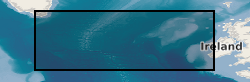
Radiocarbon measurements on planktic and benthic foraminifera from sediment cores in the North Atlantic: Ocean Drilling Program (ODP) 983, SU90-44, MD04-2829, MD01-2461, and EW9302-2JPC Site 983 is located on the Bjorn Drift in approximately 1650 m water depth on the eastern flank of the Reykjanes Ridge. Hole 983A Position: 60°24.200'N, 23°38.437'W. Sediment core SU90-44 collected from the north-eastern Atlantic basin, near the top of a small abyssal hill, southeast of the Rockall plateau, 50°01'N, 17°06'W, 4279 m. Sediment core MD04-2829 collected from Rosemary Bank in the Northern Rockall Trough 58º 56.93’ N; 09º 34.30’ W; 1743 m water depth. Sediment core MD01-2461 was collected from the north-western flank of the Porcupine Seabight approximately 550 km to the southwest, 51°45’N, 12°55’W; 1153 m water depth, recovered in 2001. Core EW9302-2JPC recovered from the Rockall Plateau and East Flank of Reykjanes Ridge from the Flemish Cap in the south- eastern Labrador Sea, 48°47.70′N, 45°05.09′W, taken at water depth 1251m.
-
Rotating Rayleigh-Benard convection. Table of the input and output parameters of the simulations. Snapshot of the temperature field, three components of the velocity and three components of the magnetic field in 3D. Data generated with a magnetohydrodynamical code of rotating Boussinesq convection in planar geometry (Cattaneo et al. 2003 ApJ 588 1183-1198). Data published in Guervilly, Hughes & Jones 2014 JFM 758 407-435 (DOI:10.1017/jfm.2014.542) and Guervilly, Hughes & Jones 2015 PRE 91 041001 (DOI: 10.1103/PhysRevE.91.041001)
-

The data result from a cooperative project between the U.K., U.S., Germany, Spain, and Portugal. This 2013 seismic experiment surveyed the Galicia Bank region off Iberia with the RV Marcus Langseth. The goal was to collect 3D seismic reflection data specifically designed to reveal the 3D structures generated during the rifting of the Galicia margin and to study the rifted continental to oceanic crust transition in the Deep Galicia Margin west of Spain. The data correspond to a 68.5km x 20 km volume down to 14s TWT with a nominal inline spacing of 6.25 m and a cross-line spacing of 50m, including 800 inlines and 5500 cross-lines. References Bayrakci, G., Minshull, T.A., Sawyer, D.S., Reston, T.J., Klaeschen, D., Papenberg, C., Ranero, C., Bull, J.M., Davy, R.G., Shillington, D.J., Perez-Gussinye, M., and Morgan, J.K., 2016, Fault-controlled hydration of the upper mantle during continental rifting, Nature Geoscience, vol. 9, p. 3840388, DOI: 10.1038/ngeo2671. URL: http://www.nature.com/ngeo/journal/v9/n5/full/ngeo2671.html R. G. Davy, J. V. Morgan, T. A. Minshull, G. Bayrakci, J. M. Bull, D. Klaeschen, T. J. Reston, D. S. Sawyer, G. Lymer, D. Cresswell, 2017. Resolving the fine-scale velocity structure of continental hyperextension at the Deep Galicia Margin using full-waveform inversion. Geophysical Journal International, Volume 212, Issue 1, 1 January 2018, Pages 244–263, https://doi.org/10.1093/gji/ggx415 C.Nur Schuba, Gary G.Gray, Julia K.Morgan, Dale S.Sawyer, Donna J. Shillington, Tim J.Reston, Jonathan M.Bull, Brian E.Jordan, 2018. A low-angle detachment fault revealed: Three-dimensional images of the S-reflector fault zone along the Galicia passive margin. Earth and Planetary Science Letters, 492, (2018), 232–238, https://doi.org/10.1016/j.epsl.2018.04.012
-
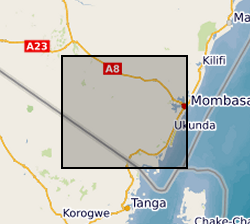
This data set contains land cover/land use data for the year 1990 and 2015 obtained through processing of Landsat images of US Geological Survey. These data sets were obtained through a supervised classification carried out with Landsat 8 image for 2015; Landsat 4 and 5 were used for land use classification of 1990. Gro for GooD: Groundwater Risk Management for Growth and Development
-
Description of peatland sites included in the compilation of carbon accumulation rates, including resolution (high, low), interpolation (yes/no), contributor name, country, lon, lat, peatland type, dominant plant type, no. of dates used in the last millenium carbon accumulation rate calculation, and problems with the data. Peatland sites at northern hemisphere high and mid latitudes (260), tropical (30) and southern hemisphere high latitudes (7 sites).
-
Published Papers: 1) Brown, W.J., Mound, J.E. \& Livermore, P.W., (2013) Physics of the Earth and Planetary Interiors, Vol 223, pp 62-76 Jerks abound: an analysis of geomagnetic observatory data from 1957 to 2008 doi:10.1016/j.pepi.2013.06.001 2) Cox, G.A., Livermore, P.W. & Mound, J.E., (2014) Geophysical Journal International. Vol 196, pp 1311--1329. Forward models of torsional waves: dispersion and geometric effects doi:10.1093/gji/ggt414 3) Hori, K., Jones, C.A. & Teed, R.J. (2015) Geophysical Research Letters, vol 42, pp 6622--6629. Slow magnetic Rossby waves in the Earth's Core. doi:10.1002/2015GL064733 4) Teed, R.J., Jones, C.A. & Tobias, S.M., (2014) Geophysical Journal International, vol 196, pp 724--735. The dynamics and excitation of torsional waves in geodynamo simulations. doi:10.1093/gji/ggt432 5) Teed, R.J., Jones, C.A. & Tobias, S.M., (2015) Earth and Planetary Science Letters, Vol 419, pp 22-31. The transition to earth-like torsional oscillations in magnetoconvection simulations. Doi:10.1016/j.epsl.2015.02.045
-
We present new age models for the Ediacaran-Cambrian which lacks a robust global temporal framework. This interval marks the radiation of animals, but there are major uncertainties in the evolutionary dynamics of this critical radiation and its relationship to changes in palaeoenvironmental changes. Here we present global data from 130 successions that enable us to create four new possible global age models (A to D) for the interval 551–517 million years ago (Ma). These models comprise composite carbonate carbon isotope (δ13Ccarb) curves, which are anchored to radiometric ages and consistent with strontium isotope chemostratigraphy, and are used to calibrate metazoan distribution in space and time. These models differ most prominently in the temporal position of the basal Cambrian negative δ13Ccarb excursion (BACE). Two age models (A and B) place the BACE within the Ediacaran, and yield an age of ~538.8 Ma for the Ediacaran-Cambrian boundary; however models C and D appear to be the most parsimonious and may support a recalibration of the boundary age by up to 3 Myr younger. All age models reveal a previously underappreciated degree of variability in the terminal Ediacaran, incorporating notable positive and negative excursions that precede the BACE. Nothwithstanding remaining uncertainties in chemostratigraphic correlation, all models support a pre-BACE first appearance of Cambrian-type shelly fossils in Siberia and possibly South China, and show that the Ediacaran-Cambrian transition was a protracted interval represented by a series of successive radiations. Data were compiled by Fred Bowyer, with support from Andrey Yu. Zhuravlev, Rachel Wood, Maoyan Zhu, Graham Shields, Ying Zhou, Chuang Yang, Simon Poulton, Dan Condon, Andrew Curtis.