
Mines
Type of resources
Available actions
Topics
Keywords
Contact for the resource
Provided by
Years
Formats
Representation types
Update frequencies
Service types
Scale
-
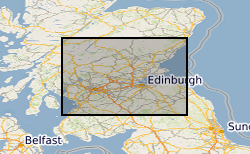
Contains digitised mine plan contours, spot heights and worked ground outlines on key coal seams from the Midland Valley in ASCII or ArcView format. Incomplete, only some seams and some areas digitised. All contours digitised on key seams, worked ground outlines simplified, spot heights digitised where no contours exist.
-
This layer of the map based index (GeoIndex) shows the location and name of active mineral workings in the UK and is derived from the BGS BritPits (British Pits) database. The BritPits database of onshore mineral workings in the UK is based on the records of the BGS, the Coal Authority, industry sources and the Valuation Office Agency (Minerals) and is maintained by the BGS Onshore Minerals and Energy Resources Programme. The database describes individual workings, both currently active and formerly worked, in terms of name, location (including Mineral Planning Authority), ownership, basic geology, commodity produced and end-uses. Contact details including the operator name, address, postcode and telephone and fax numbers are held where known. The location of over 6000 workings are held, with about 2000 currently being worked. The data can be produced digitally, under licence, in formats to meet customer requirements, such as locations of workings or operator addresses, and is suitable for use in GIS applications using the British National Grid. Although the GeoIndex is updated at regular intervals more information may be available than is shown at any one time.
-
Dataset of mineral occurrences in the UK including locations of known mines, mineral showings and localities, including sites where minerals of economic interest have been identified in panned concentrates. Data is normally taken from published sources or from internal BGS records, such as field sheets, rock and stream sediment collection cards. Data compilation started ca. 1994.
-
This layer of the map based index (GeoIndex) shows the locations of known mines, mineral showings and localities, including sites where minerals of economic interest have been identified in panned concentrates. The information for the index is taken from the Mineral Occurrence Database. The Mineral Occurrence Database holds information on mineral occurrences in the UK including locations of known mines, deposits, prospects and mineral showings, including sites where minerals of potential economic interest have been identified in panned concentrates. Data is normally taken from published sources or from internal BGS records, such as field sheets, rock and stream sediment collection cards. Data compilation started ca. 1994 and the database currently holds about 13 000 records, but details of many more old workings and occurrences remain to be added.
-
List of mines and quarries in the UK including information about operational status, products, lithostratigraphy, chronostratigraphy, pit and operator addresses, minerals planning authority. Digital data has been sold from the BritPits database, since 1994, this has been customised to suit purchasers. Use is also made of sets of operational workings data by Bureau Services who pay royalties and get updates. Older data on operators tends to be incomplete as it was not recorded. Updating is ongoing to update litho- and chronostrat data. Originally, only details of currently active sites were included in the database but, because of the importance of former workings for waste disposal and as Sites of Special Scientific Interest, information is now collected on both inactive and closed operations. The data is held in a relational database using an Oracle server and a Microsoft Access front-end. The database can be used for many purposes: mailing lists, route planning, market intelligence/analysis, and resource planning, and data has been supplied to a wide range of customers.
-
Index to various collections of Aerial Photographs purchased or obtained by BGS and its precursors as part of its surveying activities. The index was set up in 2000 and mainly covers Great Britain. The level of spatial detail depends on the flight plans provided, but most are referenced at least to OS quarter sheet level.
-
Data from the British Geological Survey's GeoIndex Minerals theme are made available for viewing here. GeoIndex is a website that allows users to search for information about BGS data collections covering the UK and other areas world wide. Access is free, the interface is easy to use, and it has been developed to enable users to check coverage of different types of data and find out some background information about the data. More detailed information can be obtained by further enquiry via the web site: www.bgs.ac.uk/geoindex.
-

The BGS BritPits version 4 is derived from a BGS database, which contains records of mineral workings covering the Great Britain, Northern Ireland, Isle of Man and Channel Islands. The coverage includes active, inactive, dormant and ceased sites and a range of mineral operations, including mines, quarries, onshore oil and gas fields, together with wharfs and rail depots handling mineral products and industrial processes which produce a mineral product. The information on currently active sites is continually updated with the cooperation of both local authorities and the minerals industry.
-
The dataset comprises of the plans of abandoned coal mines in Great Britain deposited with the Mining Remediation Authority (MRA) and held on behalf of the Health and Safety Executive in line with the 1872 Coal Mines Regulation Act and Metalliferous Mines Regulation Act. The physical plans are held by the MRA and a digital copy of the index to and scans of these plans was deposited to the British Geological Survey (BGS) for delivery through the BGS mine plans viewer. BGS also holds an incomplete disaster recovery copy of the microfiche of the statutory mine abandonment plans for the MRA.
-
[This metadata record has been superseded, see http://data.bgs.ac.uk/id/dataHolding/13608197] Manuscript notebooks, section books and field record cards containing detailed information gathered by the Survey geologists (or other recognised geologists) from various sources as part of the mapping process. Examples include observations linked directly to field slips, borehole logs, sections and drawings. Note: For the basic field mapping work notebooks have now been replaced by field record cards. Covering survey areas in Great Britain from 1840's to date.