 NERC Data Catalogue Service
Barium
Type of resources
Available actions
Topics
Keywords
Contact for the resource
Provided by
Years
Formats
Representation types
Update frequencies
Scale
Resolution
-

Marine sediment core sediment and pore water fraction barium concentration and isotope data with associated error collected during the International Ocean Discovery Programme (IODP) expedition 391 at Walvis Ridge, offshore Namibia, collected November 2021 - February 2022. Latitude and Longitude of each specific sample is listed in the datafile. Samples were measured on the Thermal Ionising Mass Spectrometer at the University of Oxford and have been drift corrected between 1st January 2023 and 30th September 2024. They are the final, complete record of the data. The data has an external error of 0.03 per mil and is deemed reproducible. Ethan Petrou is responsible for collection and processing of the data and can be contacted. The data was collected to increase the number of barium isotope measurements in the modern oceans and would be useful for any modern oceanography or geochemist interested in redox or paleoproductivity.
-
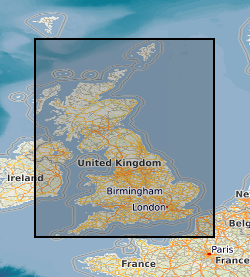
This dataset represents the first publication of complete national maps from the Geochemical Baseline Survey of the Environment (G-BASE) and TellusNI projects, whose aim was to conduct a national geochemical survey of the United Kingdom in order to improve understanding of our geology and environment and provide quantitative evidence against which to gauge future environmental change. This dataset consists of a series of interpolated raster (ASCII grid) maps displaying the concentrations of a suite of chemical elements (and oxides) in the stream sediments of the United Kingdom. The chemical elements are as follows: Arsenic, Barium, Calcium (CaO), Chromium, Cobalt, Copper, Iron (Fe2O3), Lanthanum, Lead, Magnesium (MgO), Manganese (MnO), Nickel, Potassium (K2O), Rubidium, Uranium, Vanadium, Zinc and Zirconium.
-
Discrete data for trace elements for both the dissolved and acid available fractions for thirteen core sites in the Humber catchment over the period 1993 to 1997 and for three sites from the Tweed catchment over the period 1994 to 1997. Part of the Land Ocean Interaction Study project (LOIS). Trace elements measured were: Aluminium (Al), Antimony (Sb), Arsenic (As), Barium (Ba), Beryllium (Be), Boron (B), Cadmium (Cd), Cerium (Ce), Chromium (Cr), Cobalt (Co), Copper (Cu), Gadolinium (Gd), Iron (Fe), Lanthanum (La), Lead (Pb), Lithium (Li), Manganese (Mn), Molybdenum (Mo), Neodymium (Nd), Nickel (Ni), Rubidium (Rb), Samarium (Sm), Scandium (Sc), Strontium (Sr), Tin (Sn), Uranium (U), Yttrium (Y), Zinc (Zn). The Core sites were sampled at regular weekly intervals and more intermittently during high flows (on average an extra sampling once a month per site). The Swale sites were sampled during hydrological events and the Aire sites were sampled both weekly and during hydrological events. The majority of samples were obtained using a wide neck grab sampler. Those samples collected from the Aire during hydrological events were obtained using EPIC automatic samplers. Both dissolved and acid available trace element fractions were determined for all samples. The dissolved fraction was measured by filtering samples and acidifying the filtrates with concentrated aristar grade nitric acid (1%vv) on the same day of sampling. The acid available fraction was determined by acidifying an unfiltered sample as above and agitating for 24 hours, at room temperature, prior to filtration. Samples were then analysed by inductively coupled plasma optical emission spectrometry (ICP-OES: B, Ba, Fe, Mn, Sr) and mass spectrometry (ICP-MS: Al, As, Be, Cd, Ce, Co, Cr, Cu, Gd, La, Li, Mo, Nd, Ni, Pb, Rb, Sb, Sc, Sm, Sn, U, Y, Zn). Full details about this dataset can be found at https://doi.org/10.5285/69f62656-567c-42dd-bb65-8f0cbbeb1693
-
Trace metal mobilisation data (pH, ALK, Na, K, Ca, Mg, Li, SO4, Si, Be, Mn, Fe, Zn, Cu, Al,Sr, Be, Ba, Y,Co, Ni, B, Rb, Y, Cd, Sb, Cs, Ba, La, Ce, Nd, Pb, Th, U) for the River Carnon, the River Fal (downstream) and its estuary in Cornwall following discharge of highly polluted water from the Wheal Jane mine. In January 1992, there was a major pollution incident involving highly acidic wastes. CEH, in conjunction with the University of Reading monitored the River Carnon between September 1992 and April 1994, to examine the water quality.