
miniSEED
Type of resources
Available actions
Topics
Keywords
Contact for the resource
Provided by
Years
Formats
Representation types
Update frequencies
-

MiniSEED seismic data files, one file per station channel, per day plus associated metadata file, in dataless SEED format. The comprehensive metadata file includes lat, long, start and end dates and full calibration information for each instrument. The CuBES Broadband Profile consists of Guralp, ESPCD and 6T seismometers which recorded both 1Hz and 100Hz passive data, across Zambia, 01/05/2022 to 21/12/2024. The Copper Basin Exploration Science (CuBES) project collected passive seismic data across the Copper Belt in Zambia to determine for the first time the large scale crustal structure of the region to enable the copper deposits to be interpreted in a geodynamic context. DOI: https://doi.org/10.7914/SN/Z1_2022
-

Seismic data for four stations located on Seirra Negra volcano, Galapagos Islands, between 2022 and 2025. The stations were maintained and operated by NERC grant NE/W007274/1. The instruments (SN07, SN12, SN14, and SN17) are four GeoBit GeoTiny 'wideband' seismometers. SN17 replaced SN07 in 2023, at a new site ~200m from the old location. The data cover a period of surface uplift at Sierra Negra, driven by magma accumulation following the 2018 eruption. Data are uploaded as miniseed files, in folder structured by station/channel. Files follow a standard naming format e.g. 'EC.SN12..HHZ.D.2022.001' SN07: -0.80719, -91.17005, 1067m SN12: -0.811195, -91.134960, 954m SN14: -0.843680, -91.152610, 917m SN17: -0.805954, -91.170256, 1068m An xml file is also included which contains useful metadata about the station locations and instrument responses.
-

Continuous seismic waveforms from a temporary network of 10 seismometers deployed around the United Downs Geothermal Project, Cornwall, between 2019 and 2021 as part of the NERC funded GWATT project. Data were recorded on Guralp CMG3-ESP broadband seismometers and digitised with a sample rate of 200 Hz. Raw data are stored in miniSEED format (https://ds.iris.edu/ds/nodes/dmc/data/formats/miniseed/). Metadata that allows the raw data to be converted to ground motions, as well as the location of the stations are stored in StationXML format (https://docs.fdsn.org/projects/stationxml/en/latest/overview.html). Both raw data and metadata are available from the UK node of the European Integrated Data Archive (https://eida.bgs.ac.uk) using standard FDSN webservices (https://www.fdsn.org/webservices/). Further details about the network are available at https://www.fdsn.org/networks/detail/9U_2019/. The DOI for this data set is https://doi.org/10.7914/hpf0-6r63.
-

Continuous seismic waveforms from a temporary network of seismometers deployed in the North of England between 2015 and 2025 for the UKArray project. The aim of the project was to establish a robust baseline of background seismicity prior to shale gas exploration in the region. Data were recorded on Guralp CMG3-ESP broadband seismometers and digitised with a sample rate of 100 Hz. Raw data are stored in miniSEED format (https://ds.iris.edu/ds/nodes/dmc/data/formats/miniseed/). Metadata that allows the raw data to be converted to ground motions, as well as the location of the stations are stored in StationXML format (https://docs.fdsn.org/projects/stationxml/en/latest/overview.html). Both raw data and metadata are available from the UK node of the European Integrated Data Archive (https://eida.bgs.ac.uk) using standard FDSN webservices (https://www.fdsn.org/webservices/). Further details about the network are available at https://www.fdsn.org/networks/detail/UR/. The DOI for this data set is https://doi.org/10.7914/SN/UR
-
This dataset contains data from two seismic and one infrasound array deployed at Mt. Etna during the late part of the 2020-2021 eruptive crises (May-November 2021). The arrays were composed as follow: 1) a 7-element array of 3-component, broadband (Trillium T120 compact) seismometers; 2) a 5-element array of 3-component short-period (Lennartz LE-3Dlite-MkII); 3) a 6-element array of broadband infrasound microphones (IST2018). All data were recorded with a sampling rate of 100 Hz and 24-bit resolution using Digos Datacube3 digitizers. The data were collected through a collaboration between the University of Liverpool, UK, and the Istituto Nazionale di Geofisica e Vulcanologia (INGV), Italy, with the purpose of characterizing pre- and syn-eruption tremor signals at Etna, and their links to the timing, style and intensity of paroxysmal eruptive activity at the volcano. The dataset contains records of different examples of paroxysmal activity (i.e., intense episodes of sustained Strombolian explosions accompanied by emission of ash at the vent) as well signals associated with as explosive degassing at the summit vent. Data recovery rates for this experiment were high; there are only very minor gaps in the data owing to periods of scheduled maintenance and data download during the deployment period.
-

This dataset comprises seismic node data from the Askja Caldera, Iceland, which consists of one month of continuous recording in each of July/August 2023 and July/August 2024. A total of 14 nodes were deployed within the ~8km diameter caldera; each unit consists of a 3-component Smartsolo sensor (IGU-16HR 3C) recording at 250sps. The units were buried such that their tops were ~10cm below the surface. The nodes were distributed irregularly in the caldera due to access issues; namely, only portions of the caldera are walkable. The dataset provided is in standard miniseed format, and has accompanying dataless files in xml format. The miniseed data is archived in day files under the directories "2023" and "2024", while the xml files are located in the root directory of the distribution. The data is of good quality, with both local earthquakes and teleseisms easily detected. The data were collected for the purposes of tracking microseismic activity associated with the recent reinflation event at Aska, and to help facilitate seismic imaging beneath the caldera using both body and surface wave tomography. The data may be of use to other scientists with an interest in earthquake seismology, imaging, and characterisation of geothermal areas near active volcanoes. The data were collected by the University of Iceland and University of Cambridge, both of who are responsible for interpretation of the data. The archive is complete as it currently stands.
-
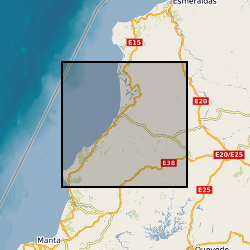
Data collected as part of a UK/French/US collaborative effort to record aftershocks from the 2016 Pedernales Earthquake in Ecuador. The dataset comprises continuous seismic data recorded on broadband and short period instrumentation.
-
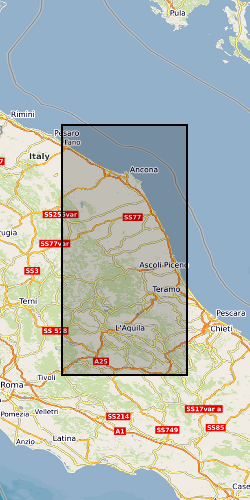
The data collection consists of 25 3-component broadband seismic station at 100sps (approx. 45mb per station, per day) located in the epicentral area of the 26th August 2016, M=6.0 Amatrice earthquake. The sequence evolved with strong mainshocks for over 6 months reaching a maximum magnitude of M=6.4 that struck Norcia town on October 30th, 2016. In line with SEIS-UK guidelines data was archived with the IRIS data management facility (https://ds.iris.edu/ds/nodes/dmc/) under the FDSN network code YR and using the network name “Amatrice Sequence International”. The project has the digital identifier https://doi.org/10.7914/SN/YR_2016.
-

Broadband seismic data recorded at Fernandina volcano, Galapagos Islands, Ecuador, from December 2022 to November 2023. The data cover a period of epsiodic shallow magma accummulation and associated earthquakes.
-

This dataset comprises broadband seismic data from the Askja Caldera, Iceland, which consists of ~12 months of continuous recording from August 2023-August 2024. A total of 23 Guralp 6TD and Certimus seismometers were deployed in and around the ~8km diameter caldera, with sampling rates set to 100sps. Each seismometer was buried ~30cm below the surface, and attached to a power supply consisting of 3 100Amp-hour batteries and 100 W solar panels mounted on a wooden frame. The batteries were placed in a box that sat on the supports of the solar panel frame to act as ballast, and wrapped in a plastic sheet. A Gps unit was mounted on the solar panel frame. Access to most stations is by foot, and installation was undertaken either by carrying the equipment on foot or by helicopter. The dataset provided is in standard miniseed format, and has an accompanying dataless file for each instrument type in xml format. The miniseed data is archived in day files under the directories "2023" and "2024", while the xml file is located in the directory "dataless". The data is of good quality, with both local earthquakes and teleseisms easily detected. The data were collected for the purposes of tracking microseismic activity associated with the recent reinflation event at Aska, and to help facilitate seismic imaging beneath the caldera using both body and surface wave tomography. The data may be of use to other scientists with an interest in earthquake seismology, imaging, and characterisation of geothermal areas near active volcanoes. The data were collected by the University of Iceland and University of Cambridge, both of who are responsible for interpretation of the data. The archive is complete as it currently stands. The data were converted into miniseed using a standard format that is consistent with archives stored at the IRIS DMC.