
Text file (TXT)
Type of resources
Available actions
Topics
Keywords
Contact for the resource
Provided by
Years
Formats
Representation types
Update frequencies
Service types
Scale
-
Data output from the numerical flow modelling in GRL manuscript ""Evidence for the top-down control of lava domes on magma ascent dynamics"", by Marsden, L., Neuberg, J. & Thomas, M., all of University of Leeds. The models were created using the Laminar Flow module in COMSOL Multiphysics v5.4 by L. Marsden. The following files are uploaded: Archive_Reference_Model.txt (Reference flow model: Gas loss function, Initial H2O content = 4.5 wt.% Excess pressure at depth = 10 MPa, Constant corresponding to crystal growth rate = 4e-6 s^-1 ) Archive_High_H2O.txt (Gas loss function, Initial H2O content = 10 wt.% Excess pressure at depth = 10 MPa, Constant corresponding to crystal growth rate = 4e-6 s^-1) Archive_No_Gas_Loss.txt (No gas loss, Initial H2O content = 4.5 wt.% Excess pressure at depth = 10 MPa, Constant corresponding to crystal growth rate = 4e-6 s^-1) Archive_Gamma_Low.txt (Gas loss function, Initial H2O content = 4.5 wt.% Excess pressure at depth = 10 MPa, Constant corresponding to crystal growth rate = 1e-6 s^-1) Archive_Excess_Pressure_0MPa.txt (Gas loss function, Initial H2O content = 4.5 wt.% Excess pressure at depth = 0 MPa, Constant corresponding to crystal growth rate = 4e-6 s^-1) Archive_Excess_Pressure_20MPa.txt (Gas loss function, Initial H2O content = 4.5 wt.% Excess pressure at depth = 20 MPa, Constant corresponding to crystal growth rate = 4e-6 s^-1) The files uploaded include the reference flow model and where a single key parameter has been changed in the flow modelling. We include data where the key parameter is at the upper or lower limit of the values tested. Data are not included where magma ascent is modelled to stall without the extrusion of a lava dome, as a time dependent model is not run in this case. A solution is provided using equilibrium modelling only. The following variables are output, at conduit centre unless specified: Depth (m), Time(s), Ascent velocity (m/s), Bulk Viscosity (Pa s), Crystal Content, Dome height (m), Gas Volume Fraction, Overpressure (Pa), Shear Stress at Conduit Wall (Pa)
-
Text data capturing pore fluid pressures (upstream and downstream), axial stress, axial and radial displacement were conditioned and logged by a high-speed data acquisition unit (NI-DAQ 6341) recording data at 10kHz. Two additional cantilever-type radial strain probes are attached directly to the sample at 90 degrees to each other, with an average output calculated via sqrt[(rA2 + rB2)], where rA and rB are the two radial outputs, to monitor an average radial strain and crack opening displacement.
-
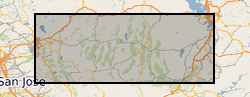
Locations of samples collected to constrain the recent activity on normal faults across Nevada. The geological samples will be used to measure the amount of exhumation that different normal faults of the Basin and Range experienced over the last 5 million years. The samples have been collected from granitic rocks that are expected to yield apatite crystals. (Uranium-Thorium)/Helium thermochronometry will be conducted on these samples to determine the cooling history of rocks from temperatures of approximately 70 degrees celsius. The samples are collected across Nevada at locations close to the fault to determine the most recent stages of exhumation. The ranges sampled are the Wassuk Range, White Range, Toiyabe Range, South Egan Range, Schell Range, Wheeler Range, House Range, Wasatch, Deep Greek, Ruby Range, Cortez Range, Humbolt Range, Dixie Valley, and Carson Range. Samples weigh approximately 2kg each. This sample coverage will constrain extension rates across the Basin and Range which is of interest to geologists, geodynamicists, and researchers interested in fault hazard.
-
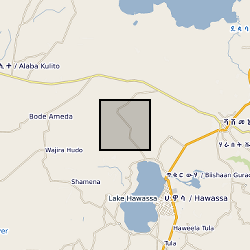
The RiftVolc microgravity network was comprised of a total of 4 benchmarks including a reference benchmark. Benchmark locations, observed gravity changes, dg14 -16, from 2014-2016, corresponding vertical deformation, Uz, free-air effect, and resultant residual gravity changes gr of the microgravity and GNSS network at Corbetti.
-
The dataset consists of a series of input and output files for the 1D and 3D numerical models used to demonstrate the impact of heat mining for a 100-m long vertical Borehole Heat Exchanger (BHE) in Scotland, assuming a constant or fluctuating surface heat flux. Simulations for a constant heat extraction from the BHE were performed using an updated version of the open-source OpenGeoSys finite-element modelling software (https://www.opengeosys.org/) made available in this repository. This updated version allows for calculation of the energy change in each material group in the models, as part of the HEAT_TRANSPORT process. For each model, the input files include the mesh file (MSH), the Boundary conditions (BC), geometry (GLI), Initial conditions (IC), Fluid properties (MFP), Medium properties (MMP), Material solid properties (MSP), Numerical parameters (NUM), Ouput parameters (OUT), Process (PCS), Reference (RFD), Source-term (ST) and Time (TIM) files. The output files consists of temperature time-series, 1D and 2D temperature profiles extracted from the models domain at different time steps (i.e. Tecplot output files) and of a text file indicating the energy content of each material group at each time step.
-
Data recorded during triaxial rock deformation experiments of Westerly granite in the presence of pressurised pore fluids (water). Data consists of mechanical data (load, displacement, confining pressure) and pore pressure data (up- and downstream pore pressure, upstream intensifier volume, four pore pressure transducers mounted on sample). Contains all data necessary to evaluate the results presented in the paper entitled: 'Dilatancy stabilises shear failure in rock' by Aben and Brantut, submitted to Earth and Planetary Science letters, and available at arXiv (arXiv:2101.10036).
-

This dataset contains raw mechanical measurements of standard uniaxial tests in 1) tension; 2) compression; 3) compression with creep deformation (load hold); 4) compression with creep and mechanical oscillations. The data is used by Schaefer et al., 2023, (https://doi.org/10.55575/tektonika2023.1.1.10). Experiments consisted of 1) standard Uniaxial Compressive strength tests; 2) Brazilian tensile strength tests; 3) Creep tests in compression and tension; 4) Creep and mechanical oscillations tests in compression and tension. For experiments in 1 in compression, a rock cylinder of 20x40 mm (diameter x height) is loaded at a constant deformation rate in a uniaxial press, for each test type until 1) failure; 3) a target stress that is then held constant for 5h before moving to a different target stress and repeating the process; and 4) to a target stress that is then held for 30 mins before inducing stress oscillations for 40 minutes. The stress is then held constant at the end of oscillations for another 30 mins. Target stresses corresponded to 50; 60 and 70% of the average compressive strength measured in test type 1. For experiments in 1), 3) and 4) in tension, a rock disc of 40x20 mm (diameter x height) is loaded at a constant deformation rate in a uniaxial press under the same stressing configurations as in compression. More details of the methods can be found in the publication Schaefer et al., 2023. Volcanic domes and edifices are inherently unstable owing to their structure and rapid emplacement/growth, further enhanced by both mechanical and thermal variations due to the movement of magma. Understanding the long-term mechanical response and fatigue of their rock constituents is thus key to understanding their stability. Experimental datasets can help quantify the amount of deformation that rocks can sustain before failure, helping us to understand possible rock failure events at larger scale at volcanoes. All data were collected at the University of Liverpool and analysed at the University of Liverpool, UK, at the USGS, USA and LMU Munich, Germany. All samples were collected at Unzen volcano, Japan. Experiments and data analysis were carried in 2021 and 2022.
-
This is a collection of extracts from British newspapers describing earthquakes, mostly British. It contains original clippings, photocopies, and in a few cases manual transcriptions.
-
All data dictionaries held in Oracle. They include both administrative (e.g. codes for companies), scientific (e.g. codes for deformation episodes) and geographic (e.g. codes for countries). Typically, they are used to constrain the allowable values held in other Oracle datasets. In some cases they are an implementation of the classifications that the BGS uses in its work.
-

Field reports and macroseismic questionnaires for recent British earthquakes. As of 2003, data collection for this dataset is mostly digital.