
Image (TIFF)
Type of resources
Available actions
Topics
Keywords
Contact for the resource
Provided by
Years
Formats
Representation types
Update frequencies
Service types
Scale
-
Nanoscopic (50 < size < 150 nm) magnetic particles embedded within the unaltered interior of mineral crystals like zircons (ZrSiO 4 ) make ideal candidates to record the information about the earth's magnetic field (geodynamo). Information regarding the magnitude of the field can be obtained by measuring the natural remnant magnetization (NRM) of these carriers and further information on the approximate size range of the carriers can be obtained by carrying out thermal remnant magnetization measurements (TRM). However very little is known about the actual morphology and spatial distribution of these carriers in order to understand the fundamental parameters influencing paleomagnetic recording. We propose to image pristine zircons crystals with simple geological histories containing large remnant magnetization using ptychotomography in order to investigate the size, shape and spatial distribution of nano-paleomagnetic carriers. This would also give us an opportunity to fine tune the ptychotomographic setup at I13-coherence branch. This data package consists of 3D maps of Bishop Tuff Zircons, relatively young. The folders contain a stack of .tiff files which can be loaded into imagej, dragonfly, aviso for segmentation purposes.
-

These images were acquired using micro computed tomographic imaging of 4 sandstone plugs taken at various depths in the Glasgow UKGEOS borehole GGC01. GG496 (170.07 m), GG497 (168.66 m), GG498 (73.37 m) and GG499 (135.06 m). These samples are further detailed and analysed in the following article: http://dx.doi.org/10.1144/petgeo2020-092.
-
Each of this set of 3D X-ray tomography datasets show a particle “bead pack” developed as a magmatic mush analogues but of use to anyone investigating non-spherical systems. The stack of tiff images in each 3D dataset show either cuboid, rod and disc/plate like particles as well as irregular shapes and mixtures of these. The data were used to measure packing geometries, contact areas, and pore volumes, surface areas and connectivity, and perform permeability simulation used to develop advanced porosity-permeability relationships for any bead packing geometry. The data were collected on a Nikon XCT scanner with the exact imaging condition for each scan presented in the txt settings file in each folder (including x-ray energy, flux and resolution information). The data may be of use to those developing advanced finite element, discrete element or flow models in complex packed beds.
-
Extant euglenids from cultures LM and SEM images of living euglenids and euglenids post acetolysis Fossil material (recovered by standard palynological analysis) LM, SEM and TEM images of fossil materials from:- (i) The Torridonian of Scotland (ii) The Nonesuch Formation of Michigan, USA (iii) The 'fish beds' of the Silurian Inliers of the Midland Valley of Scotland.
-
Non -contact atomic force microscopy (NC-AFM) images of surface nanobubbles on the fluorcarbonate mineral synchysite. Synchysite is a rare earth fluorcarbonate mineral which has previously been relatively unstudied. Since nanobubbles were first imaged in 2000, they have been thought to play a intigral role in mineral processing. Images of nanobubbles were produced under collector reagent conditions favourable to flotation. These are the first images of nanobubbles on the fluorcarbonate mineral synchysite. Nanobubbles at the surface of synchysite improve the understanding of both flotation and nanobubble formation.
-

This dataset comprises the raster scans used as source information for capturing DiGMap 1:50000 scale data. The majority were processed under contract in India. Additions have been made. The images are georeferenced.
-
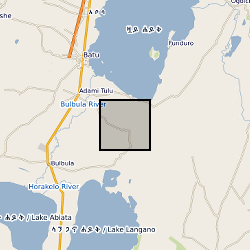
Scanning electron microscopy (SEM) and X-ray microtomography of fluidal pyroclasts (X-ray microtomography). Data are referenced in Clarke et al., 2019: Fluidal pyroclasts reveal the intensity of peralkaline rhyolite pumice cone eruptions; https://doi.org/10.1038/s41467-019-09947-8.
-
H2 adsorption data on sub-bituminous coal as a function of pressure. Hydrogen flooding of a coal core. Micro CT imaging of the effect on coal swelling after hydrogen injection. Hydrogen is trapped, and no swelling is observed indicating that coal might be a good candidate for the storage of hydrogen.
-
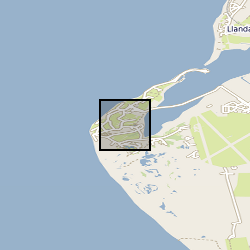
X-ray computed tomography (XCT) scans of four samples of consolidated shale from the Lower Jurassic (C.exaratum subzone) of the Cardigan Bay Basin (Wales, UK). The samples were taken from the Mochras Core, at depths of 789, 810, 812, and 818m (all samples within data measured in metres). Each sample is distinguished by its unique sample identification number (SSK). For each sample, there is a stack of XCT orthoslices (.tiff) files, and for SSK109633, an incomplete Avizo file. Mochras core location (aprox.) 52°48'39.74"N, 4° 8'48.09"W. Mochras Island, west of Llanbedr, Gwynedd, Wales, UK
-
3D reconstructions and orthophotos of exposures of the 1930 pyroclastic density current on Stromboli. Location 1 is located at UTM W84-33 S_0518638 4295048 and location 2 at UTM W84-33 S_0518956 4294953. The photographs for the models where taken on 28/7/2021 and were converted to the models and orthophotos using structure for motion photogrammetry and the AGISOFT software. The data was collected to aid grain size analysis, by providing a volume change in the outcrop before and after the collection of a physical sample of the material. The data collection was carried by Dr Irene Manzella, Dr Paul Cole and Symeon Makris.