
Image (SVG)
Type of resources
Available actions
Topics
Keywords
Contact for the resource
Provided by
Years
Formats
Representation types
Update frequencies
Service types
Scale
-
Data from the British Geological Survey's GeoIndex Minerals theme are made available for viewing here. GeoIndex is a website that allows users to search for information about BGS data collections covering the UK and other areas world wide. Access is free, the interface is easy to use, and it has been developed to enable users to check coverage of different types of data and find out some background information about the data. More detailed information can be obtained by further enquiry via the web site: www.bgs.ac.uk/geoindex.
-
Data from the British Geological Survey's GeoIndex Hazards theme are made available for viewing here. GeoIndex is a website that allows users to search for information about BGS data collections covering the UK and other areas world wide. Access is free, the interface is easy to use, and it has been developed to enable users to check coverage of different types of data and find out some background information about the data. More detailed information can be obtained by further enquiry via the web site: www.bgs.ac.uk/geoindex.
-
Data from the British Geological Survey's GeoIndex Map products theme are made available for viewing here. GeoIndex is a website that allows users to search for information about BGS data collections covering the UK and other areas world wide. Access is free, the interface is easy to use, and it has been developed to enable users to check coverage of different types of data and find out some background information about the data. More detailed information can be obtained by further enquiry via the web site: www.bgs.ac.uk/geoindex.
-
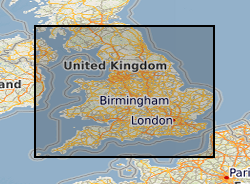
This layer of the Map based index (GeoIndex) shows where water wells exist with data available on transmissivity, storativity and discharge/drawdown. These parameters indicate the physical characteristics of the aquifer which can relate to factors such as possible storage capacities or rate of movement of water through the rock.
-
Data from the British Geological Survey's GeoIndex Geochemistry theme are made available for viewing here. GeoIndex is a website that allows users to search for information about BGS data collections covering the UK and other areas world wide. Access is free, the interface is easy to use, and it has been developed to enable users to check coverage of different types of data and find out some background information about the data. More detailed information can be obtained by further enquiry via the web site: www.bgs.ac.uk/geoindex.
-
The map shows the localities where samples that form part of the BGS rock collections have been taken. Many of these samples are from surface exposure, and were collected by BGS geologists during the course of geological mapping programmes. Others are from onshore boreholes or from mine and quarry workings. The principal collections are the E (England and Wales), S (Scotland), N (continuation of the S collection) and the MR (miscellaneous). The collections, which are held at the BGS offices at Keyworth (Nottingham) and Edinburgh, comprise both hand specimens and thin sections, although in individual samples either may not be immediately available. Users may also note that the BGS holds major collections of borehole cores and hand specimens as well as over a million palaeontological samples. The Britrocks database provides an index to these collections. With over 120,000 records, it now holds data for some 70% of the entire collections, including the UK samples shown in this application as well as rocks from overseas locations and reference minerals. The collections are continuously being added to and sample records from archived registers are also being copied into the electronic database. Map coverage is thin in some areas where copying from original paper registers has not been completed. Further information on Britrocks samples in these and other areas can be obtained from the Chief Curator at the BGS Keyworth (Nottingham) office or from the rock curator at the BGS Murchison House (Edinburgh) office.
-
This layer of the map based index (GeoIndex) shows the locations of over 12,500 rock samples from the land area of the United Kingdom gathered as part of the Mineral Reconnaissance Programme (MRP). The Mineral Reconnaissance Programme (MRP), funded by the DTI, carried out baseline mineral exploration in Great Britain between 1972 and 1997. The programme has been subsumed into the new BGS Minerals Programme, also funded by the DTI. The rock samples have been analysed for a variety of major and trace elements, mainly by XRF.
-
Data from the British Geological Survey's GeoIndex Offshore (cultural data) theme are made available for viewing here. GeoIndex is a website that allows users to search for information about BGS data collections covering the UK and other areas world wide. Access is free, the interface is easy to use, and it has been developed to enable users to check coverage of different types of data and find out some background information about the data. More detailed information can be obtained by further enquiry via the web site: www.bgs.ac.uk/geoindex.
-
BGS soil property data layers including parent material, soil texture, group, grain size, thickness and European Soil Bureau description. These data are delivered under the terms of the Open Government Licence (http://www.nationalarchives.gov.uk/doc/open-government-licence/), subject to the following acknowledgement accompanying the reproduced BGS materials: Contains British Geological Survey materials copyright NERC [year]. Contact us if you create something new and innovative that could benefit others usingbgsdata@bgs.ac.uk.
-
The BGS has been commissioned by Defra to provide guidance on what are 'normal' levels of contaminant concentrations in English soils in support of the revision of the Part 2A Contaminated Land Statutory Guidance. The domain polygons and other data produced by this work are served as WMS here.