
1984
Type of resources
Topics
Keywords
Contact for the resource
Provided by
Years
Formats
Representation types
Update frequencies
Scale
-
This dataset consists of landscape point feature information for points across Great Britain, surveyed in 1984. Data are presented as rows of information recorded as point features (for example individual trees, water bodies or structures), with associated vegetation species where relevant, within a set of 382 1km squares across Great Britain, surveyed during the Countryside Survey long term monitoring project (note: not all surveyed squares contained point features). The Countryside Survey is a unique study or 'audit' of the natural resources of the UK's countryside. The sample sites are chosen from a stratified random sample, based on a 15 by 15 km grid of GB. Surveys have been carried out in 1978, 1984, 1990, 1998 and 2007 by the Centre for Ecology & Hydrology, with repeated visits to the majority of squares. The countryside is sampled and surveyed using rigorous scientific methods, allowing us to compare new results with those from previous surveys. In this way we can detect the gradual and subtle changes that occur in the UK's countryside over time. In addition to point features, habitat areas, vegetation species data, soil data, linear habitat data, and freshwater habitat data are also gathered by Countryside Survey. Full details about this dataset can be found at https://doi.org/10.5285/124b872e-036e-4dd3-8316-476b5f42c16e
-

Magnetograms are records of variations in the strength and direction of the Earth’s magnetic field. Historically these magnetograms were recorded on paper using photographic techniques. In the UK, measurements were made at eight long-running observatories; Abinger, Eskdalemuir, Falmouth, Greenwich, Hartland, Kew, Lerwick, and Stonyhurst. BGS also hold magnetogram records from the Cape Evans observatory that ran continuously at Robert Falcon Scott’s Antarctic base camp during the British Antarctic Expedition 1910–13. The magnetogram collection, one of the longest running geomagnetic series in the world, provides a continuous record of more than 160 years of UK measurements. These magnetograms start in the 1840s and end in 1986 at which time digital recording of the magnetic field took over and magnetograms can be produced by computer graphic. The plots show variation in the Earth's magnetic field, typically over a 24-hour period. The collection is a valuable, partly untapped data resource for studying geomagnetic storms, space weather and the evolution of the Earth’s magnetic field. The magnetograms provide insight into: • the Earth’s outer core: long-term change (years to centuries) in the dynamo that sustains our magnetic field • space weather: short-term changes (seconds to days) in near-Earth space and on the ground • space climate: long-term change (decades to centuries) in solar activity and consequences for Earth’s environment All the above have an impact on human activities. For example, bad space weather affects technologies that we increasingly rely on, such as electrical power and GPS networks. In response to the threat of loss from degradation due to age and a desire to preserve and exploit old data, BGS undertook a programme of work to digitally photograph, archive and preserve the analogue paper records of magnetic field variation in the United Kingdom. Between 2009 and 2013, high-quality digital images of every available magnetogram were taken. These images are available to search online. Scientists and the general public around the world can now gain easy access to this historical dataset.
-
This dataset consists of stock (length) data for landscape linear features across Great Britain in 1984. Data are presented as lengths of different feature categories (such as fences, walls and lines of trees), with associated species attributes, from 382 km squares, surveyed for the Countryside Survey long term monitoring project (note: not all surveyed squares contained linear features). The Countryside Survey is a unique study or 'audit' of the natural resources of the UK's countryside, carried out by the Centre for Ecology & Hydrology. The sample sites are chosen from a stratified random sample, based on a 15 by 15 km grid of GB. Surveys have been carried out in 1978, 1984, 1990, 1998 and 2007 with repeated visits to the majority of squares. The countryside is sampled and surveyed using rigorous scientific methods, allowing us to compare new results with those from previous surveys. In this way we can detect the gradual and subtle changes that occur in the UK's countryside over time. In addition to linear features, habitat areas, vegetation species plot, soil plot, freshwater habitat and satellite map data are also produced by Countryside Survey. Full details about this dataset can be found at https://doi.org/10.5285/a3f5665c-94b2-4c46-909e-a98be97857e5
-
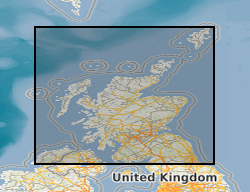
The Land Survey Plans collection of c.1,520 plans consists largely of mine plans acquired by the Survey, including 492 non-coal mine plans deposited by the National Coal Board 1984-87, and copies of mine plans derived from various sources including '6-inch reductions'. The collection also contains about 500 miscellaneous plans extracted from other Land Survey records in order to benefit from specialised systems of archival storage. The Survey's collection of Northern England mine plans are being added to the LSP collection. The collection supplements the Plans Of Abandoned Mines (Other than Coal & Oil Shale) in Scotland (NONCOALPLANSCO) providing an index to plans other than coal and oil shale for Scotland. Indexed on BGS Plans Database Index. Coal Authority hold some non-coal plans for Scotland. All non-confidential data held by NGRC(N) is available to users. Mainly coalfield areas of Central Scotland.
-
This dataset consists of stock (area) data for landscape features across Great Britain in 1984. Data are presented as areas of Broad (or Priority) Habitats, with associated landscape attributes (such as plant species and land use), within a set of 379 1km squares across Great Britain. The Countryside Survey is a unique study or 'audit' of the natural resources of the UK's countryside. The sample sites are chosen from a stratified random sample, based on a 15 by 15 km grid of GB. Surveys have been carried out in 1978, 1984, 1990, 1998 and 2007 by the Centre for Ecology & Hydrology, with repeated visits to the majority of squares. The countryside is sampled and surveyed using rigorous scientific methods, allowing us to compare new results with those from previous surveys. In this way we can detect the gradual and subtle changes that occur in the UK's countryside over time. In addition to habitat areas, vegetation species data, soil data, linear habitat data, and freshwater habitat data are also gathered by Countryside Survey. Full details about this dataset can be found at https://doi.org/10.5285/b656bb43-448d-4b2c-aade-7993aa243ea3