
Mine waters
Type of resources
Available actions
Topics
Keywords
Contact for the resource
Provided by
Years
Formats
Representation types
Update frequencies
Scale
-

This dataset contains surface water and groundwater chemistry data of 111 samples - 41 surface waters, 63 groundwater, and 7 groundwater duplicates - collected at the UK Geoenergy Observatory (UKGEOS) in Glasgow, between 20 September 2022 and 12 January 2024 by the British Geological Survey (BGS), as part of the monitoring programme at the Glasgow research facility (https://www.ukgeos.ac.uk/glasgow-observatory). Samples are from 6 surface water sites, 5 mine water boreholes, and 5 environmental monitoring boreholes and were analysed at BGS and other laboratories. It includes the following parameters: field measurements of redox potential (ORP), pH, dissolved oxygen, electrical conductivity, alkalinity and water temperature, as well as chemical analyses of major, minor, and trace elements, non-purgeable organic carbon (NPOC), polycyclic aromatic hydrocarbons (PAH), total petroleum hydrocarbons (TPH), oxygen and deuterium isotopes (δ2H and δ18O), carbon isotopes in dissolved inorganic carbon (DIC) (δ13CDIC), and – limited to the groundwater samples – ammonium (NH4), reduced iron, dissolved sulphide, dissolved gases radon, methane, ethane and carbon dioxide (Rn, CH4, C2H6, CO2) and volatile organic compounds (VOC). The dataset consists of two excel files: GroundWaterChemData3 and SurfaceWaterChemData4, with an accompanying report by Palumbo-Roe et al. (2025).
-

Reports detailing investigations into mine water discharges and potential effects on aquifers in the East Midlands Coalfield and in the Lake District.
-

Data set is of drill fluid return, settling tank, and bore hole flush fluids sampled during the development of GGC01 seismic monitoring borehole and GGA07 and GGA08 mine water geothermal wells at the UKGEOS - Glasgow site.
-
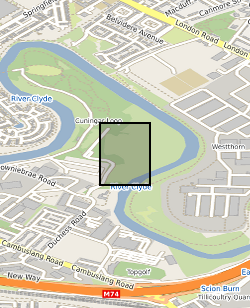
The data release includes groundwater chemistry data from 15 samples collected during the borehole test pumping phase at the UK Geoenergy Observatories (UKGEOS) Glasgow facility. This release from the British Geological Survey (BGS) covers groundwater samples collected between 14 January 2020 and 21 February 2020 and then analysed for the concentrations of selected parameters at BGS and other laboratories. It contains a report and 2 data sheets. Further details can be found in the accompanying report http://nora.nerc.ac.uk/id/eprint/531098/.
-

The borehole information pack from borehole GGA05, site 02 of the UK Geoenergy Observatories (UKGEOS) Glasgow facility. This release from the British Geological Survey (BGS) contains BGS and Drillers’ logs, cased hole and open hole wireline data, optical camera data, a listing of archived rock chips and a descriptive report. The mine water characterisation and monitoring borehole was drilled between 1st July and 11th October 2019 (start of drilling to casing installation date) to 88.5 m drilled depth. The cased borehole was wireline logged and hydrogeologically tested in January 2020. Rock chip samples were taken during the drilling process and have been archived at the National Geological Repository at BGS Keyworth. Further details can be found in the accompanying report http://nora.nerc.ac.uk/id/eprint/528052 DOI https://dx.doi.org/10.5285/714fe9fc-ce77-4479-8053-1c5fd4e86f06
-
The study in three coal mining regions: Lower Silesia, Upper Silesia and Lublin (each N=500) was conducted using Computer Assisted Web Interview (CAWI). The questionnaire includes the block of questions concerning mine water awareness, climate change and local/place attachment. The survey online took 15 to 20 minutes and was prepared after in-depth pilot research among participants with different education level from the mining regions. We used the uninformed approach to the survey, so there were no additional questions nor requirements for participants prior to the survey. Since the mine water energy extraction is a technical issue that is neither well known nor commonly used in the narratives of Poles, we tested survey questions with pilot cognitive interviews to remove the technical language and reduce the number of replies without understanding. The interviews were conducted with 10 participants in July 2020 and due to the pilot's recommendations and results, we implemented additional changes in the final version of the questionnaire. Specifically, some questions were simplified and the background information on mine water extraction was simplified and shortened The survey CAWI was completed by adult people aged 18-65 (N=1500) between 14-19 August 2020 by Kantar Research Agency. The sample was constructed using KANTAR’s internet panel profiled for the basic demographics, such as gender, age, and the town size. Particular attention paid to the quality of the panel is reflected in its structure. Kantar’s internet panel reflects the profile of the Polish population of Internet users in terms of its participants’ demographic characteristics. The sample from each region was 500 respondents and among the full sample (N=1500) we reached only 192 people who chose to call “mining areas” as best description of the area where they live. Although the three voivodships were chosen due to its mining industry the selected sample covers the region in general in which mining communities are statically not fully represented. We also asked about the subjective perception of the area respondents live in, which we further analysed with spatial distribution. The dataset was created within SECURe project (Subsurface Evaluation of CCS and Unconventional Risks) - https://www.securegeoenergy.eu/. This project has received funding from the European Union’s Horizon 2020 research and innovation programme under grant agreement No 764531
-

The borehole information pack from borehole GGA02, site 01 of the UK Geoenergy Observatories (UKGEOS) Glasgow facility. This release from the British Geological Survey (BGS) contains BGS and Drillers’ logs, cased hole wireline data, details on fibre-optic cable installation, a listing of archived rock chips and a descriptive report. The borehole was drilled between 17th June and 20th September 2019 (start of drilling to casing installation date) to 94.16 m drilled depth as a mine water characterisation and monitoring borehole. Unfortunately, during the final stages of construction grout entered inside the casing, the casing was damaged and the borehole is now available as a sensor testing borehole to 67.2 m. The cased borehole was wireline logged in January 2020. Rock chip samples were taken during the drilling process and have been archived at the National Geological Repository at BGS Keyworth. Further details can be found in the accompanying report http://nora.nerc.ac.uk/id/eprint/528076 DOI https://dx.doi.org/10.5285/189dac62-b720-4fde-8260-f129fb9b0233
-

The borehole information pack from borehole GGA07, site 03 of the UK Geoenergy Observatories (UKGEOS) Glasgow facility. This release from the British Geological Survey (BGS) contains BGS and Drillers’ logs, cased hole and open hole wireline data, optical camera data, a listing of archived rock chips and a descriptive report. The mine water characterisation and monitoring borehole was drilled between 24th June and 16th December 2019 (start of drilling to casing installation date) to 56.9 m drilled depth. The cased borehole was wireline logged in January 2020 and hydrogeologically tested in February 2020. Rock chip samples were taken during the drilling process and have been archived at the National Geological Repository at BGS Keyworth. Further details can be found in the accompanying report http://nora.nerc.ac.uk/id/eprint/528080 DOI https://dx.doi.org/10.5285/d8d27fb5-3be4-4a54-aef7-8429ec234667
-

The borehole information pack from borehole GGA08, site 03 of the UK Geoenergy Observatories (UKGEOS) Glasgow facility. This release from the British Geological Survey (BGS) contains BGS and Drillers’ logs, cased hole and open hole wireline data, optical camera, CCTV data, a listing of archived rock chips and a descriptive report. The mine water characterisation and monitoring borehole was drilled between 25th June and 6th December 2019 (start of drilling to casing installation date) to 91.37 m drilled depth. The cased borehole was wireline logged in January 2020 and hydrogeologically tested in February 2020. Rock chip samples were taken during the drilling process and have been archived at the National Geological Repository at BGS Keyworth. Further details can be found in the accompanying report http://nora.nerc.ac.uk/id/eprint/528081 DOIhttps://dx.doi.org/10.5285/b19497aa-75a5-4f51-8089-299f9229b9ca
-

The borehole information pack from borehole GGA04, site 02 of the UK Geoenergy Observatories (UKGEOS) Glasgow facility. This release from the British Geological Survey (BGS) contains BGS and Drillers’ logs, cased hole and open hole wireline data, a listing of archived rock chips and a descriptive report. The mine water characterisation and monitoring borehole was drilled between 28th June and 22nd October 2019 (start of drilling to casing installation date) to 53.63 m drilled depth. The cased borehole was wireline logged and hydrogeologically tested in January 2020. Rock chip samples were taken during the drilling process and have been archived at the National Geological Repository at BGS Keyworth. Further details can be found in the accompanying report http://nora.nerc.ac.uk/id/eprint/528078 DOI https://dx.doi.org/10.5285/83ab3481-45d9-475d-8814-008edc9fb1cb