
BGS Permeability Index version 8
Simple
- Date (Creation)
- 2021-01-07
0115 936 3276
0115 936 3276
01491 692345
01491 692345
- Maintenance and update frequency
- unknown Unknown
- GEMET - INSPIRE themes, version 1.0
- BGS Thesaurus of Geosciences
-
- Ground water movement
- Hydrogeology
- Permeability
- dataCentre
- Keywords
-
- NERC_DDC
- Access constraints
- otherRestrictions Other restrictions
- Other constraints
- license
- Use constraints
- otherRestrictions Other restrictions
- Other constraints
- The copyright of materials derived from the British Geological Survey's work is vested in the Natural Environment Research Council [NERC]. No part of this work may be reproduced or transmitted in any form or by any means, or stored in a retrieval system of any nature, without the prior permission of the copyright holder, via the BGS Intellectual Property Rights Manager. Use by customers of information provided by the BGS, is at the customer's own risk. In view of the disparate sources of information at BGS's disposal, including such material donated to BGS, that BGS accepts in good faith as being accurate, the Natural Environment Research Council (NERC) gives no warranty, expressed or implied, as to the quality or accuracy of the information supplied, or to the information's suitability for any use. NERC/BGS accepts no liability whatever in respect of loss, damage, injury or other occurence however caused.
- Other constraints
- The dataset is made available to external clients under BGS Digital Data Licence terms and conditions. Revert to the IPR Section (iprdigital@bgs.ac.uk ) if further advice is required with regard to permitted usage.
- Spatial representation type
- vector Vector
- Metadata language
- EnglishEnglish
- Topic category
-
- Geoscientific information
- Geographic identifier
-
GBN
- Date (Revision)
- 2009
- Geographic identifier
-
GREAT BRITAIN [id=139600]
- Date (Creation)
- 1979
))
- Begin date
- 1879
- End date
- 2021
- Unique resource identifier
- OSGB 1936 / British National Grid (EPSG::27700)
- Distribution format
-
-
ESRI Shapefile
(
1994
)
-
ESRI Shapefile
(
1994
)
0115 936 3276
01491 692345
- OnLine resource
-
BGS Datasets - Permeability
(
WWW:LINK-1.0-http--link
)
Resource page for dataset with contact and licensing details.
- OnLine resource
-
Citation Information - Digital Object Identifier (DOI)
(
WWW:LINK-1.0-http--related
)
British Geological Survey (2021): BGS Permeability Index version 8. British Geological Survey. (Dataset). https://doi.org/10.5285/7f9c6bb5-1e7a-4405-ae59-d893a80df2b3
- Hierarchy level
- dataset Dataset
- Other
- dataset
Conformance result
- Date (Publication)
- 2011
- Explanation
- See the referenced specification
- Pass
- No
Conformance result
- Date (Publication)
- 2010-12-08
- Explanation
- See http://eur-lex.europa.eu/LexUriServ/LexUriServ.do?uri=OJ:L:2010:323:0011:0102:EN:PDF
- Pass
- No
- Statement
- The BGS Permeability Index dataset V8 is derived from the 4 geological themes of BGS Geology 50k: mass-movement, artificial, superficial deposits and bedrock. Each polygon in the BGS Geology 50k is attributed with a 2-part code; LEX-RCS code (rock unit-lithology combination). The LEX-RCS code is assigned (attributed) with 3 further codes to indicate the Predominant Flow Mechanism, and the Maximum and Minimum Permeability. The dataset was produced by dissolving the individual themes of BGS Geology 50k based on LEX-RCS and joining to a Microsoft Access lookup table of all the LEX-RCS combinations with their assigned permeability codes. The first code 'Predominant Flow Mechanism' indicates how fluid will migrate from the ground surface through the unsaturated zone of each rock unit and lithology combination and has three classes: Intergranular, Fracture or Mixed (intergranular and fracture). The second and third codes (Maximum and Minimum Permeability) indicate the range of flow rates likely to be encountered in the unsaturated zone for each rock unit and lithology combination to which five classes have been assigned for the Maximum and Minimum Permeability codes: very high, high, moderate, low, and very low. The Maximum and Minimum Permeability values represent a likely permeability range for the specified rock unit and lithology combination at, and immediately below, its outcrop or subcrop (rather than at any significant depth). The Maximum Permeability represents the fastest potential vertical rate of migration through the unsaturated zone likely to be encountered in the specified rock unit-lithology combination. The Minimum Permeability represents the minimum, and in some cases more normal, bulk rate of vertical movement likely to be encountered. Where a widely variable combination of lithologies occurs within a rock unit this Minimum Permeability value reflects the probable movement rate likely to be encountered in the least permeable horizons. These 3 codes were ascribed solely on the known hydrogeological characteristics of the various lithologies, considering their age, dissolution potential, degree of cementation/induration and fracturing. In unconsolidated deposits, intergranular flow is the predominant flow mechanism. In most consolidated sedimentary rocks, and igneous and metamorphic rocks, fracture flow will occur and hence a wide range of permeability values can occur for any one lithology. The potential for dissolution and degree of cementation, lithological variation and induration are also factors that affect measured values.
- File identifier
- ba6dee03-9598-54ec-e054-002128a47908 XML
- Metadata language
- EnglishEnglish
- Hierarchy level
- dataset Dataset
- Date stamp
- 2026-03-28
- Metadata standard name
- UK GEMINI
- Metadata standard version
- 2.3
- Dataset URI
- http://data.bgs.ac.uk/id/dataHolding/13607706
Overviews
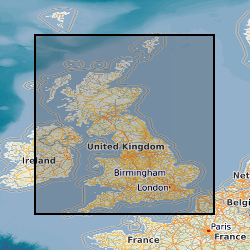
Spatial extent
Provided by
